Labour MPs turn public on PM, escalating leadership crisis
Labour MPs have shifted their criticism of Keir Starmer into public view, turning private discontent into a test of authority in Westminster.
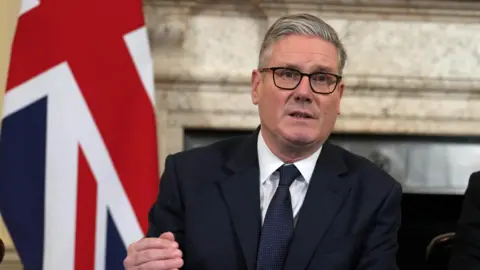
Labour MPs have moved their doubts about the prime minister into the open, a sharper and more dangerous phase of dissent that raises questions about Keir Starmer’s grip on the House of Commons, his cabinet and his ability to project stability.
The immediate significance is not just party turbulence. In Westminster, once MPs publicly signal that confidence is ebbing, the issue can quickly become a test of governing authority. A leader of the opposition can introduce a no-confidence motion, and convention means the government must make parliamentary time available for a debate. That is why even before any formal arithmetic is tested, a public revolt can damage a prime minister’s standing and make authority look fragile.
BBC political editor Chris Mason has described similar moments as ones in which a leader’s political future can “hang in the balance”. That warning now applies to Starmer because the criticism is no longer confined to private frustration or internal briefing; Labour MPs are airing their doubts in public, which marks a significant escalation in party management and signals a loss of discipline inside the governing party.
For the prime minister, the risk runs beyond a single vote. A sustained rebellion can make a government appear unable to command its own party, let alone the Commons. If the criticism stays isolated, it may be contained as a noisy but temporary dispute. If frontbench figures or senior backbenchers join in, the pressure could harden into a bloc that forces the leadership to spend political capital on survival rather than legislation.

The warning from elsewhere in Europe is stark. French prime minister Michel Barnier was ousted in a no-confidence vote after left and far-right parties united against him, following his decision to push through a budget without parliamentary support. That collapse showed how fast a loss of parliamentary backing can become a governing crisis once opponents find enough common ground to act.
For Starmer, the key question now is whether he can restore authority quickly enough to stop the revolt spreading. In Westminster, public dissent is often the moment a leadership problem stops being a factional row and starts becoming a question of who really controls the government.
This article was produced by Prism’s automated news system from verified source data, official records, and press releases, then run through automated quality and moderation checks before publishing. The system is built and supervised by the people who set the standards it runs under. Read our full AI policy.
Did this article answer your question?

