Labubu Authentication Guide, How Collectors Verify Boxes Tags Figures
This guide walks you through a practical, photographer-ready checklist to authenticate Labubu figures from box to toy. You will learn what physical marks, digital checks, and seller practices matter so you can spot fakes, preserve value, and buy with confidence.

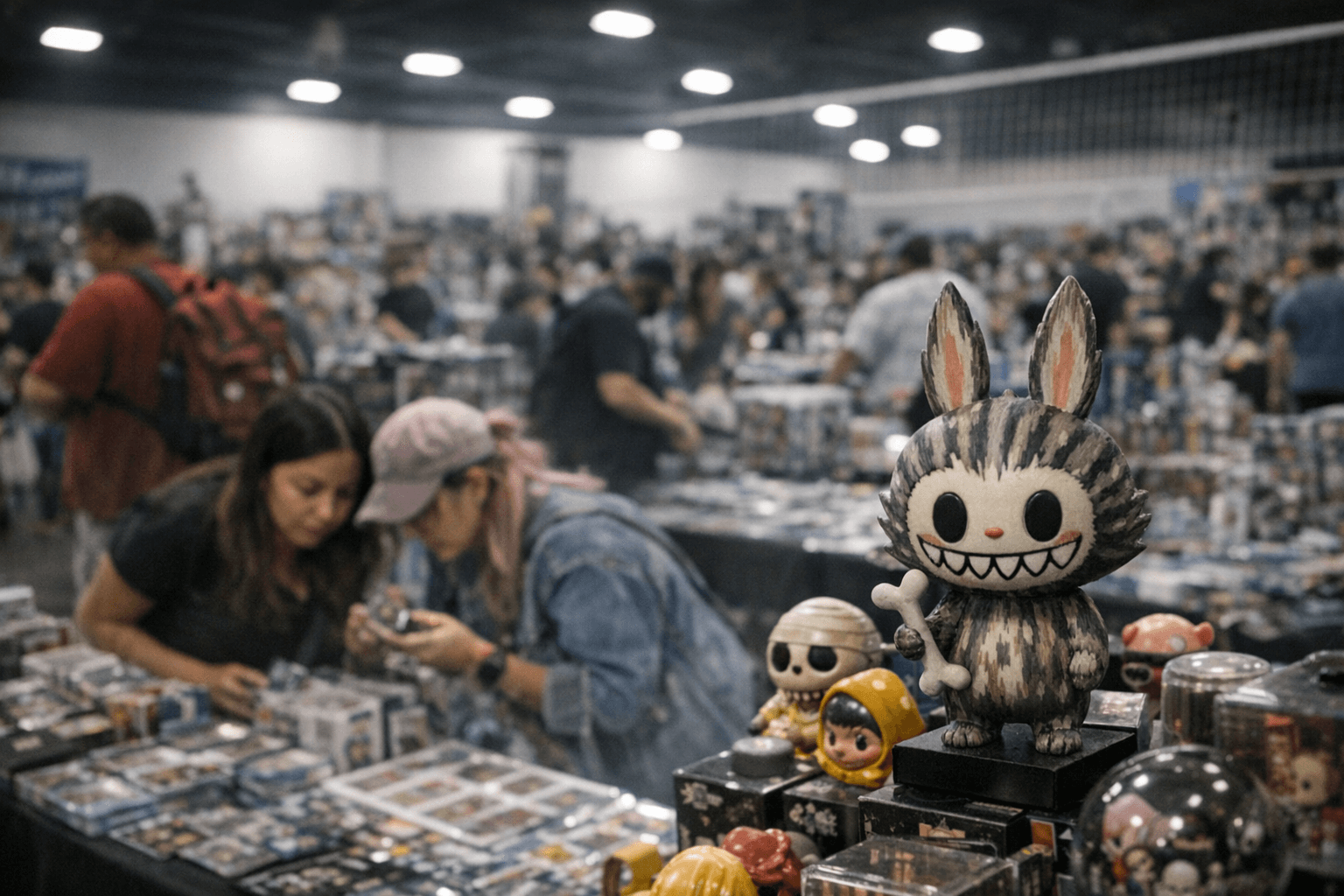
Start here for a practical, step-by-step inspection routine you can use at the show table or when the delivery arrives. The list below consolidates community best practices into repeatable checks so you can layer proof and reduce risk.
1. Examine the box seal
Inspect the box seal first because packaging is often the easiest giveaway. Genuine Labubu releases use a destructible single-use seal that must be broken to open the box; if a package has a resealable strip or looks easily resealed, that is a red flag. Pay attention to glue residue, uneven cuts, or signs the seal has been replaced, and always document the intact seal with a photo before opening.
2. Inspect holographic and anti-counterfeit stickers
Look closely at all holographic stickers and anti-counterfeit labels, including any double-P hologram where applicable. Authentic holograms display crisp detail, smooth color shifts, and consistent placement compared with blurry, pixelated or off-center fake stickers. Use a loupe or bright light to examine microprinting and tamper-evident edges; counterfeit stickers often lack the same layered reflectivity and fine printing.
3. Scan QR codes on box and tag and confirm official routing
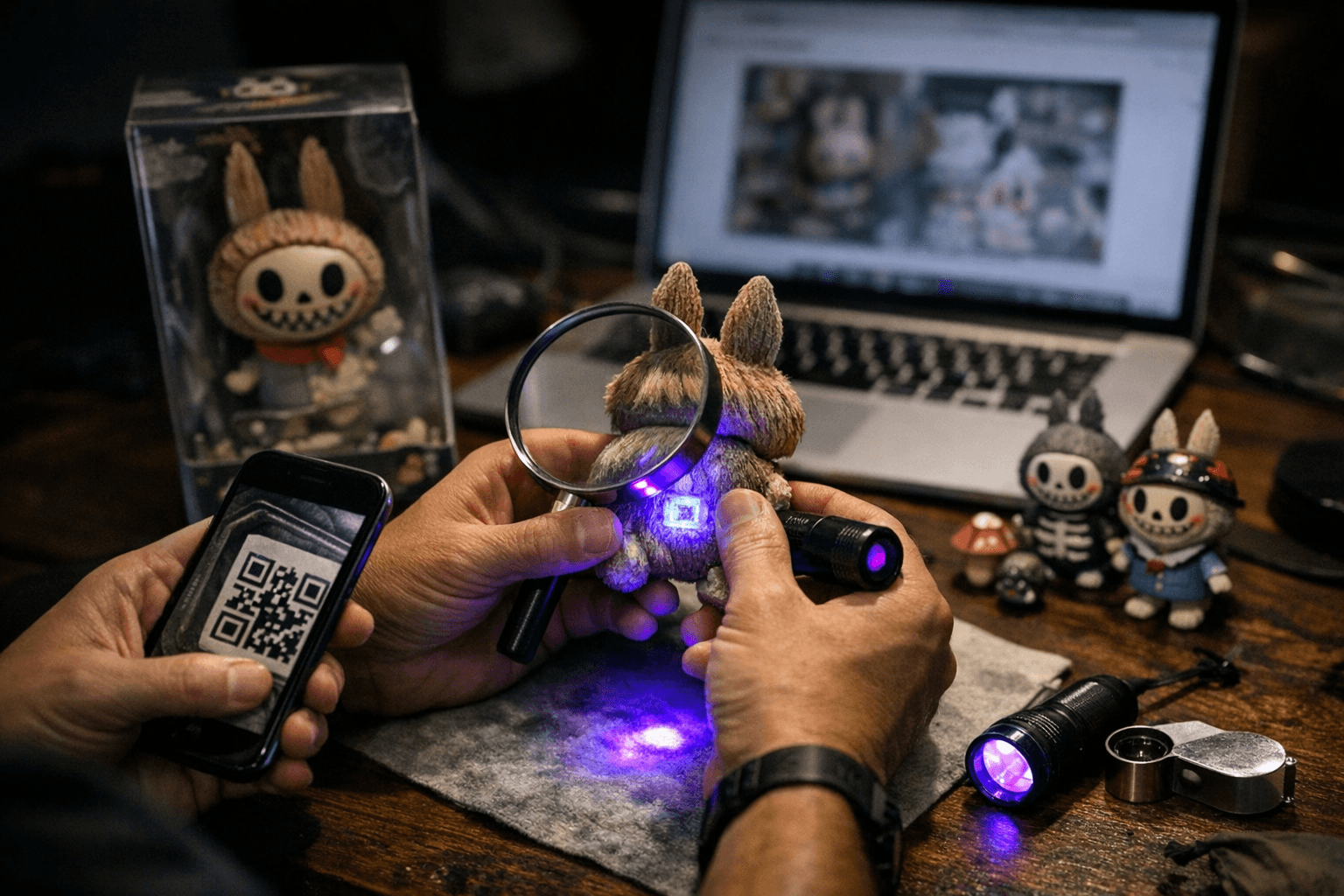
Scan QR codes found on both the box and the doll’s tag and confirm they route to official Pop Mart domains. Genuine QR links will open official Pop Mart pages or product verification portals, while fakes sometimes link to generic pages, shortened URLs, or non-official domains. If a QR code redirects strangely or produces no verification page, treat that as a major warning and ask the seller for alternate authentication evidence.
4. Verify Pop Mart logo emboss and UV-reactive series marks
Check the physical embossing and UV details on the figure itself. The Pop Mart logo is typically embossed on the left foot and should feel crisp and evenly pressed into the vinyl. Where applicable, the right foot contains UV-reactive series marks; under a UV lamp these fades or markings should appear in a specific pattern and position consistent with official examples. Counterfeits often have weak embossing or missing UV reactions.
5. Count and inspect the teeth
A quick visual trait to memorize: authentic Labubu figures show nine evenly spaced teeth. Count them under good light and look for even spacing and consistent sculpt quality. Fake figures can show irregular counts, uneven spacing, or sloppy paint in the tooth line, so this small detail is a fast authenticity checkpoint.
6. Assess stitching, fur texture, color tones and label quality
Examine every material and finish detail on the figure and its tag because counterfeits often fail at the micro level. Check stitching for clean, even seams and examine fur texture for consistent pile and attachment; poor sewing, loose threads, or glue marks are common in fakes. Compare paint alignment, color hues, and label printing, the authentic product uses consistent color tones and high-quality labels, while counterfeit pieces often have misaligned paint, off hues, and low-resolution tags.
7. Prioritize safe practices when buying online
When purchasing online, prioritize sellers with verifiable inventory and transparent history, and always ask for a clear video of the unboxing showing the box seal, QR scans, and figure details. Use trusted escrow services, marketplace authentication programs, or third-party inspection when available to hold funds until verification is complete. If the seller refuses video, claims to have “opened by mistake,” or offers only static photos, treat it cautiously and request timed photos or live video.
8. Layered verification and use of reference comparisons
Always combine checks across box, tag, and figure because counterfeiters sometimes place fake dolls inside genuine packaging. Layered verification means you confirm the seal and box, scan and verify QR tags, and then perform the physical figure checks so each layer supports the next. Keep side-by-side reference photos for common fake variants so you can compare embossing depth, sticker placement, teeth spacing, and stitching; the visual comparisons shorten inspection time and strengthen your evidence if a dispute arises.
- Photograph the intact box and seal before you open it.
- Request a short unboxing video that pans slowly across the sticker, QR scan, left and right feet, and face.
- Carry a small UV flashlight and loupe to spot embossing, microprinting and UV marks.
- Save seller messages and timestamps; they help if you need marketplace support.
Quick tips to carry in your pocket
Use this checklist every time you buy, sell, or document your Labubu collection. Layered, repeatable checks protect value and keep our community trusted and vibrant.
Know something we missed? Have a correction or additional information?
Submit a Tip