LafeberVet Guide: Evidence-Based Parrot Nutrition and Practical Feeding Tips
LafeberVet guidance shows nutrition is the top driver of parrot health; build diets around balanced pellets, fresh vegetables, and species-appropriate supplements to prevent common diet-related illness.
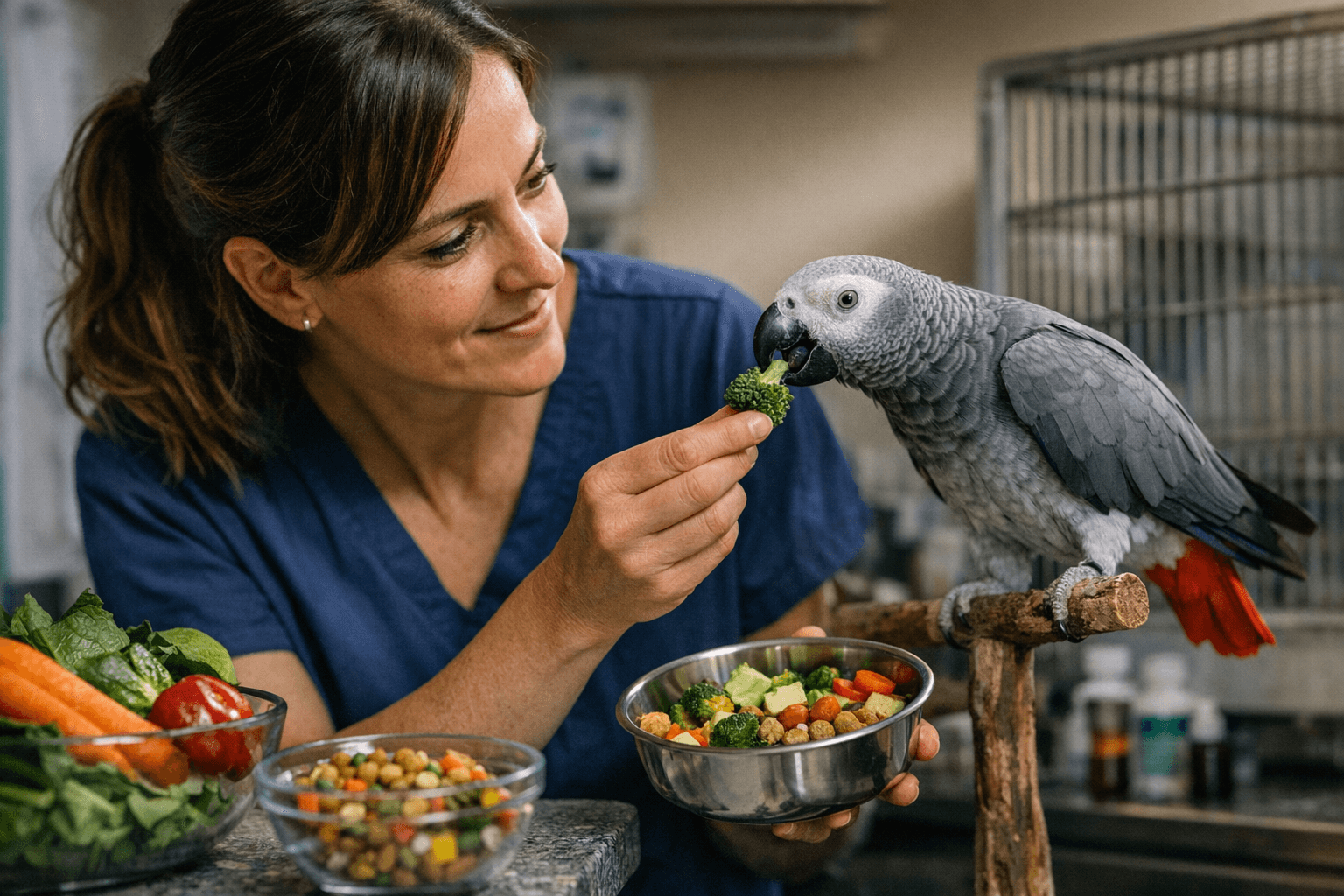
Nutrition stands out as the leading factor in companion parrot health, and clear, actionable feeding practices can prevent many common problems. LafeberVet emphasizes using balanced formulated pellets as the foundation of the diet, supplemented with a variety of fresh vegetables, limited fruit, and occasional whole grains and protein sources appropriate to species and life stage. This framework reduces the risks tied to seed-exclusive feeding and high-fat menus that predispose birds to hepatic lipidosis.
Watch the bird, not the bowl. Poor nutrition often shows first in the integument and beak: tattered or poor-quality feathers, nail and beak overgrowth or flaking are common clinical signs. Other red flags include poor growth, weight loss, recurrent or chronic illness, and metabolic issues linked to imbalanced macronutrients. Awareness of specific nutrient needs matters: vitamin A, essential fatty acids, and adequate protein are repeatedly cited as critical for parrots across life stages.
Practical feeding steps cut through the confusion. Transition birds gradually to pelleted diets, mixing increasing proportions of pellets with the previous ration over a period of weeks to reduce stress and refusal. Avoid all-seed exclusive diets for psittacines; seed-only regimens lack key vitamins and minerals and often lead to selective feeding that amplifies deficiencies. Offer varied textures and foraging enrichment to engage natural behaviors and encourage balanced intake. Limit fruit because of sugar content, and treat high-fat foods as occasional rather than staple items.
Hygiene and water quality are simple, high-impact practices. Provide clean water daily, remove uneaten fresh foods before spoilage, and maintain clean feeding surfaces to reduce bacterial and fungal risks. For new birds, quarantine and a veterinary check are essential steps before integrating with existing flocks. Regular veterinary exams with an avian specialist and routine bloodwork as indicated by age and species help detect subclinical deficiencies and metabolic disturbances early.
LafeberVet guidance translates directly into everyday care: plan a pellet-first pantry, rotate a spectrum of vegetables, add whole grains and protein carefully, and design foraging opportunities that mimic natural feeding. Keep a log of weight trends and feather condition, and seek avian veterinary evaluation for any persistent decline.
For caregivers, these recommendations make feeding less about guesswork and more about measurable health. Prioritize the pellet foundation, monitor the signs LafeberVet highlights, and schedule preventive veterinary care; doing so reduces disease risk and gives parrots the nutrition they need to thrive.
Know something we missed? Have a correction or additional information?
Submit a Tip