LaGuardia Accident Sparks Debate Over Overnight Air Traffic Controller Staffing
Two controllers managed at least four combined roles when an Air Canada jet struck a fire truck at LaGuardia, killing both pilots and forcing a federal reckoning with overnight staffing.
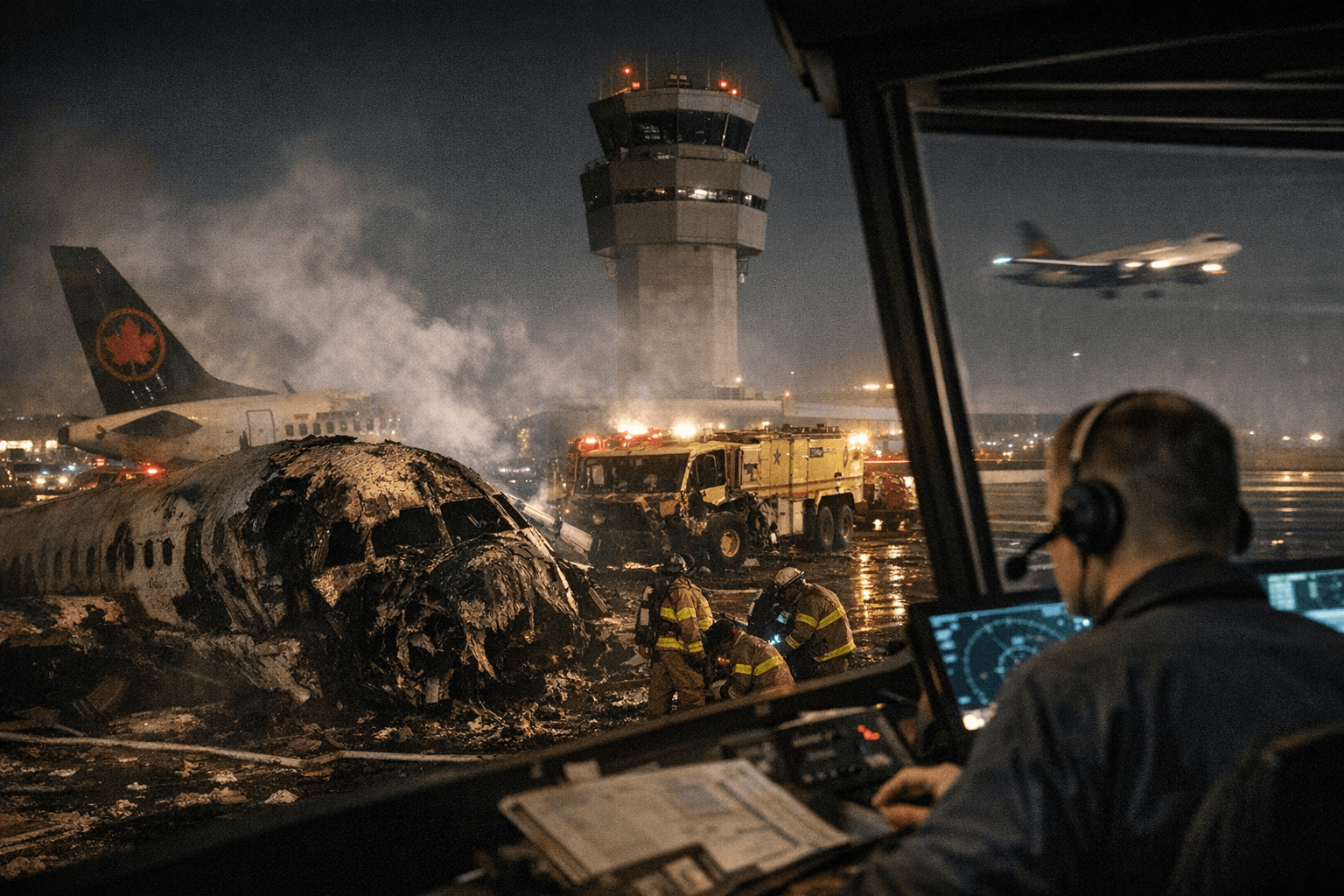
The minimum overnight staffing standard at an airport like LaGuardia is two air traffic controllers. On Sunday night, that was exactly how many were in the tower when an Air Canada regional jet struck a Port Authority fire truck on the runway, killing both pilots. Two controllers. At minimum four jobs between them.
The local controller managed landings, takeoffs, and the immediate airspace surrounding the airport. The supervisor, designated controller in charge, was responsible for overall safety of operations and, because of the overnight staffing arrangement, had also been assigned to handle departure clearances for pilots. One of the two was additionally responsible for tracking every aircraft and vehicle moving on the ground. The National Transportation Safety Board is still determining which controller carried that third layer of responsibility.
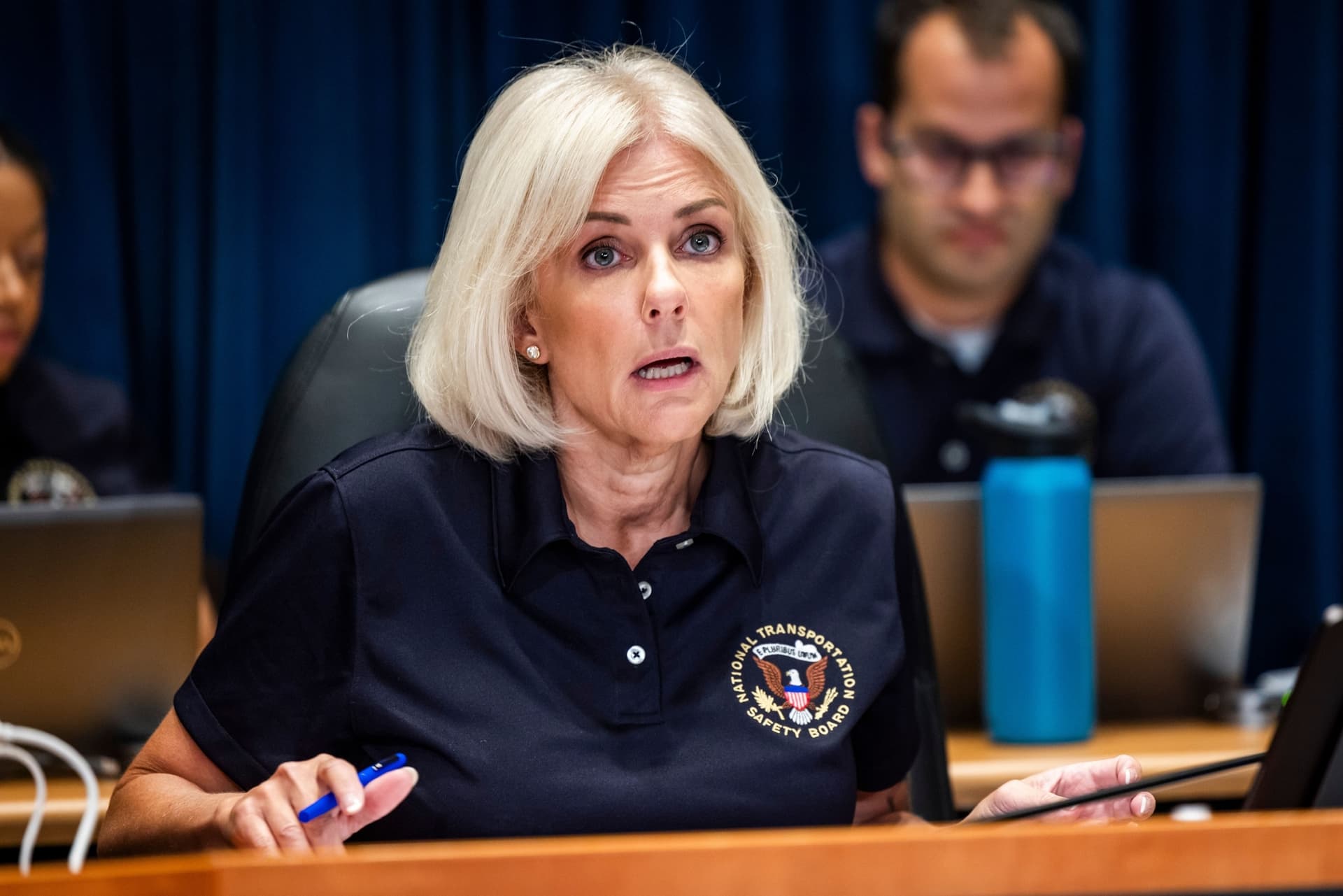
NTSB Chair Jennifer Homendy declined to assign individual blame at a press conference in the days after the crash, in which pilots Antoine Forest and Mackenzie Gunther died after the Jazz Aviation flight, operated on behalf of Air Canada, struck a Port Authority Aircraft Rescue and Firefighting vehicle that was responding to a separate incident on the airfield. The plane was carrying 72 passengers and four crew members; dozens were injured, along with two firefighters in the emergency vehicle. "I would caution pointing fingers at controllers and saying distraction was involved," Homendy said. "This is a heavy workload environment." She added that the NTSB's own aviation team had flagged the practice of consolidating overnight positions as a standing systemic problem. "Our air traffic control team has stated this is a problem, that this is a concern for them for years," she said.
The crash arrived against a backdrop of a nationwide controller shortage that has been building for decades. In 2024, the United States had roughly 11,700 certified professional controllers and certified controllers in training, leaving the country about 4,000 short of the FAA's target staffing level. The FAA hit its hiring goal in 2025, bringing in 2,026 new air traffic controllers, and the agency plans to hire at least 8,900 more through 2028. But nearly 7,000 are projected to leave over that same period, an attrition math that limits how quickly any tower can move away from consolidated overnight shifts.
A government shutdown deepened the wound. The 43-day closure required controllers to work without pay, and the damage to the profession has proven lasting. A Transportation Department spokesperson said that "the failure to pay air traffic controllers for 44 days created uncertainty, drove many experienced controllers out of the profession and harmed the recruitment pipeline." Experienced departures are particularly costly: a new hire takes years to earn full certification at a complex facility, and handling combined positions at LaGuardia, one of the FAA's most operationally demanding towers, is not a task assigned to trainees.
"No one wants to enter a job where their paycheck could be held hostage," the Transportation Department spokesperson added.
The administration has pledged remedies, including higher starting salaries and a streamlined application process. "This administration is working all avenues from increasing starting salaries for controllers to streamlining the hiring process to effectively bring about the Golden Age of Travel and ensure America has the safest airspace in the world," a Transportation Department spokesperson said. No salary figures or implementation timeline were specified.
The NTSB investigation into the LaGuardia collision is ongoing, with investigators examining controller workload, tower communications, and the sequence of decisions made in the minutes before impact. Whether the two-controller overnight minimum is adequate at one of the country's busiest and most complex airports is now, formally, a federal question.
This article was produced by Prism’s automated news system from verified source data, official records, and press releases, then run through automated quality and moderation checks before publishing. The system is built and supervised by the people who set the standards it runs under. Read our full AI policy.
Did this article answer your question?

