Lai says Taiwan won’t be traded after Trump-Xi talks on China pressure
Lai Ching-te said Taiwan would not be traded after Trump’s Beijing talks with Xi, pairing restraint with a firm line on sovereignty and security.
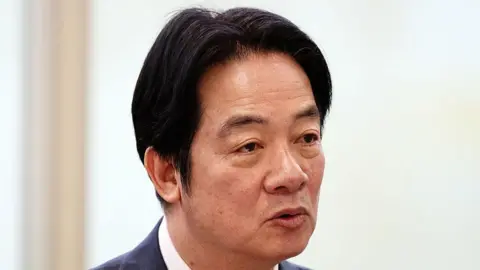
Lai Ching-te moved quickly after Donald Trump’s Beijing summit with Xi Jinping, telling audiences in Taipei that Taiwan would not be “sacrificed or traded” and would not yield its core interests under outside pressure. In a Facebook post on Sunday, May 17, Lai said Taiwan would not provoke or escalate conflict, but would also not relinquish its national sovereignty, dignity, or democratic and free way of life.
The timing mattered. Trump had met Xi in Beijing from May 13 to May 15, and Taiwan emerged as one of the sharpest points of tension in the talks. Chinese messaging described Taiwan as the most important issue in bilateral relations, while Xi warned Trump that missteps on Taiwan could push the two countries into conflict. Trump, for his part, later warned Taiwan against declaring formal independence and called on Taiwan and China to cool down, feeding anxiety in Taipei that the island could be treated as a bargaining chip in a broader U.S.-China deal.

Taiwan’s top institutions moved to reinforce the same message. The Presidential Office said U.S. policy toward Taiwan had been repeatedly reaffirmed as unchanged. Spokeswoman Karen Kuo said Taiwan would continue to promote peace and stability while maintaining the status quo. The Ministry of Foreign Affairs went further, saying the Republic of China is a sovereign democratic country and that Beijing has no right to claim jurisdiction over Taiwan. It also said the 23 million people of Taiwan were committed to the status quo.
Lai’s statement was calibrated for a difficult moment. He paired restraint with resolve, signaling that Taiwan does not seek escalation while making clear that its status cannot be negotiated away by outsiders. He also said U.S. arms sales and deeper Taiwan-U.S. security cooperation remained necessary and were key elements in preserving regional peace and stability, an argument meant to reassure both domestic audiences and foreign partners that deterrence still underpins stability in the Taiwan Strait.
He made those remarks at an event marking the 40th anniversary of the founding of the Democratic Progressive Party in Taipei, underscoring how closely Taiwan’s ruling party is tying sovereignty, security and democratic identity together. The backdrop remains tense: China has repeatedly refused to talk with Lai, Beijing has labeled him a separatist, and Chinese forces carried out military drills around Taiwan in May 2024, three days after his inauguration, describing them as punishment for separatist acts and a warning to outside powers. Lai’s latest message aimed to lower the temperature rhetorically without giving up the claim that Taiwan’s future cannot be decided by Beijing, Washington or any other capital.
This article was produced by Prism’s automated news system from verified source data, official records, and press releases, then run through automated quality and moderation checks before publishing. The system is built and supervised by the people who set the standards it runs under. Read our full AI policy.
Did this article answer your question?