Lamine Yamal, Barcelona's teenage star rises from Rocafonda to global fame
Rocafonda shaped Yamal as much as La Masia did: family, neighborhood pride, and club structure turned a prodigy into football’s newest global symbol.
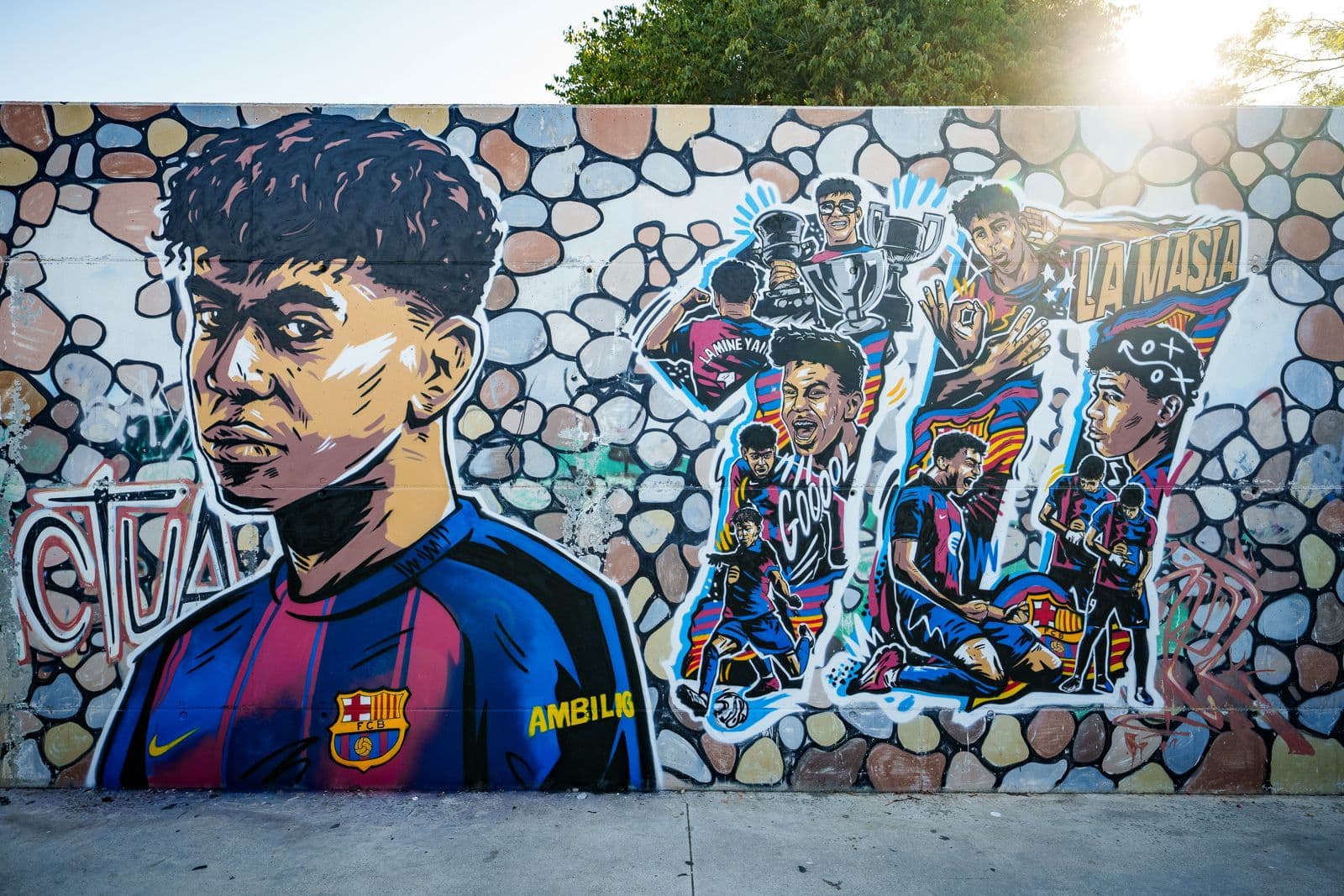
Lamine Yamal’s rise is not just a story of talent arriving early. It is a story of how family, neighborhood identity, and an elite club pathway can hold a teenager steady while the sport rushes to turn him into a phenomenon. At 18, the Barcelona winger already carries records, trophies, and a global spotlight, but the most revealing part of his ascent is how visibly he still belongs to Rocafonda.
Roots that never disappeared
Born on July 13, 2007, in Esplugues de Llobregat, Yamal grew up in Rocafonda, a working-class neighborhood in Mataró that now travels with him everywhere. His goal celebration, the hand sign for “304,” points to the last digits of Rocafonda’s postal code, 08304, and turned a local reference into a badge of collective pride. That gesture matters because it shows how the player has used fame to amplify where he came from instead of leaving it behind.
His full name, Lamine Yamal Nasraoui Ebana, reflects Moroccan and Equatorial Guinean family roots. In a sport where identity is often flattened by stardom, Yamal’s background has remained central to how he is seen and how he sees himself. The combination of birthplace, neighborhood, and heritage gives his story a broader meaning in modern European football: he is not only Barcelona’s teenage star, but also a visible symbol of multicultural Spain.
How Barcelona built the platform
Yamal came through FC Barcelona’s La Masia academy, the club’s long-running talent pipeline, and that development structure is crucial to understanding his rise. La Masia gave him more than technique. It provided a setting where a gifted child could be introduced to senior football without being thrown into it unprepared, a distinction that matters when the player in question was already breaking first-team barriers before he was old enough to vote.
He made his senior debut at 15 and became Barcelona’s youngest-ever La Liga starter at 16 years and 38 days. Those milestones were not merely ceremonial. They showed that the club was willing to trust a teenager in high-pressure minutes, while also giving him a framework of coaching, repetition, and institutional protection. Barcelona’s later decision to extend his contract until June 30, 2031, underlined that he is no longer being treated as a temporary spark but as a central long-term asset.
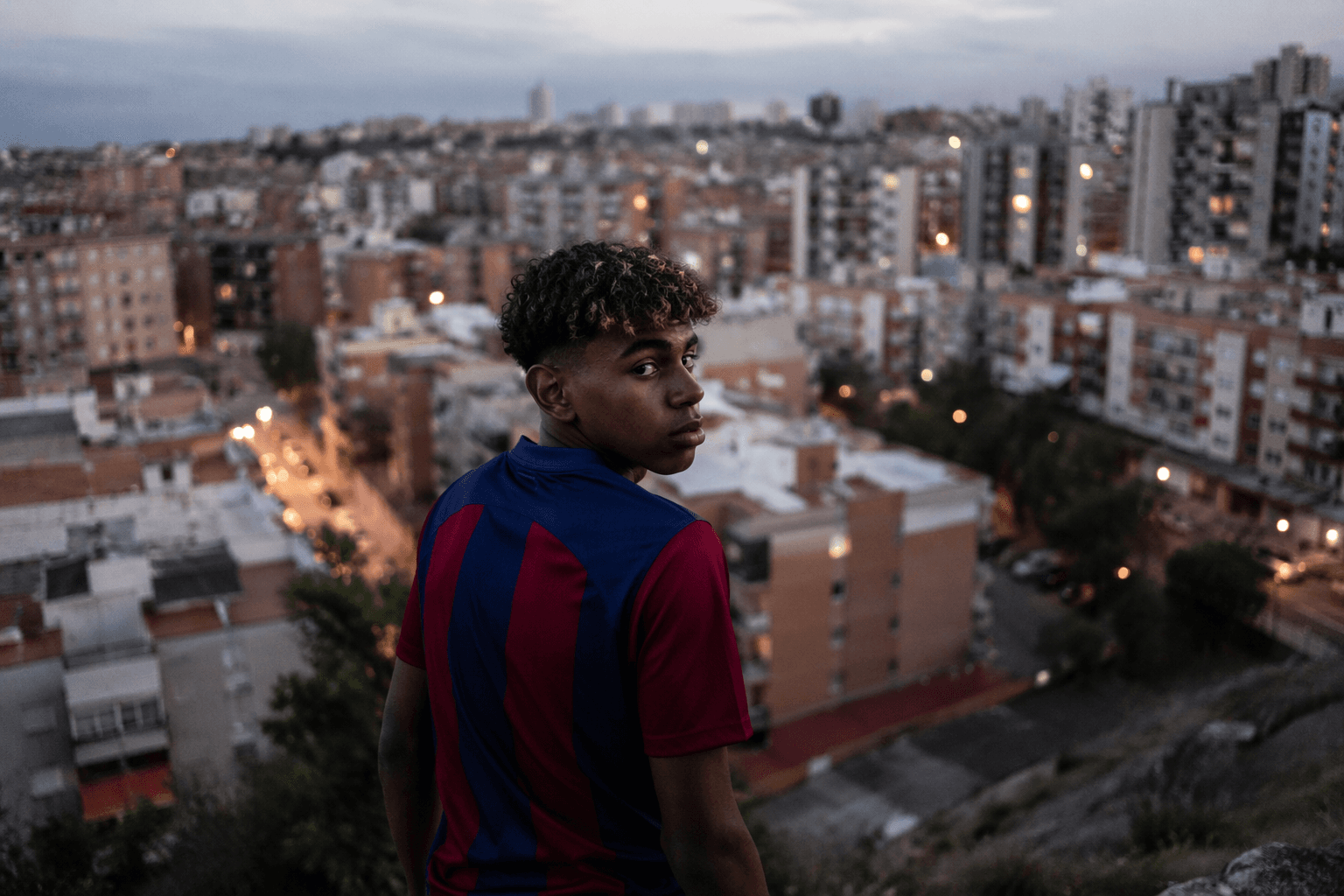
That extension, reached in May 2025, also reflects how top clubs now manage elite youth talent. The modern game moves quickly, and the value of a player like Yamal is not only in performance but in continuity, brand power, and the ability to anchor a competitive project for years. Locking him down early is part sporting strategy, part financial protection, and part recognition that a generational talent can reshape a club’s future.
The records that pushed him onto the world stage
For most players, a breakout season changes everything. For Yamal, one breakthrough kept arriving after another. On July 9, 2024, in Munich, Germany, he scored against France to become the youngest scorer in UEFA European Championship history at 16 years and 362 days, a mark also recognized by Guinness World Records. The goal was not just statistically notable. It was a defining moment in a tournament where he became one of the central figures in Spain’s run to the title.
Spain won Euro 2024, and Yamal was named Young Player of the Tournament just one day after celebrating his 17th birthday. Under Luis de la Fuente, Spain’s attack featured Yamal alongside players such as Dani Olmo and Nico Williams, and the teenager’s impact made him one of the key figures in the title run. UEFA’s recognition of him as a standout of the competition confirmed what the numbers had already made clear: he was no longer simply a promising prospect, but a decisive international player.
That sequence matters because it shows how quickly elite performance can reprice a career. A teenager who was still finishing adolescence had already moved from club breakthrough to continental record holder to title winner. In football’s attention economy, that kind of acceleration can be destabilizing, but Yamal’s support structure has helped keep the story from becoming only about spectacle.
Why Rocafonda still matters in global fame
What makes Yamal distinctive is that his celebrity has not erased his local identity. His 304 celebration transformed Rocafonda from a neighborhood many outside Mataró had never heard of into a point of reference in Spanish football culture. EL PAÍS English noted how he empowered the working-class community where he grew up by popularizing part of its zip code, and that effect is easy to see: the neighborhood is now part of the language used to explain him.
This is where the machinery behind meteoric fame becomes visible. Yamal’s family grounding, his academy upbringing, and Barcelona’s development model all act as stabilizers against the pressure that comes with being a teenage star. Instead of being cut loose from where he came from, he has carried Rocafonda into the center of the sport, making identity part of resilience rather than a casualty of success.
Barcelona emphasized that point on July 13, 2025, when it said Yamal had reached adulthood after already setting a host of records. The message was bigger than a birthday note. It framed him as a player who had crossed into adulthood with his history intact, already responsible for both his own future and the hopes attached to Spain’s new generation.
What his rise says about modern football
Yamal’s ascent shows how football now creates global stars younger than ever, but it also shows what keeps those stars sustainable. Talent alone gets a player noticed; family identity, neighborhood belonging, and an elite developmental system help him endure the noise. In Yamal’s case, the balance has been unusually successful: the records arrived fast, but the grounding has remained visible.
That balance is why his rise resonates beyond Barcelona. He represents a club’s academy pipeline at its most effective, a national team refresh under Luis de la Fuente, and a broader European reality in which multicultural roots are increasingly central to the game’s future. If his early career is any indication, the most important part of Lamine Yamal’s story is not how quickly he became famous, but how clearly he has stayed himself while becoming so.
This article was produced by Prism’s automated news system from verified source data, official records, and press releases, then run through automated quality and moderation checks before publishing. The system is built and supervised by the people who set the standards it runs under. Read our full AI policy.
Know something we missed? Have a correction or additional information?
Submit a Tip