UFC fight on White House South Lawn marks Trump’s 80th birthday
Thunderstorms hovered over a $60 million UFC card on the White House South Lawn as Trump turned 80, testing the line between spectacle and stewardship.
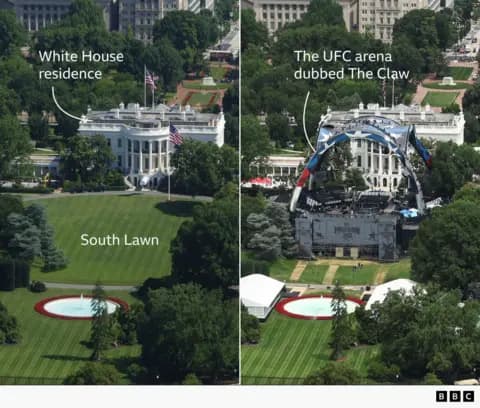
Thunderstorms hung over the White House South Lawn as UFC Freedom 250 prepared to stage seven fights beneath a temporary octagon and the towering structure nicknamed the Claw. The card, timed to Donald Trump’s 80th birthday and Flag Day, turned the presidency’s front yard into a live test of security, weather contingency and the normalization of spectacle on federal ground.
The main card was set for 8 p.m. EDT, with the lightweight title bout between Ilia Topuria and Justin Gaethje headlining a show that the UFC framed as a once-in-a-generation patriotic event. Organizers said nearly a year of planning went into the production, which drew up to 900 workers and thousands of ticketed guests to a site that has never before hosted a professional UFC cage fight.
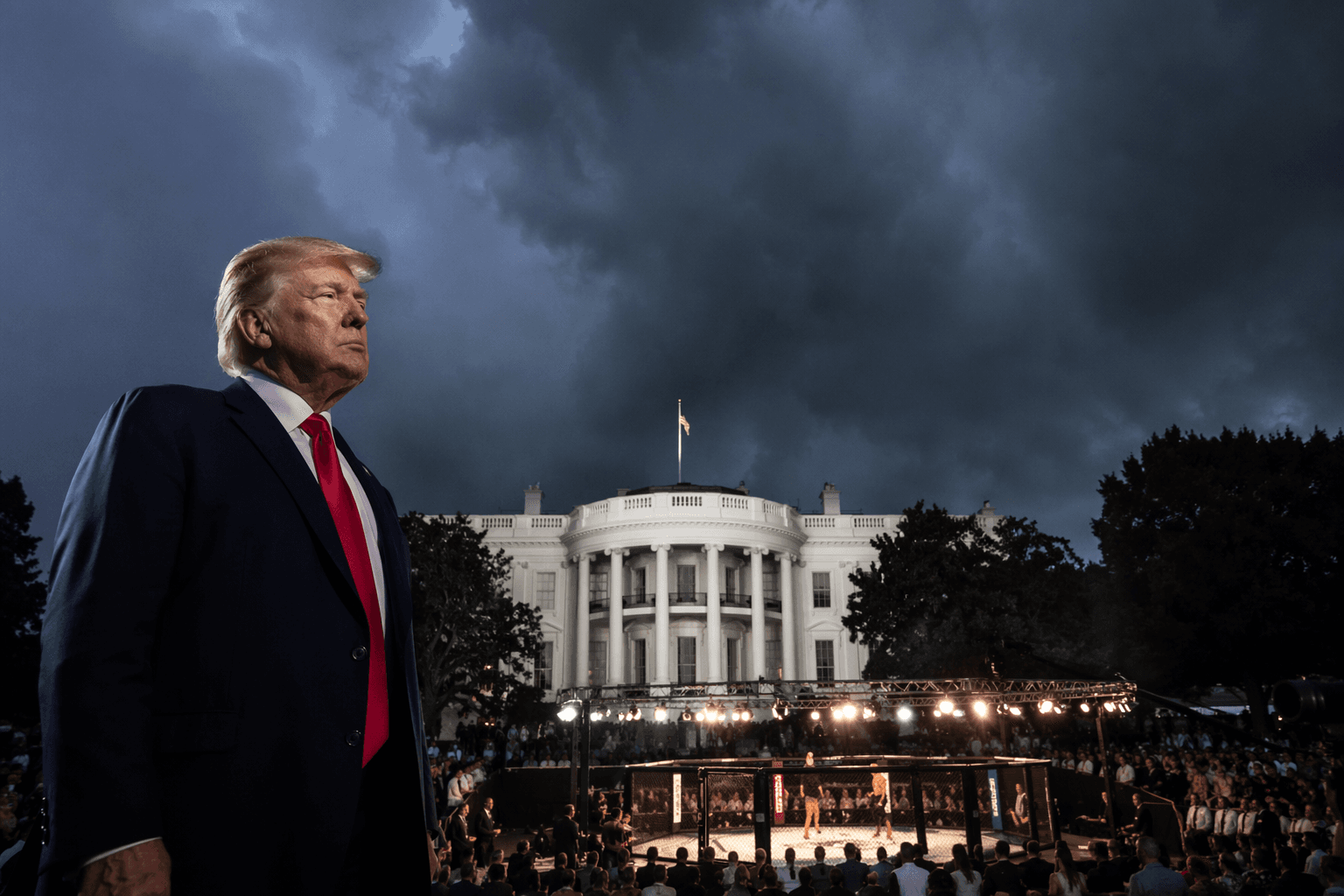
The setup on the South Lawn was closer to a television special than a traditional sporting venue. It centered on a full octagon, lights, speakers, wiring and multiple screens, all built around the Claw, a towering frame that gave the event the look of a temporary arena dropped onto the White House grounds. The UFC said the structure would be dismantled immediately after the fights, despite Trump previously suggesting it could remain up.
The scale of the production matched its political weight. The event was estimated to cost more than $60 million, and presidential historians described it as unprecedented on White House grounds. The South Lawn has long hosted Easter Egg Rolls, congressional picnics, youth sports and low-contact recreation, but never a combat card with this many spectators and this much infrastructure attached to it.
That transformation drew a legal challenge that failed two days before the event. The Public Integrity Project sued on behalf of Susan Douglas and Air Force veteran Paul Romano, arguing that the Trump administration and federal land managers had violated park rules and environmental requirements by allowing a private sporting event on federal parkland without congressional approval or environmental review. U.S. District Judge Amit P. Mehta rejected the bid to block the fights, saying the plaintiffs lacked standing and that the harm was temporary after nearly a year of planning and about $60 million already spent. The White House called the lawsuit “untimely and frivolous,” while the plaintiffs’ lawyers said the event misused sacred national monuments for private gain.
Weather then added another layer of uncertainty to an already extraordinary stage set. Forecasts for Washington warned of thunderstorms during the planned fight window, with the highest risk near the 8 p.m. start time for the main card. Coverage focused on lightning and wind as much as rain, with severe weather capable of bringing heavy downpours, gusts, hail and isolated tornado potential. The first fights were delayed by about an hour before the card got underway, a reminder that even a White House spectacle still answers to the sky.
This article was produced by Prism’s automated news system from verified source data, official records, and press releases, then run through automated quality and moderation checks before publishing. The system is built and supervised by the people who set the standards it runs under. Read our full AI policy.
Know something we missed? Have a correction or additional information?
Submit a Tip