Latino/a Adults Face Unique Barriers in Diabetes Prevention Programs, Study Finds
Hispanic adults die from diabetes 17% more often than average; a Colorado study pinpoints why prevention programs fall short for Spanish-speaking participants.
The National Diabetes Prevention Program has enrolled more than 600,000 Americans since its 2012 launch, but Spanish-speaking Latino/a adults remain less likely than non-Latino White participants to meet its goals. A qualitative study published in JAMA Network Open, led by Fatima A. Tensun, Lilia Cervantes, and Karen A. Uvina, offers the clearest picture yet of why — and what program administrators must change.
The research team conducted semi-structured phone interviews with 22 Spanish-speaking Latino/a adults, 17 women and 5 men, with a mean age of 44, who had participated in community-based NDPP sessions in Colorado. Interviews were completed between June 2022 and August 2023, audio recorded, transcribed, and analyzed using inductive thematic analysis. Five overarching themes emerged, spanning individual psychology, family dynamics, and program design.
The urgency behind that work is quantifiable. Diagnosed diabetes affects 11.7% of Hispanic adults in the United States, nearly double the 6.9% rate among non-Hispanic White adults, according to National Institute of Diabetes and Digestive and Kidney Diseases data covering 2019 to 2021. In 2022, Hispanic and Latino Americans died from diabetes 17% more often than the U.S. population overall, and in 2021 they were 81% more likely to develop kidney failure caused by diabetes. Nationally, over 40 million Americans, roughly 12% of the population, now live with diabetes, and more than 115 million adults are living with prediabetes, the at-risk condition the NDPP targets. The total estimated cost of diagnosed diabetes reached $412.9 billion in 2022, including $306.6 billion in direct medical costs and $106.3 billion in reduced productivity.
The NDPP rests on solid scientific footing. The landmark Diabetes Prevention Program clinical trial, conducted by the National Institute of Diabetes and Digestive and Kidney Diseases with 3,234 participants, 45% of them from minority groups at elevated risk, demonstrated that the lifestyle change intervention cut the risk of developing type 2 diabetes by 58%, and by 71% for adults 60 and older. Medicare began covering NDPP participation in 2018, and as of March 2022, the CDC recognizes 2,147 organizations to deliver the program across all 50 states. Yet of participants whose data have been evaluated, only 35.5% achieved the recommended 5% body weight loss target, averaging a 4.2% loss.
Tensun and her co-authors identified cultural self-perception as a concrete, addressable barrier. Participants described frustration, self-critical beliefs, and internalized cultural biases that made behavioral change harder to sustain. Traditional gender role expectations compounded those pressures, particularly for women, who constituted 77% of the study sample.
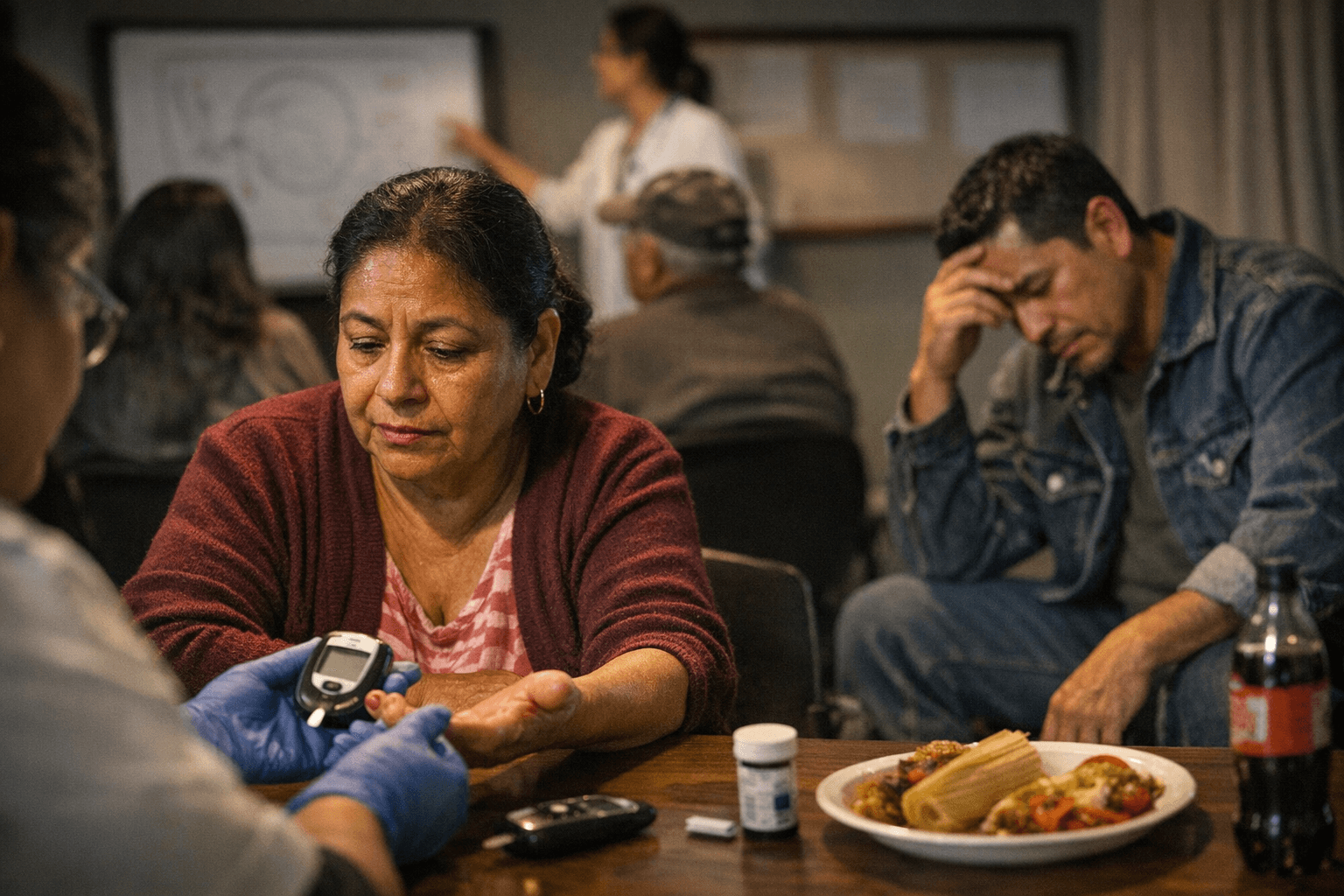
Family structure surfaced as the study's most operationally complex theme. Relatives could actively reinforce the program: joining exercise routines, absorbing dietary education alongside participants, and providing daily accountability. But entrenched family eating patterns and cultural food norms frequently worked against program recommendations, creating friction that individual willpower could not reliably overcome. Clinics and health departments designing NDPP cohorts for Latino/a communities need to treat family members as program participants, not bystanders.
On the infrastructure side, participants consistently named three elements as decisive for motivation and retention: Spanish-language materials, bilingual coaching, and community health workers, known in many Latino communities as promotoras/es de salud. Peer support within program cohorts produced parallel effects, giving participants a sense of shared cultural context that standardized curricula alone could not replicate. Program designers who treat these as optional enhancements rather than structural requirements are misreading the evidence.
The authors conclude that confronting cultural bias and gender role expectations while expanding family engagement and community health worker integration could materially improve outcomes for Latino/a participants. The NDPP targets more than 88 million Americans estimated to be at risk for type 2 diabetes. At that scale, culturally concordant design is not a courtesy; it is a public health necessity.
This article was produced by Prism’s automated news system from verified source data, official records, and press releases, then run through automated quality and moderation checks before publishing. The system is built and supervised by the people who set the standards it runs under. Read our full AI policy.
Did this article answer your question?