Lawler condemns antisemitic attack as House pushes new protections
A Capitol Hill confrontation pushed Mike Lawler’s antisemitism fight from rhetoric to policy. But the numbers still point the other way: antisemitic incidents and hate crimes remain at record highs.
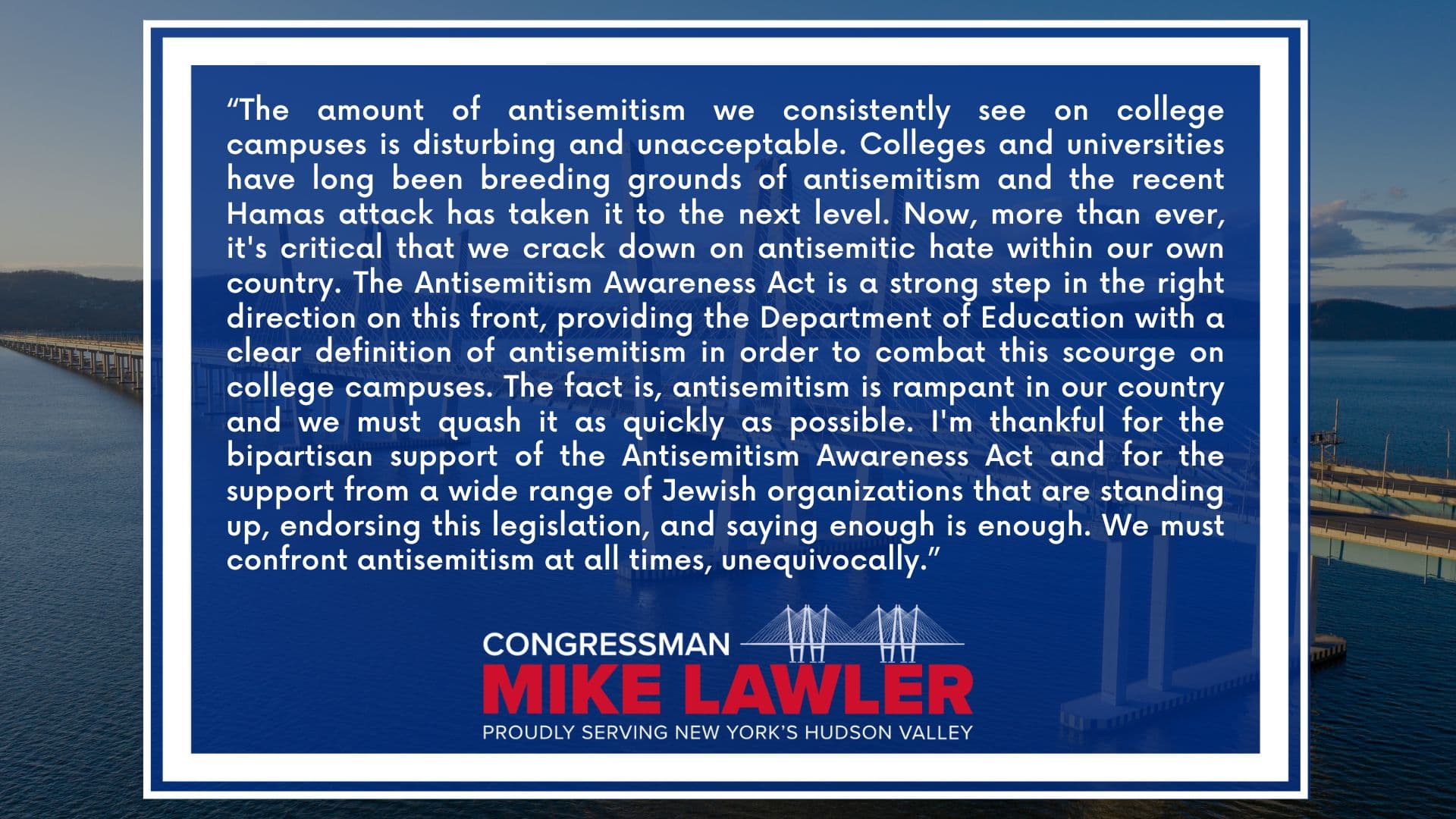
Rep. Mike Lawler used the insult aimed at him on Capitol Hill to argue that Congress has to do more than issue statements.
“The idea that people feel it’s okay to engage in that type of conduct is shameful,” Lawler said on Face the Nation with Margaret Brennan after William Paul, the son of Sen. Rand Paul, allegedly confronted him at the Tune Inn in Washington, D.C., and hurled antisemitic and anti-gay remarks in front of a NOTUS reporter. Paul later apologized on X, said he had too much to drink, and said he was seeking help for a drinking problem.
The episode gave fresh urgency to an effort Lawler has already been pressing with Rep. Josh Gottheimer, his fellow member of the House Problem Solvers Caucus. In February 2025, the two lawmakers reintroduced the Antisemitism Awareness Act, which would require the Department of Education to use the IHRA Working Definition of Antisemitism and its examples when enforcing federal anti-discrimination laws. Lawler and Gottheimer also introduced a bipartisan House resolution in April 2026 condemning antisemitic rhetoric from prominent online personalities and urging stronger action by social media platforms and public leaders.
The policy push comes against a grim backdrop. The Anti-Defamation League recorded 9,354 antisemitic incidents in the United States in 2024, the highest total in the 46-year history of its audit and up 5% from 2023. The Federal Bureau of Investigation later reported 1,938 anti-Jewish hate-crime incidents in 2024, the highest level the bureau has recorded since it began collecting such data in 1991.
Those numbers underscore the gap between bipartisan condemnation and measurable enforcement. Lawler and Gottheimer have built a cross-party message around antisemitism, but the record they are confronting shows a steady rise in incidents, even as universities, public institutions and platforms face renewed pressure to act. The Antisemitism Awareness Act is designed to give the Education Department a clearer standard when it weighs complaints under federal civil rights law, a step supporters say is necessary if campus protections are to mean anything in practice.
Lawler’s confrontation at the restaurant, and Paul’s attempt to walk it back, turned that debate into something more immediate. Congress can condemn antisemitism in broad terms, but the test now is whether those words translate into enforcement, reporting and protections that actually slow the rise in abuse.
This article was produced by Prism’s automated news system from verified source data, official records, and press releases, then run through automated quality and moderation checks before publishing. The system is built and supervised by the people who set the standards it runs under. Read our full AI policy.
Did this article answer your question?