Leaked Tape Allegedly Shows Hungary Coordinating With Russia on EU Sanctions
Audio allegedly captures Hungarian FM Péter Szijjártó telling Lavrov "We will do our best" to remove someone from EU sanctions, days before Hungary's April election.
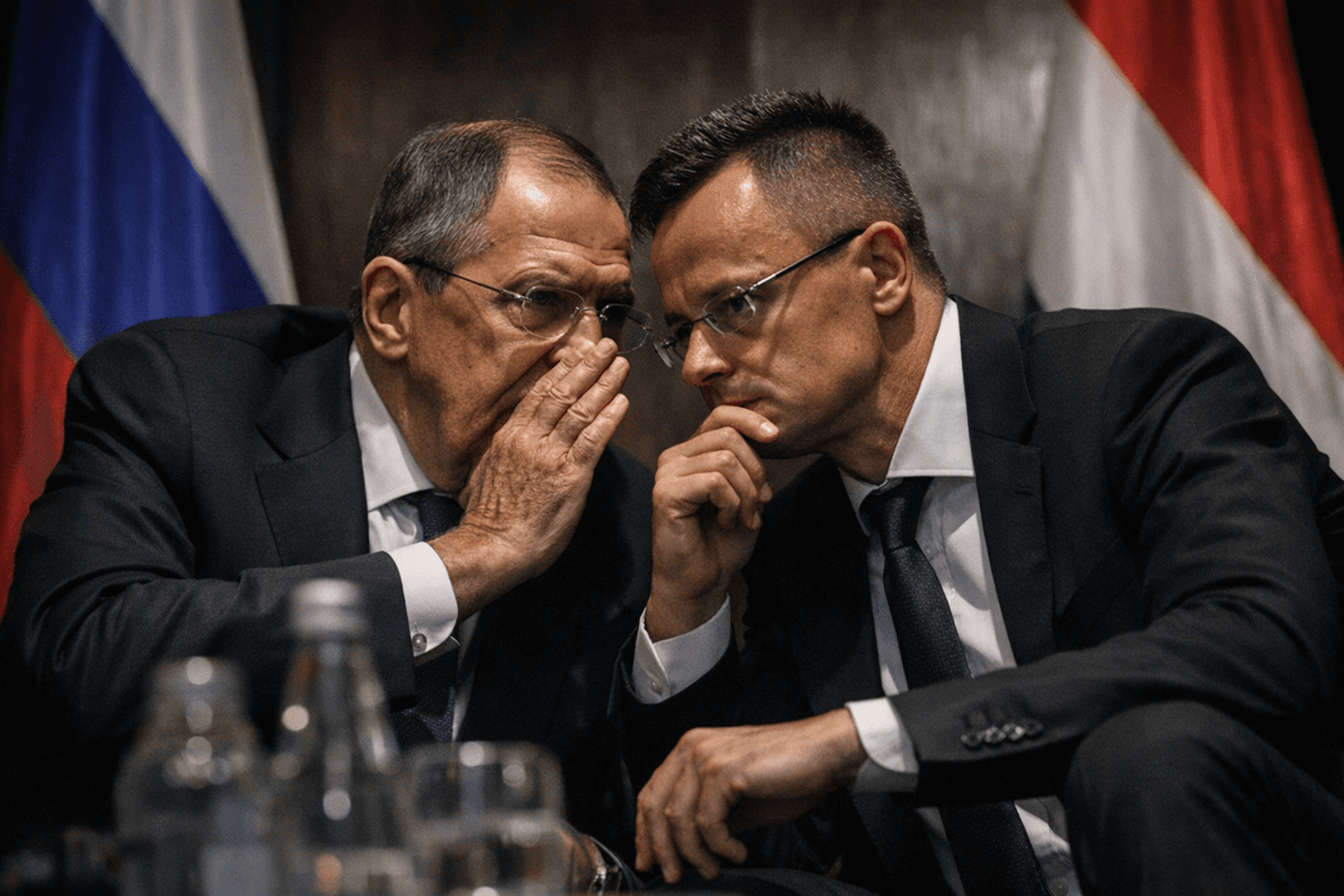
We will do our best in order to get her off." Those words, attributed to Hungarian Foreign Minister Péter Szijjártó in a leaked audio clip published March 31, 2026, allegedly capture a conversation with Russian Foreign Minister Sergey Lavrov about removing an unnamed individual from an EU sanctions list. The recording, reportedly from an August 2024 phone call, landed in European politics at the worst possible moment for Prime Minister Viktor Orbán: twelve days before Hungarians go to the polls.
The audio was published by an investigative consortium that included VSquare, based in Warsaw, and The Insider, whose journalists claimed to have verified the recording with outside experts. Reuters said it was unable to independently verify the tape's authenticity but quoted from the recording and from subsequent Hungarian government responses. Politico similarly acknowledged the limits of authentication while noting that Szijjártó had publicly admitted to contact with Russian officials around EU meetings.
The single English-language excerpt made public is notable for its specificity. Szijjártó, according to the recording, appears to offer direct assistance to the Russian side in shaping the composition of an EU sanctions list, a move that, if confirmed, would constitute a significant breach of EU solidarity on one of the bloc's most consequential policy instruments.
Szijjártó did not deny making the call. His government instead framed publication of the recording as evidence of illegal interception, with Szijjártó calling the exposure "a huge scandal" and claiming foreign secret services had tapped his communications. Orbán ordered an investigation into the alleged wiretapping, a response that shifted public attention from the content of the recording to the circumstances of its disclosure.
EU officials expressed "great concern" and sought clarification from Budapest. Several political opponents and European commentators argued the tape confirmed long-standing suspicions that Hungarian officials maintained an unusually close working relationship with Moscow, particularly on sanctions enforcement. Hungary has repeatedly blocked or delayed EU sanctions measures against Russia since the 2022 invasion of Ukraine, drawing sustained criticism from partner governments.
The April 12 election pits Orbán's Fidesz party against a unified opposition bloc, and the leak arrives as voters weigh whether his government's foreign policy posture, one that has consistently prioritized Budapest's bilateral interests with Moscow over collective EU positions, should continue. Orbán has governed Hungary since 2010 and has cultivated closer ties with the Kremlin than any other EU or NATO head of government.
If the recording is ultimately authenticated, it would raise formal legal and diplomatic questions about whether a member state shared information other EU governments consider sensitive, and about the integrity of sanctions deliberations at the bloc level. An 18-month-old phone call, surfaced twelve days before a pivotal vote, has the potential to reshape both.
This article was produced by Prism’s automated news system from verified source data, official records, and press releases, then run through automated quality and moderation checks before publishing. The system is built and supervised by the people who set the standards it runs under. Read our full AI policy.
Did this article answer your question?


