Lebanon says first stage of Hezbollah disarmament near completion
Lebanon’s government announced it was days away from finishing the first phase of a ceasefire mandated disarmament of Hezbollah fighters south of the Litani River, a cornerstone of a U.S. backed November 2024 ceasefire. The development could reshape military postures along the Israeli border, but verification questions, political divisions and a looming Dec. 31 year end deadline leave the outcome uncertain.
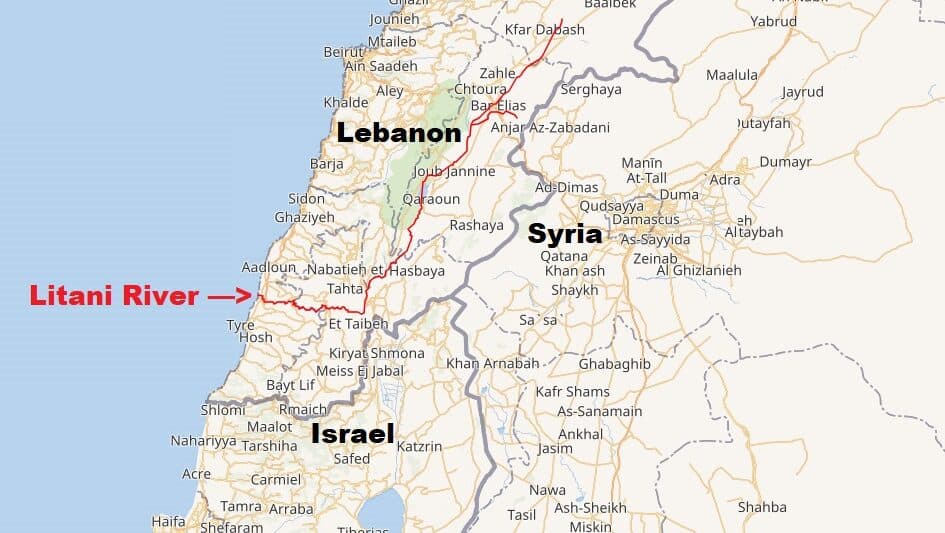
Lebanon’s prime minister said the government was on the verge of completing the first phase of a weapons consolidation plan aimed at removing Hezbollah arms from territory south of the Litani River. Prime Minister Nawaf Salam told journalists on Saturday and issued a statement saying “the first phase of the weapons consolidation plan related to the area south of the Litani River is only days away from completion.”
The operation is a central condition of the U.S. backed ceasefire that ended more than a year of fighting between Israel and Hezbollah in November 2024. Lebanese authorities were tasked in August 2025 with drawing up a plan for a state monopoly on weapons, and officials have said the multi stage effort must be carried out before the Dec. 31, 2025 deadline set under the ceasefire framework.
Lebanese Armed Forces units have led ground operations and logistical efforts, assisted by the United Nations Interim Force in Lebanon which helped collect a substantial quantity of weapons in the south. The army has told reporters it detonated numerous arms caches and said it had detonated so many caches that it had run out of explosives, a claim observers say is difficult to independently verify.
Government officials describe a phased expansion of the disarmament. The second phase is to move north of the Litani River up to the Awali River and later to concentrate efforts on Beirut and its suburbs. The army told authorities in April that additional deployments had strengthened operations in the south and that the handover of most southern outposts had already been achieved during March and April 2025, progress officials cite as groundwork for the current phase.
Implementation faces political and practical limits. Lebanon’s information minister Paul Morcos said the army will start implementing the terms of the deal but “may have limited capabilities.” A U.S. official identified only as Barrack, speaking during a recent visit to Beirut, described the army’s proposal as part of an 11 step process and said it focused on persuading Hezbollah to give up arms, “not necessarily militarily.”

Those words underline the diplomatic and operational tightrope in Beirut. Hezbollah maintains it will not disarm until Israeli forces leave and cross border strikes cease, a stance that clashes with Israeli officials who have tied their force posture to the group’s disarmament. Israeli skepticism has complicated regional confidence in Lebanon’s pledges and has helped keep pressure on international mediators to secure credible verification mechanisms.
Legal and sovereignty questions are also in play. For Beirut, reasserting a state monopoly on arms is presented as an essential step to solidify sovereignty and restore normalcy in border communities. For Israel, the priority remains the neutralization of Hezbollah’s military capacity wherever it exists. For Washington and United Nations actors, the challenge is to translate commitments into tangible, verifiable steps without reigniting the conflict.
Lebanon’s government said it will proceed to the north of the Litani once the south is secured. With days remaining before the year end deadline, the political calculus in Beirut and the willingness of Hezbollah to accept terms will determine whether the disarmament remains a declaratory milestone or becomes a durable change on the ground. Independent verification of the scope and completeness of weapons removal remains contested, leaving neighbors and international partners watching closely.
This article was produced by Prism’s automated news system from verified source data, official records, and press releases, then run through automated quality and moderation checks before publishing. The system is built and supervised by the people who set the standards it runs under. Read our full AI policy.
Know something we missed? Have a correction or additional information?
Submit a Tip

