Russian drone attacks on Kherson buses kill workers, wound passengers
Kherson’s buses have become moving targets, with three transport workers killed and passengers wounded as drone strikes cut residents off from work, markets and hospitals.

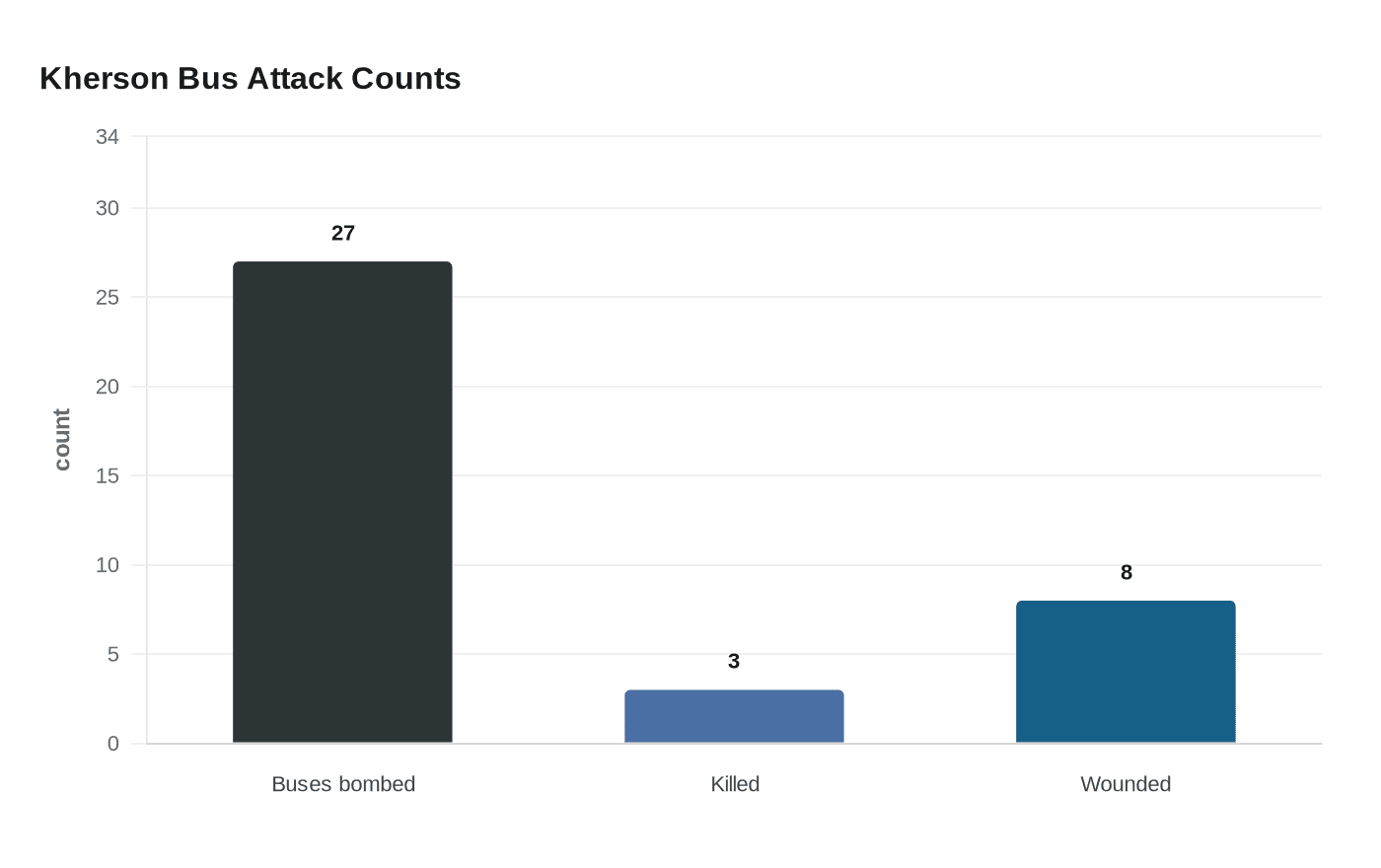
In Kherson, the daily act of catching a bus has become a risk of blast wounds, shattered glass and death. Russian drones have increasingly struck public transport since the final months of 2024, and local authorities say 27 Kherson buses have been bombed this year alone, killing three transport workers and wounding eight more.
The attacks have hit the city’s most ordinary routes, the ones that carry nurses, market vendors, pensioners and schoolchildren across a city still living under artillery fire. On March 12, a yellow minibus near Dniprovskyi market was struck by a Russian Molniya drone while more than 20 passengers were on board. Survivors described torn seats and floors, shattered exits, severe leg injuries and people climbing out through windows after the blast.
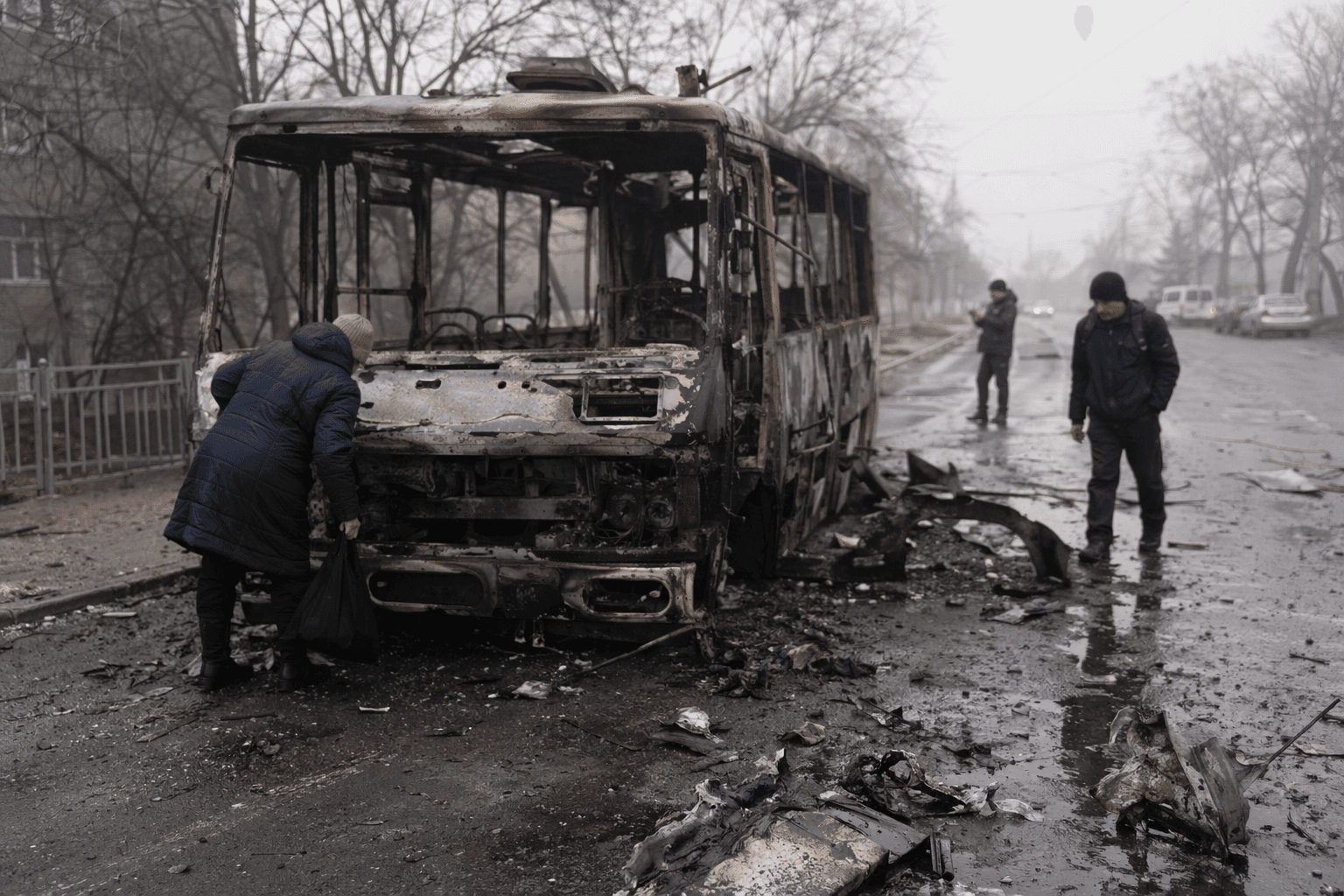
The danger has not let up. On May 2, a drone attack on a bus killed two people and injured seven more, with regional officials saying most of the casualties were public utilities workers. On May 13, another Russian drone hit a route bus in central Kherson, injuring six passengers and the driver, who suffered a concussion. Interfax-Ukraine reported that the strike came around 11:15 in the central part of the city.
Open-source data analyzed by Ukrainian Archive shows the scale of the campaign extends beyond one city. At least 31 attacks on public transport vehicles and stops were identified across Ukraine between Dec. 1, 2024, and Dec. 31, 2025, killing 37 people and injuring 131. In Kherson Oblast alone, the strikes accounted for 18 deaths and 67 injuries, and Ukrainian Archive said all 22 attacks it recorded in Kherson took place in the red zone along the western side of the Dnipro River.
Kherson’s response has been improvised but urgent. Khersoncomuntransservice is testing a bus fitted with a metal anti-drone frame, and the city plans to buy armored film for windows to reduce shrapnel and blast injuries. Crews have been issued helmets, bulletproof vests and drone detectors, though officials say fiber-optic drones cannot be detected by those systems. The Molniya drone that hit the March 12 minibus was reportedly tethered to a fiber-optic cable, making it harder for a detector to spot.
The attacks are also reshaping the city’s geography of access. Public transport no longer runs to Ostriv microdistrict, Antonivka and several coastal areas, leaving residents with fewer ways to reach jobs, pharmacies, markets and hospitals. About 65,000 people are still thought to live in Kherson, down from roughly 300,000 before the war, and for those who remain, a bus ride is no longer routine civic life. It is a test of whether an urban system can keep serving civilians while it is being hunted.
This article was produced by Prism’s automated news system from verified source data, official records, and press releases, then run through automated quality and moderation checks before publishing. The system is built and supervised by the people who set the standards it runs under. Read our full AI policy.
Know something we missed? Have a correction or additional information?
Submit a Tip