Leeds United Supporter Dies After Medical Emergency at Elland Road Before Manchester United Game
A Leeds United supporter died after suffering a medical emergency inside Elland Road shortly before kick-off of the Premier League fixture against Manchester United on January 4, 2026. The club confirmed the death and expressed condolences after the match, raising urgent questions about stadium medical response, fan welfare and how modern football balances competition with communal grief.
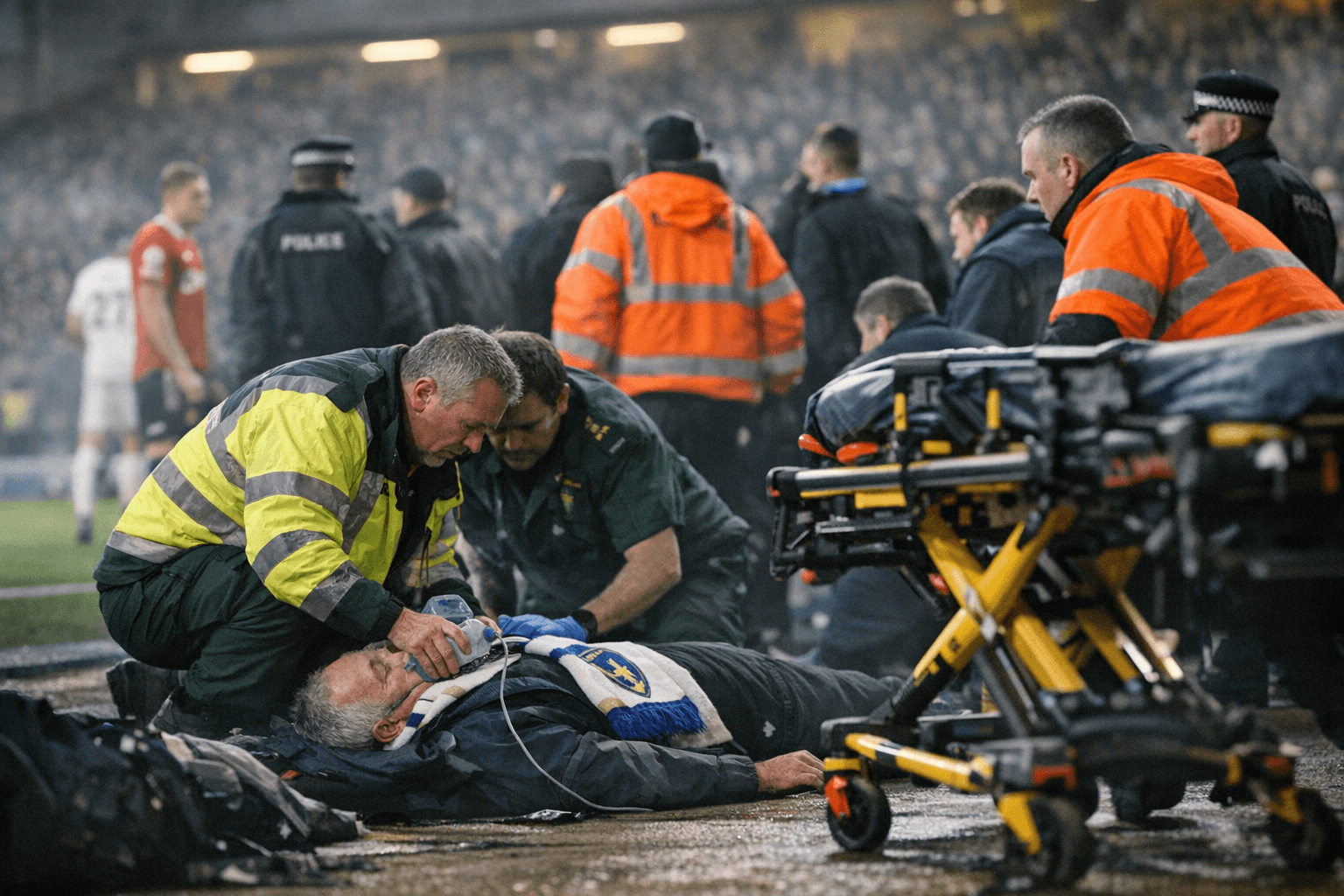
A Leeds United supporter died after suffering a medical emergency inside Elland Road shortly before the 12:30pm kick-off of the Premier League fixture against Manchester United, the club confirmed on January 4. Leeds United issued an official statement after the match saying, “Leeds United are devastated to confirm that a supporter sadly passed away ahead of our Premier League fixture with Manchester United at Elland Road, following a medical emergency in the ground before kick-off.” The statement added, “The thoughts of everyone at Leeds United are with the family and friends of the supporter at this exceptionally difficult time.”
The match went ahead and finished 1-1, with Brenden Aaronson giving Leeds the lead just after the hour mark and Matheus Cunha equalising three minutes later. The club released its statement about three hours after the final whistle. The supporter has not been named and no further details about cause of death, age or emergency response times have been disclosed publicly.
On the field the contest provided little indication of the chilling event that had occurred inside the ground before players walked out. Aaronson’s composed low finish and Cunha’s swift reply underlined a competitive match that adhered to the league’s timetable and broadcast commitments. That continuity, while understandable from a sporting and commercial perspective, highlights the particular tensions of elite football today: fixtures must satisfy broadcasters, sponsors and fixture congestion, yet the stadium remains at its core a place of congregation where sudden tragedy can rupture the ritual of the matchday.
This incident raises acute questions about spectator safety and transparency. Stadium medical provision has long been a focus of policy after high-profile in-game emergencies in recent years. Modern grounds are required to provide immediate resuscitation equipment and trained personnel, and clubs routinely review procedures after incidents. Yet the absence of publicly available detail - on response times, whether emergency services attended, or the medical cause - fuels calls for clearer post-incident reporting and independent reviews to reassure supporters and families.
There are broader cultural implications as well. Football grounds are civic spaces where shared identity and emotion are concentrated. How clubs respond publicly and privately to bereavement speaks to their role in communities. A succinct statement of condolence is essential, but fans and family often expect follow-through in the form of pastoral support, memorial protocols and transparent engagement with welfare authorities. The timing of the club’s statement, several hours after the match, may reflect the need to inform next of kin and manage communications, yet it also illustrates the difficult balance between administrative prudence and the urgency of communal mourning.
From a business perspective, the match proceeding as scheduled underscores the commercial realities that shape decision-making. Broadcast windows and fixture lists leave little room for ad hoc postponements, which can compound pressure on clubs to maintain schedules even in the face of tragedy. That dynamic invites industry-wide reflection on contingency planning for medical emergencies and whether existing frameworks sufficiently prioritize human welfare.
As the club and authorities determine next steps, the immediate priority remains support for the bereaved and a fuller account of what occurred inside Elland Road. The event is a sober reminder that, amid the spectacle and commerce of modern football, the safety and dignity of those who fill the stands must always be paramount.
This article was produced by Prism’s automated news system from verified source data, official records, and press releases, then run through automated quality and moderation checks before publishing. The system is built and supervised by the people who set the standards it runs under. Read our full AI policy.
Did this article answer your question?
.jpg&w=1920&q=75)