Leeper v. Shipt: California case threatens PAGA claims for Target gig workers
The California Supreme Court, in docket S289305, will decide whether arbitration clauses can bar representative-only PAGA suits, a ruling that could strip enforcement tools from Shipt and Target gig workers.
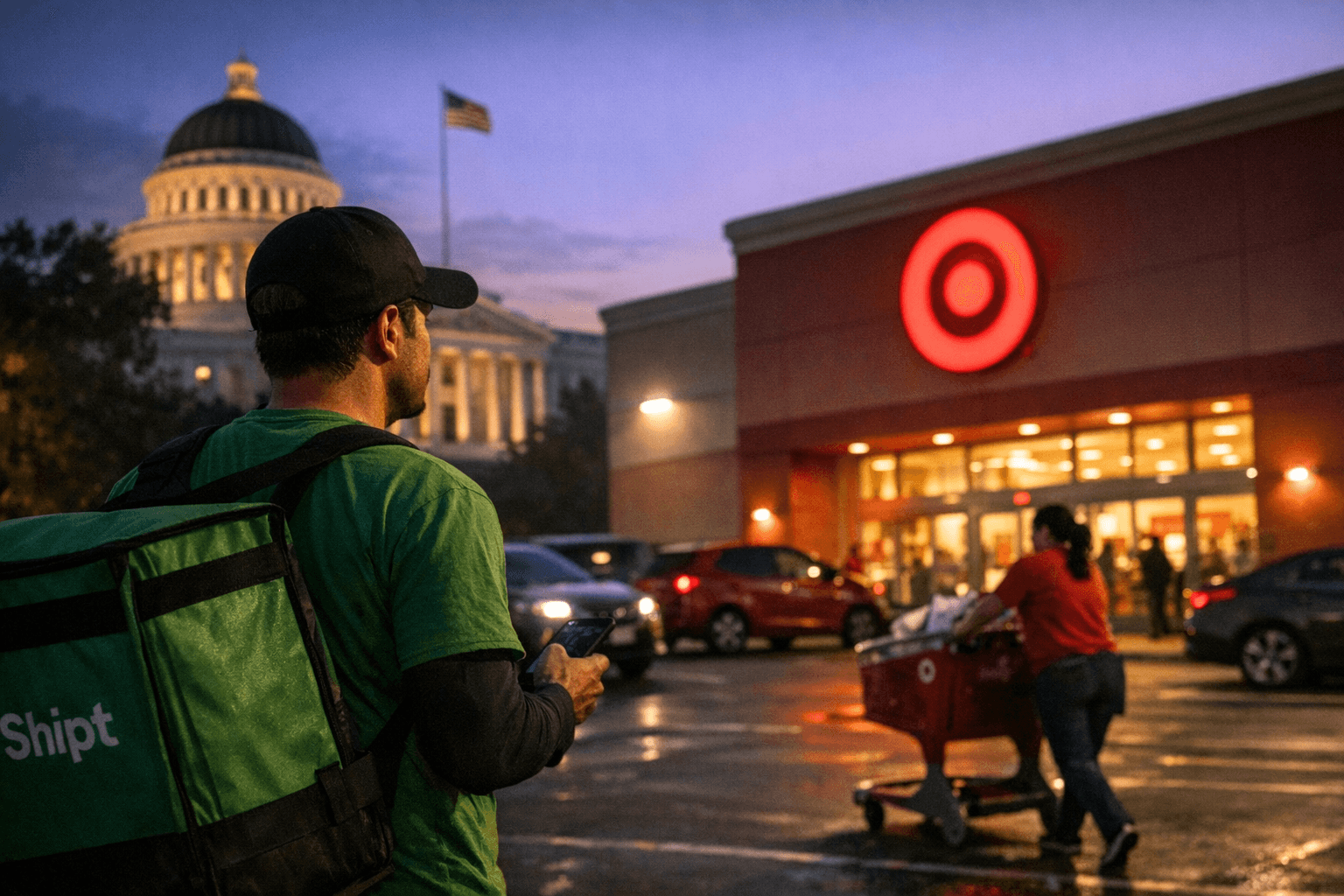
The California Supreme Court has agreed to resolve a high-stakes dispute in Leeper v. Shipt, Inc., S289305 that asks whether employers can use arbitration agreements to force individual arbitration and thereby block representative Private Attorneys General Act enforcement. The question reached the court after appellants moved on May 14, 2024 to compel arbitration of the individual portion of Christina Leeper’s PAGA action and to have arbitrability questions sent to an arbitrator, and after a trial court denied that motion, the denial quoted in the record as “[the] action [was] solely a [...]” in the truncated order reported on the litigation blog.
Leeper’s filed complaint frames her case as a purely representative PAGA claim: she alleged she “[brought] this PAGA action on a representative, non-individual basis” and sued “in [her] representative capacity as an aggrieved employee on behalf of the [s]tate and all similarly aggrieved individuals.” The complaint seeks “non-individual civil penalties” and “non-individual injunctive and declaratory [...] penalties” and asserts, “Because [Leeper] alleges only non-individual PAGA claims on a representative basis, Shipt cannot compel them to arbitrat[ion].”
The procedural posture that drew the Supreme Court’s attention was the Court of Appeal’s ruling that every PAGA action necessarily includes both an individual and representative component even when a plaintiff pleads only representative claims, a rule that worker-advocate amici say undercuts PAGA’s purpose. Impact Fund, which filed an amicus brief on January 7, 2026 in support of Leeper and published an explanatory practitioner-blog post on March 2, 2026, summarized PAGA’s legislative purpose this way: PAGA “was intended to increase the number of enforcement actions and to generate financial penalties substantial enough to deter these often-profitable violations,” allowing an employee to bring claims on behalf of the state and coworkers.
Business and retail interests lined up on the other side with a coalition urging the Court to bar so-called “headless” PAGA suits. The U.S. Chamber of Commerce coordinated a coalition brief filed January 7, 2026, with outside counsel James R. Sigel, Byung-Kwan Park, Tritia M. Murata and Natalie E. Fox of Davis Wright Tremaine LLP. Retail and small-business amici in the excerpted brief include Retail Litigation Center, National Retail Federation, California Retailers Association, the Chamber of Commerce of the United States, California Chamber of Commerce and the National Federation of Independent Business. That brief argues plaintiffs cannot evade arbitration by abandoning individual claims and pursuing only representative relief, invoking the Latin formulation “rege quam pro se ipso in hac parte sequitur,” and pressing points such as: “3. Leeper’s argument that a ‘headless’ PAGA plaintiff hypothetically stands to benefit from the ‘deterrent effect’ of a judgment equates her so-called ‘benefit’ with that of the general public,” and “4. Leeper’s argument that a PAGA plaintiff in a ‘headless’ PAGA action could still recover PAGA penalties from a ‘common fund’ exposes ‘headless’ PAGA actions as a fallacy.”
The arbitration agreement at the center of the dispute further complicates matters for large retailers: Wagehourblog reports the clause applies to Shipt and its “affiliates or parents,” language that could bring Target within the scope of any enforceable arbitration obligation. Advocates for workers argue the Court of Appeal’s reading would let employers funnel representative enforcement into individual arbitrations and erode PAGA’s deterrent effect; business groups contend allowing representative-only suits would permit plaintiffs’ counsel to sidestep valid arbitration agreements.
With multiple amicus briefs filed January 7, 2026 and the California Supreme Court’s grant of review, the forthcoming decision in S289305 will determine whether representative-only PAGA claims survive arbitration clauses and delegation provisions, and in doing so will reshape litigation strategy and the practical reach of PAGA penalties for Shipt shoppers and Target-affiliated gig workers across California.
Know something we missed? Have a correction or additional information?
Submit a Tip

%3Amax_bytes(150000)%3Astrip_icc()%2F8-k.asp-final-08e181198e5a47aaafdb796be8ef4efa.png&w=1920&q=75)