Lenovo Reveals Self-Charging Keyboard and Mouse Concept at CES
At CES 2026 Lenovo unveiled a Self-Charging Kit Concept: a wireless keyboard and mouse that harvest energy from indoor lighting, with the company claiming recharging down to about 50 lux. Presented as a proof-of-concept with no ship date or pricing, the design signals renewed vendor interest in energy-harvesting peripherals and could reshape battery and design choices for wireless mechanical keyboards.
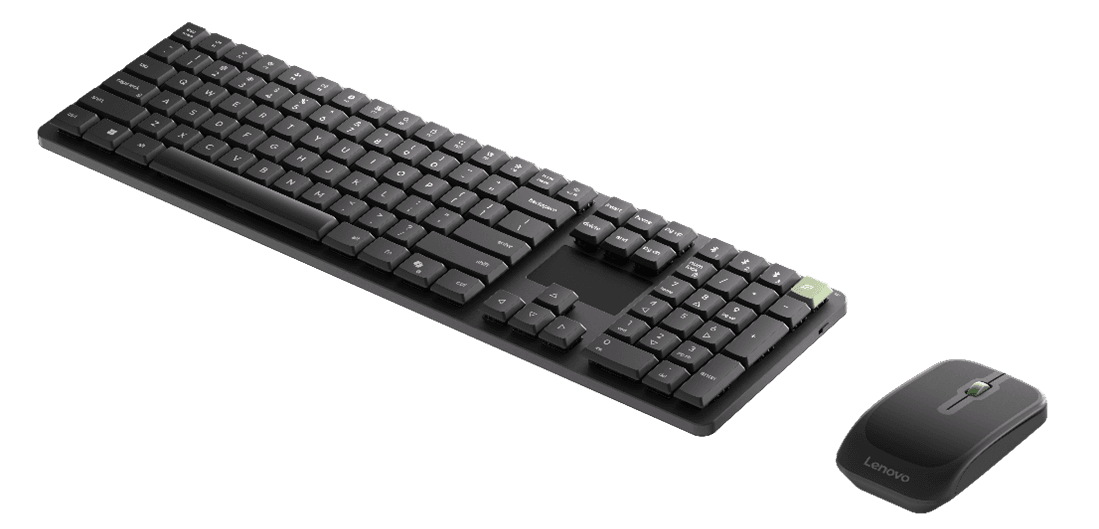
Lenovo introduced a wireless keyboard and mouse concept on January 8, 2026, that integrates thin light-harvesting layers into the keyboard deck and the mouse top so the peripherals recharge during normal use under typical indoor illumination. The manufacturer described the system as capable of harvesting usable energy at levels down to roughly 50 lux, a threshold Lenovo says is notably lower than older solar peripheral efforts.
The company framed the concept as a proof-of-concept rather than a consumer product. No shipping timetable or pricing details were announced. For desk setups the design aims to deliver a "no-charging" experience by continuously replenishing battery charge from ambient indoor light, minimizing or eliminating the need to plug devices in for top-ups during day-to-day use.
Practical implications for mechanical keyboard builders and buyers are immediate. A 50 lux threshold would allow meaningful energy capture in many home and office environments where older photovoltaic peripheral attempts required much brighter light. That could reduce reliance on large batteries, change expectations around rechargeable modules, and influence decisions on features that drive power draw, such as wireless protocols and RGB lighting.
Design tradeoffs are likely to shape any future commercial product. Integrating thin light-harvesting layers into a keyboard deck and mouse top raises questions about material choices and aesthetics, keycap opacity and profile, and how backlighting or opaque finishes might interfere with surface-mounted collectors. Firmware and power management strategies could also shift, with manufacturers prioritizing ultra-low standby draw, adaptive polling rates, and smarter battery-size planning to match harvested power budgets.
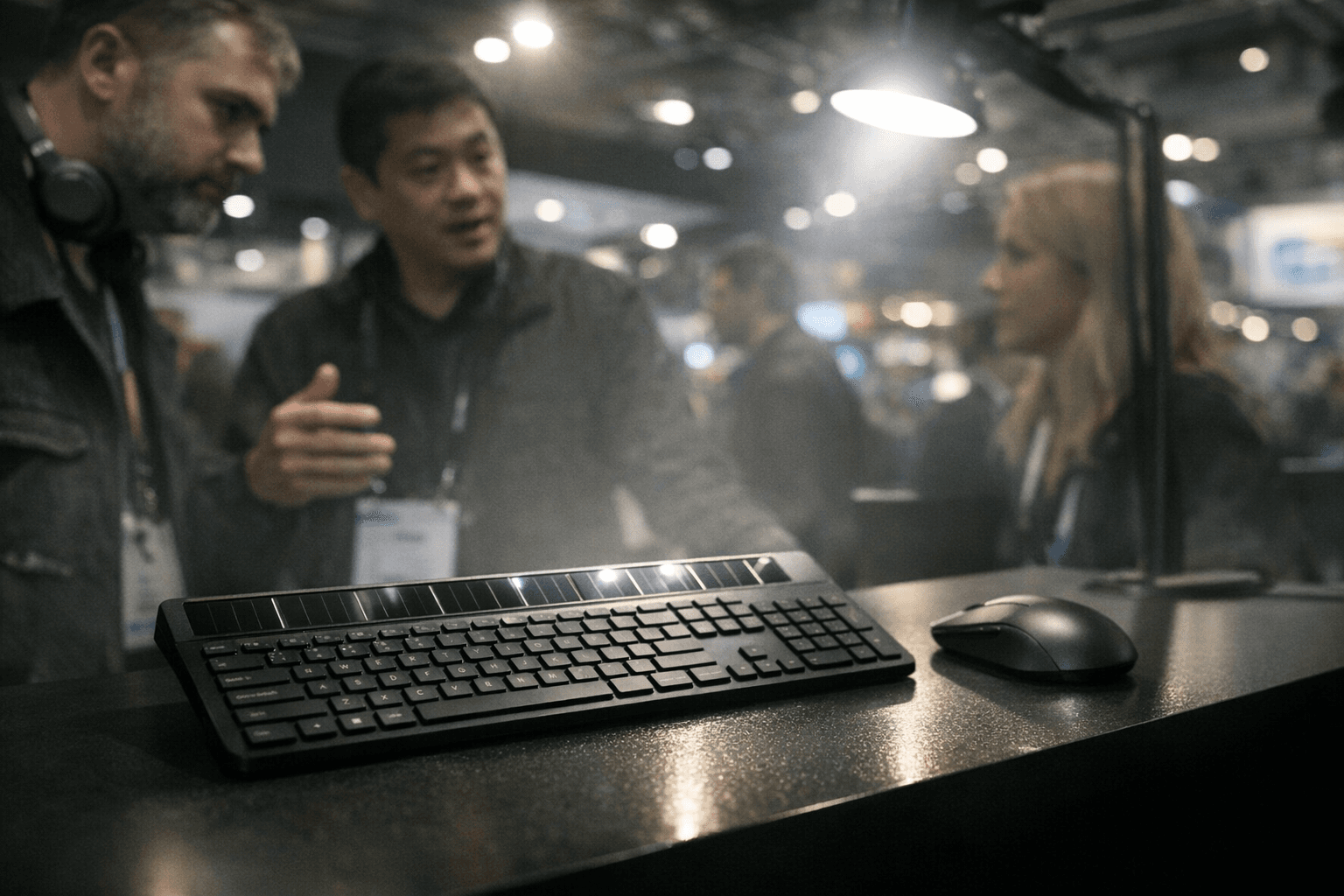
For modders and community designers, the concept is a signal to explore low-light energy harvesting experiments and to pay attention to layout and surface treatments that permit light capture. Desk setup and lamp placement will also matter: continuous top-down or ambient light exposure will influence harvesting performance even if the threshold is low. Independent testing of the claimed 50 lux performance will be essential to judge real-world usefulness.
Lenovo’s presentation keeps the idea in the conversation between vendors and the DIY community. Follow-up will depend on whether companies translate the concept into production hardware, demonstrate consistent recharge rates in varied environments, and balance aesthetic and functional demands. Expect energy-harvesting approaches to be a recurring topic in wireless mechanical keyboard design discussions throughout the year.
Know something we missed? Have a correction or additional information?
Submit a Tip