Leo Workwear’s EcoViz® shift brings PFAS-free safety to high-risk sectors
Leo Workwear moved its full range to EcoViz® in 2024, claiming over 3,000 tonnes of CO₂ saved since 2019 by switching to recycled polyester and PFAS-free finishes.
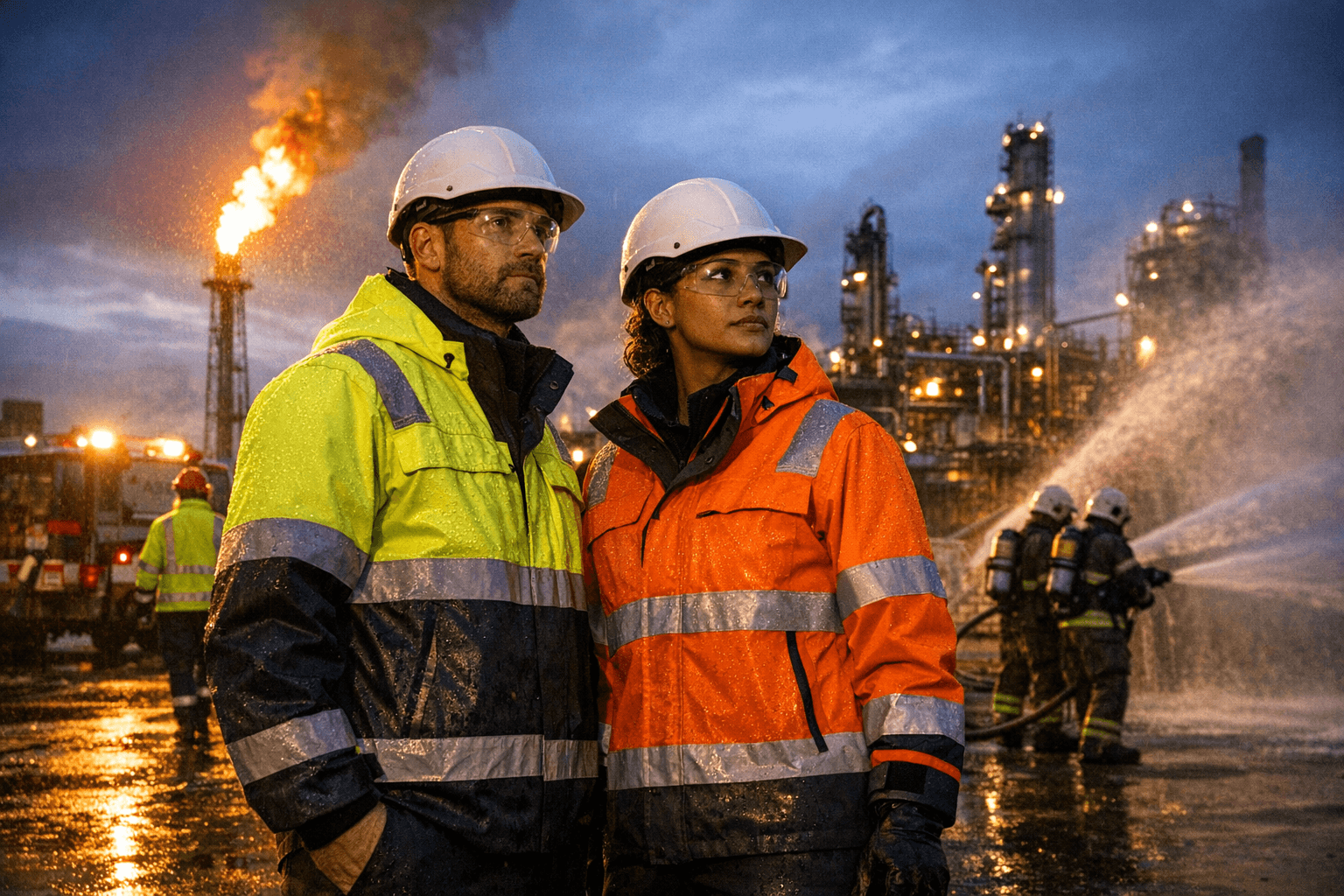
“In high-risk sectors (manufacturing, utilities, logistics, waste facilities), garment performance is a critical safety control.” That blunt framing sets the stakes for a surprisingly style-led shift: Leo Workwear announced that in 2024 it transitioned its entire range to EcoViz®, a recycled-polyester platform the company says preserves safety while cutting environmental impact.
Leo’s move is not cosmetic. Why Lyreco reports that “With 100% of Leo Workwear’s range now made from EcoViz® materials, businesses no longer have to choose between worker safety and environmental responsibility.” The brand and distributor Lyreco Intersafe link the change to measurable climate wins — “Over 3,000 tonnes of CO₂ emissions have been saved since 2019.” Lyreco Intersafe adds that “This saving is due to a less carbon-intensive production process for our recycled polyester compared to virgin polyester fabric production,” and that recycled polyester “requires significantly less energy compared to virgin polyester” while maintaining “the durability and protection required for high-risk working environments.”
The technical trade-offs at play are immediate on the shop floor. High-visibility garments must retain their luminance through sunlight, moisture and washing; Ishn states that “High visibility colors must maintain their brightness and integrity over time, even after exposure to environmental factors such as sunlight, moisture, and washing.” At the same time, water-repellent finishes cannot undermine safety: “Water-repellent finishes must not interfere with the safety performance of these fabrics,” Ishn warns. Industry concern over PFAS chemistry — where “the broader health and environmental concerns stem from the manufacturing, environmental persistence, and breakdown of these chemicals” — has pushed suppliers toward PFAS-free durable water repellents. Ishn notes that “Although the industry continues to refine these treatments to match the oil and stain resistance of PFAS-based repellents, C0 DWR fabrics already offer sufficient stain resistance and reliable water repellency,” and that Reflective Apparel has used C0 DWR as its preferred water-repellent fabric since 2023.
Procurement voices are amplifying the message. Lyreco Intersafe frames the shift as mission-driven: “At Lyreco Intersafe, we believe safety and sustainability can go hand in hand,” and that “High-visibility workwear is essential for keeping workers safe in hazardous environments, ensuring they remain visible in low-light conditions.” The practical problems Ishn flags — that “repair and reuse are often difficult, leading to increased waste” and that an influx of lower-cost, lower-quality products has “increasing environmental concerns” — make lifecycle thinking a business priority, not an afterthought.
Circularity is emerging as an alternative route. Uvex reports that “uvex’s new line of workwear uvex suXXeed greencycle planet has successfully completed this certification process and has been awarded the Cradle to Cradle gold certificate.” Uvex positions the greencycle planet range as “high-quality workwear that is not only highly functional and comfortable, but also has a fashionable look thanks to clever materials and cuts – perfect for wearing at work in industry and trade, or even at home.” Uvex’s explanation of the Cradle to Cradle principle reframes disposal: products should be returned to biological or technical cycles rather than being “buried” at end of life.
Taken together, the adoption of EcoViz®, the uptake of PFAS-free C0 DWR since 2023 among suppliers such as Reflective Apparel, and Cradle to Cradle certification for uvex suXXeed greencycle planet point to a sector-level pivot. For companies purchasing for high-risk sites, the message is clear: safety standards and lower-carbon materials are being engineered to coexist, and procurement choices can now deliver both visible protection and measurable emissions savings.
Know something we missed? Have a correction or additional information?
Submit a Tip

