Lessons from the first college class to graduate with ChatGPT on hand
The first class to start and finish college with ChatGPT is graduating, and at Stanford some professors are weighing a return to in-person proctoring.

The Class of 2026 has become the first graduating cohort to spend its entire university career with ChatGPT on hand, a marker OpenAI is elevating with a new ChatGPT Futures program. OpenAI said 26 students and young builders were selected for the inaugural class, each receiving a $10,000 grant and access to frontier models, as the company framed the group as the first generation to enter campus in fall 2022 and leave with AI already built into daily academic life.
At Stanford University, that shift has been felt in the most basic parts of student work: reading, drafting, coding, testing and compliance with academic rules. A senior writing about his class described the students as the first college class of the AI era and said nearly all of higher education has been overtaken by AI. He also said cheating had become omnipresent at Stanford, pushing some professors to consider bringing back in-person proctoring for exams, a practice the university had banned for more than a century as a sign of trust in student honor.
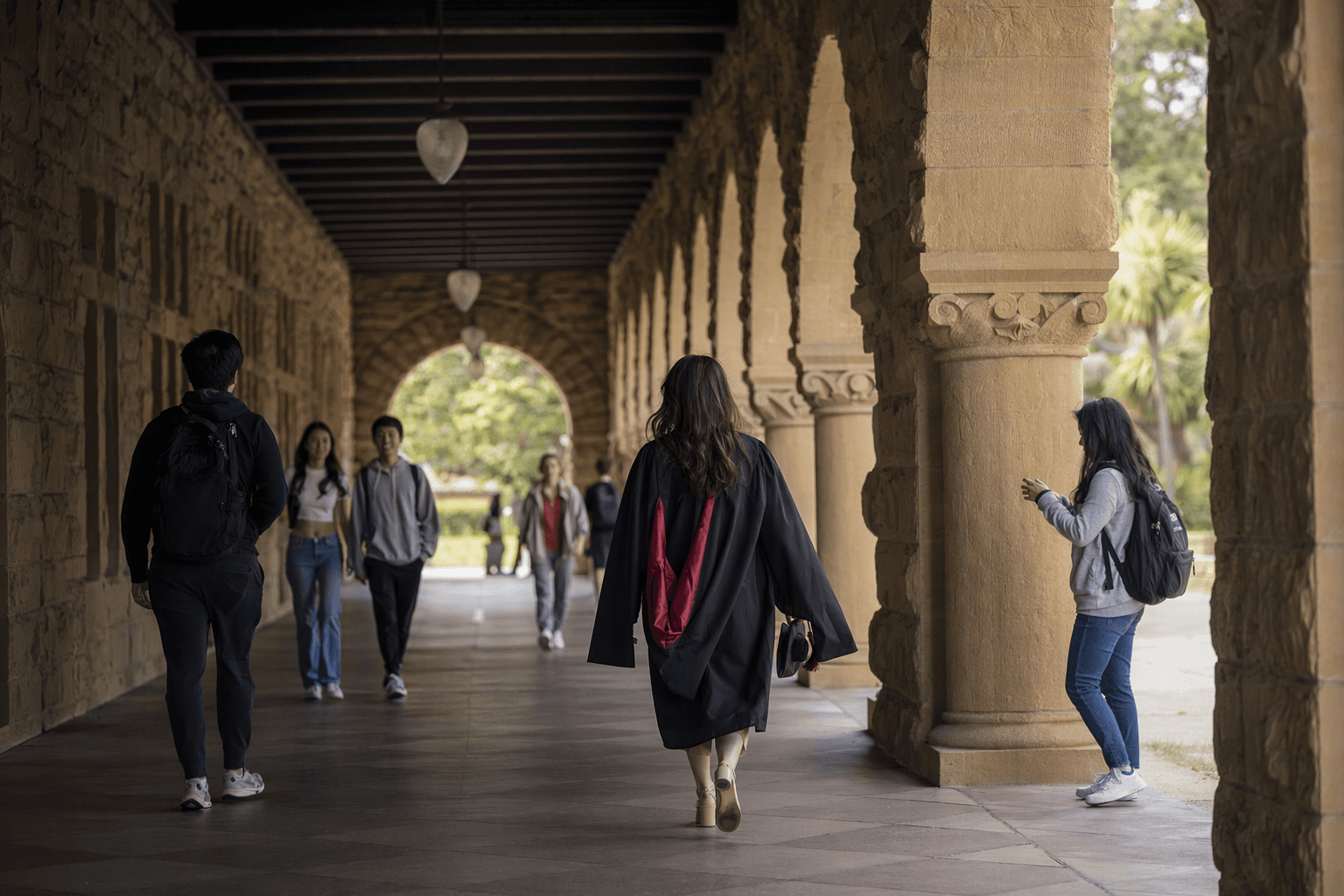
The pressure inside classrooms has been matched by pressure beyond them. Students who arrived in 2022 expecting a clear path to lucrative entry-level jobs are now graduating into a labor market where AI is already changing what employers ask of new hires. That uncertainty has sharpened the divide between students who use AI as a tutor, editor or research aid and those who fear it is eroding the very skills universities are supposed to build.
OpenAI’s own pitch for the program is that the technology can expand student ambition rather than flatten it. The company says honorees across more than 20 universities and institutions, including Vanderbilt University, the University of Toronto, Oxford, Georgia Tech and the University of Waterloo, are using AI to build study tools, translate mental-health resources, advance scientific research and design accessibility tools. That broader network matters: the AI generation is not a Stanford-only story, but a national and international one, with the same software reshaping expectations at campuses that have very different academic cultures.
The same tension showed up in a separate look at the graduating class, where one student-built tool called Einstein could log into Canvas, attend lectures, write essays and do homework. Its builder said 100,000 people used it at its peak, a scale that captures how quickly AI moved from novelty to infrastructure. Georgetown University Center on Education and the Workforce research director Zack Mabel warned that students who lean too hard on AI may weaken the skills they will need in a fast-changing labor market. For the Class of 2026, the lesson is blunt: constant AI access did not just change how students finished college. It changed what colleges expect, what students can hide, and what employers may soon demand.
This article was produced by Prism’s automated news system from verified source data, official records, and press releases, then run through automated quality and moderation checks before publishing. The system is built and supervised by the people who set the standards it runs under. Read our full AI policy.
Did this article answer your question?