Lightning damage disrupts West Coast Main Line train services
Lightning knocked out signalling on the West Coast Main Line, forcing delays and cancellations after engineers rushed to fix blown fuses near Runcorn.

Thunderstorms overnight knocked out signalling on the West Coast Main Line, forcing Network Rail to warn passengers of delays and cancellations while engineers worked to repair blown fuses at Weaver Junction near Runcorn.
The disruption spread beyond the main intercity route, affecting services in west Wales and north west England. Trains serving Wrexham, Chester and North Wales were also reported to be hit, with passengers told to check journey information before setting out as operators worked through the backlog.
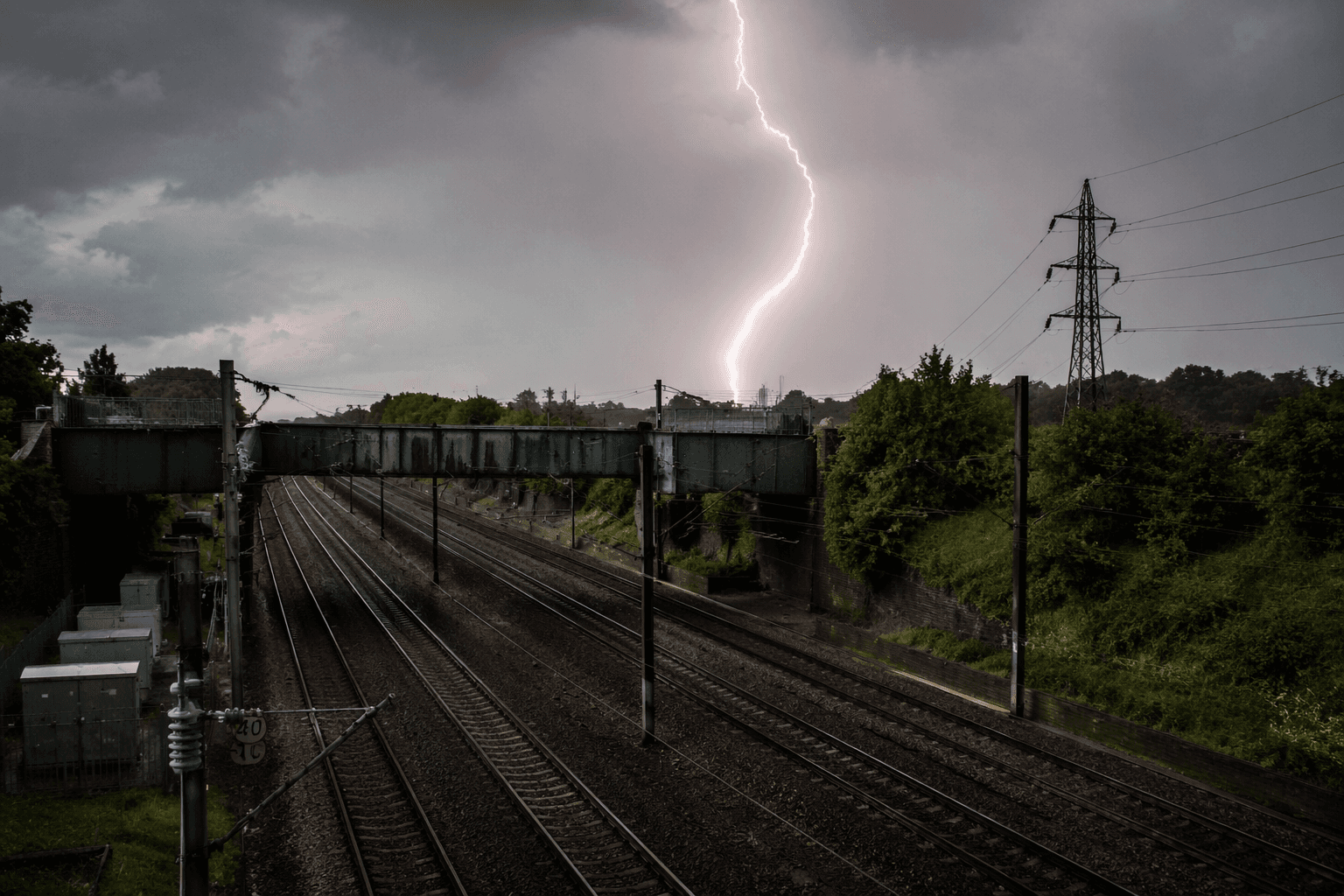
The incident underlined how exposed rail infrastructure remains to sudden severe weather, especially when lightning hits signalling equipment. On this occasion, the failure at Weaver Junction caused a knock-on effect across a wide network of passenger services, turning one overnight storm into a morning of cancellations, delays and service uncertainty.
The problem is not new. Network Rail Scotland has previously said more than 10,000 lightning strikes hit the north of Scotland in a single day, with some of them damaging signalling equipment on the Highland Main Line. That episode showed how a burst of electrical activity can overwhelm key control systems and force rail operators to slow trains, suspend services or arrange replacement transport while repairs are carried out.
Past storms have produced similar disruption elsewhere on the network. In Wiltshire, a lightning strike damaged signalling equipment near Bourton, south of Swindon, and disrupted First Great Western trains between the West Country and London. On the Calder Valley line, a strike in the Castleton area damaged the signalling system and interrupted trains through the station, affecting services between Manchester and Hebden Bridge.
The latest outage at Weaver Junction adds to a wider question for Britain’s transport network: whether signalling, power and maintenance systems are being hardened quickly enough for a climate era in which intense thunderstorms can arrive with little warning and cascade into regional disruption. For rail operators and infrastructure managers, lightning is no longer just a weather event; it is a test of resilience across the network.
This article was produced by Prism’s automated news system from verified source data, official records, and press releases, then run through automated quality and moderation checks before publishing. The system is built and supervised by the people who set the standards it runs under. Read our full AI policy.
Did this article answer your question?


