Lincoln gave new meaning to America’s founding equality promise
Lincoln turned a founding slogan into a demand the nation still had to meet. At Gettysburg, he recast equality as a test of survival, not a finished fact.
The phrase “all men are created equal” did not begin as a finished promise of personal liberty for every American. It entered public life through Thomas Jefferson’s draft of the Declaration of Independence, but its meaning was contested from the start, and it took later political struggle, especially Abraham Lincoln’s words at Gettysburg, to make it point toward a broader democratic future.
The declaration was powerful, but not self-executing
The Continental Congress adopted the Declaration of Independence on July 4, 1776, and delegates began signing it on August 2, 1776. The National Archives describes the document as one of the founding texts that states the principles on which American government and identity rest, yet it is not legally binding. That tension matters: the Declaration has always carried symbolic force larger than its legal status, which is why it could inspire generations long after the revolution itself.
The Library of Congress traces the phrase “all men are created equal” to European Enlightenment philosophy. But the reach of the word “all” was never settled. From the moment the Declaration was created, Americans argued over whether the language included women, children, enslaved people, and others who stood outside the political community of the time.
Jefferson’s language was about collective self-government, not modern equality
Jack Rakove, the Stanford historian, has said the Declaration was not originally understood as a statement of individual equality in the modern sense. In his reading, Jefferson and the Continental Congress were declaring something more specific: the American colonists, as a people, had the same right to self-government as other nations.
That distinction matters because it shows how limited the founding text was in its original political setting. The phrase was radical in one register, since it challenged imperial authority, but it did not automatically translate into equal standing for every person living in the new nation. The distance between revolutionary rhetoric and social reality is what made the phrase so vulnerable to reinterpretation, and so available to later generations determined to widen its meaning.
Lincoln put equality to work in wartime
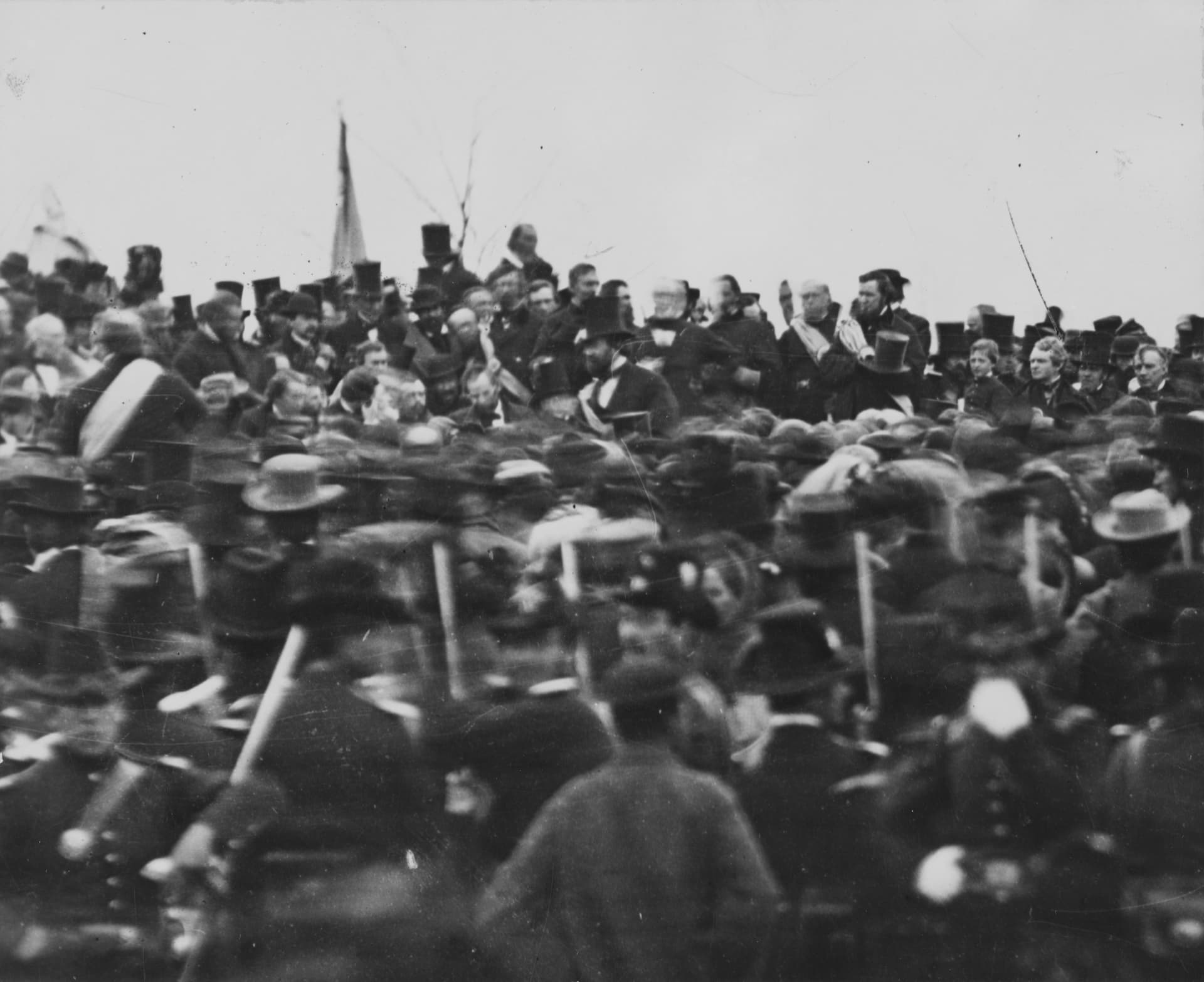
Abraham Lincoln gave the phrase new force in the Gettysburg Address, delivered on November 19, 1863, at the dedication of Soldiers’ National Cemetery after the Union victory at Gettysburg in Pennsylvania. He opened by connecting the Civil War to the nation’s founding, saying, “Four score and seven years ago our fathers brought forth on this continent, a new nation, conceived in Liberty, and dedicated to the proposition that all men are created equal.”
Lincoln’s use of the phrase did more than recall Jefferson. He made equality the measure of whether the republic could survive the war that was tearing it apart. The National Park Service says this was the first time Lincoln openly framed the abolition of slavery as a desired outcome of the war and as part of a “new birth of freedom.” In that speech, equality stopped being only a founding claim and became a standard against which the nation’s conduct could be judged.
Why Gettysburg changed the meaning
Lincoln’s genius was not that he invented the language of equality, but that he linked it to the moral and political stakes of the Civil War. He turned a phrase that had once described a people’s right to rule themselves into a broader democratic ideal, one that could be used to challenge slavery and the exclusions built into American life.
That shift gave later reform movements a more usable inheritance. The power of the phrase no longer depended only on what Jefferson may have meant in 1776. It rested on the idea that the nation’s founding promise could be invoked against the nation’s failures, which is why the words became more historically meaningful through pressure from abolitionists, Black Americans, women, and civil rights activists who insisted that the promise apply more fully than the founders had allowed.
The unfinished promise behind the familiar words
The Declaration’s authority has always depended on contradiction. It is not legally binding, yet it is one of the most enduring statements in American public life; it began as a claim about self-government, yet it came to symbolize a much larger fight over who counts as equal; and it was written in a world that excluded many people, yet it later became a language of inclusion because those excluded people forced new readings of it.
That is why Lincoln matters so much in the story of American equality. He did not erase the gap between the founding ideal and the country that existed in 1863, but he made that gap impossible to ignore. By tying the survival of the Union to the proposition that all men are created equal, and by naming a new birth of freedom, he helped turn an eighteenth-century declaration into a standard that later generations could use to press the nation toward its own words.
This article was produced by Prism’s automated news system from verified source data, official records, and press releases, then run through automated quality and moderation checks before publishing. The system is built and supervised by the people who set the standards it runs under. Read our full AI policy.
Did this article answer your question?