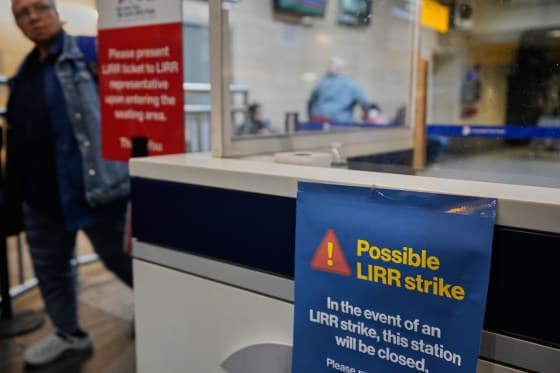
LIRR shuts down as strike halts 300,000 daily commuters
The Long Island Rail Road stopped before dawn, stranding up to 300,000 weekday riders as five unions and the MTA failed to settle the final year of a four-year contract.

The Long Island Rail Road shut down just after midnight Saturday, cutting off the nation’s busiest commuter railroad and forcing as many as 300,000 weekday riders to rethink how they would get into New York City. The strike, the first on the LIRR since 1994, began after five unions and the Metropolitan Transportation Authority failed to bridge a wage dispute centered on the final year of a four-year contract.
For commuters from Long Island, the disruption was immediate and severe. Many riders who rely on the railroad to reach Penn Station and jobs across Manhattan, Queens and beyond were left with limited alternatives as the MTA activated contingency plans that included shuttle buses and alternate travel guidance. Officials warned of heavy congestion on roads and delays across other transit routes, while urging riders to work from home if possible. The Port Washington Branch was singled out as a gap in the shuttle plan, leaving those riders with especially little clarity about a fallback.

The breakdown came after months of increasingly fraught bargaining. The two sides had already agreed to wage terms for 2023, 2024 and 2025, with raises of 3%, 3% and 3.5%, but could not settle the 2026 increase. The MTA offered a 3% general wage increase for 2026 and said its broader proposal would amount to about 4.5% when lump-sum payments were included. The unions rejected that framing and pressed for 5% in the final year, while also seeking 16% over four years overall.
Five unions were involved in the walkout: the Brotherhood of Locomotive Engineers and Trainmen, Brotherhood of Railroad Signalmen, International Association of Machinists and Aerospace Workers, International Brotherhood of Electrical Workers and Transportation Communications Union. The MTA has said the coalition represents roughly half the railroad workforce. The pay fight has become politically and financially sensitive because LIRR engineers reportedly averaged more than $160,000 in 2025 with overtime.
The stakes reached well beyond the railroad itself. The MTA warned that larger wage increases would ripple into agency, state and New York City budgets, and the unresolved LIRR deal could shape labor talks elsewhere in the transit system. The last LIRR strike, in June 1994, lasted two days before Governor Mario M. Cuomo and aides stepped in to impose a settlement, a reminder of how quickly a contract fight on this line can become a regional emergency.
Know something we missed? Have a correction or additional information?
Submit a Tip