Lithuania faces uncertainty over future U.S. troop presence
Lithuania said its next U.S. troop rotation was still under review, raising fears that an armored American battalion could disappear from the Baltic state for the first time since 2020.

Lithuania’s defence minister said the future of U.S. troops in the Baltic state was under review, a development that has unsettled a frontline NATO ally already watching Washington reassess its military footprint in Europe. Robertas Kaunas said the current U.S. rotation was leaving as planned, but the next scheduled group was not yet arriving, leaving Lithuania uncertain about when replacements would come or how large they would be.
Kaunas said Washington had assured him that a new rotation would follow, but he did not know when or at what strength. He said he had discussed the issue with U.S. Defense Secretary Pete Hegseth at the Shangri-La Dialogue in Singapore last week. For Vilnius, the stakes were concrete rather than symbolic: Lithuania borders Belarus, Russia’s ally, and has treated an American troop presence as a central part of its deterrence posture against Moscow.
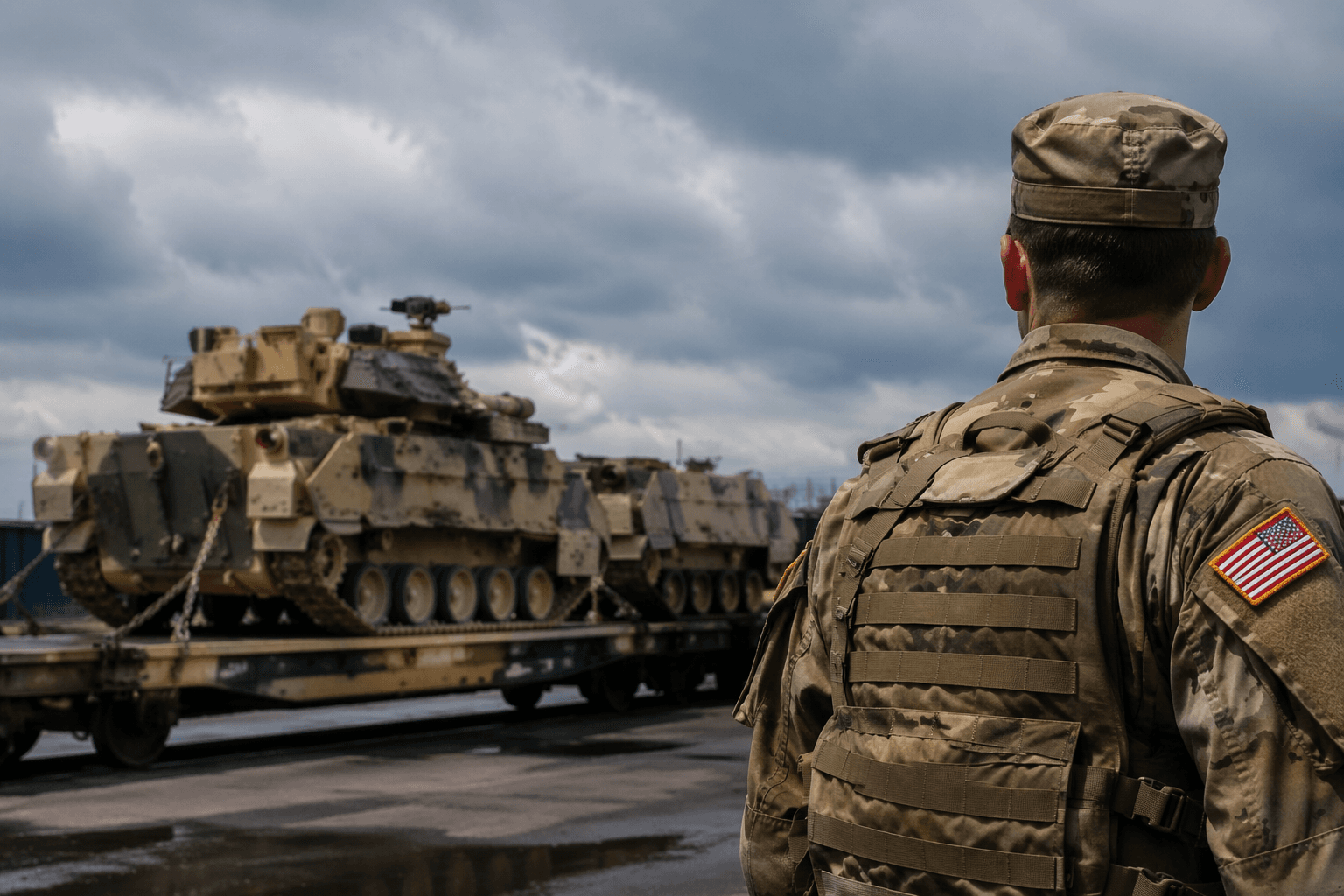
If the next rotation is delayed, Lithuania could be without an armored U.S. battalion of about 1,000 troops for the first time since 2020. That would mark a notable shift for a country that has built its defense planning around forward U.S. presence and the signal it sends to Russia and to NATO allies on the alliance’s eastern flank. The uncertainty also fed a broader European debate over whether the continent would need to absorb any gap left by Washington if U.S. deployments change elsewhere.
The current rotation arrived in October 2025 and consists of two battalions of Texas-based 1st Cavalry Division troops equipped with Abrams tanks, Bradley armored vehicles and Paladin self-propelled howitzers. Those troops were the first to use new permanent facilities Lithuania built for them at Pabrade military base, near the Belarus border. A pause in the next deployment would leave those facilities temporarily without a U.S. armored battalion, a stark reminder of how quickly force posture changes can alter the regional balance.
Lithuania has tried to blunt the anxiety with spending. The country has tripled its defence spending since 2022 and is due to spend 5.4% of gross domestic product on defence this year, a striking figure that reflects how seriously Vilnius views the Russian threat. Even so, the episode underlined the limits of national rearmament when allied assurances remain in flux, and why any review of U.S. troop presence in Lithuania resonates far beyond Pabrade.
This article was produced by Prism’s automated news system from verified source data, official records, and press releases, then run through automated quality and moderation checks before publishing. The system is built and supervised by the people who set the standards it runs under. Read our full AI policy.
Know something we missed? Have a correction or additional information?
Submit a Tip