Logan County Braces as Colorado Lawmakers Clash Over Data Center Rules
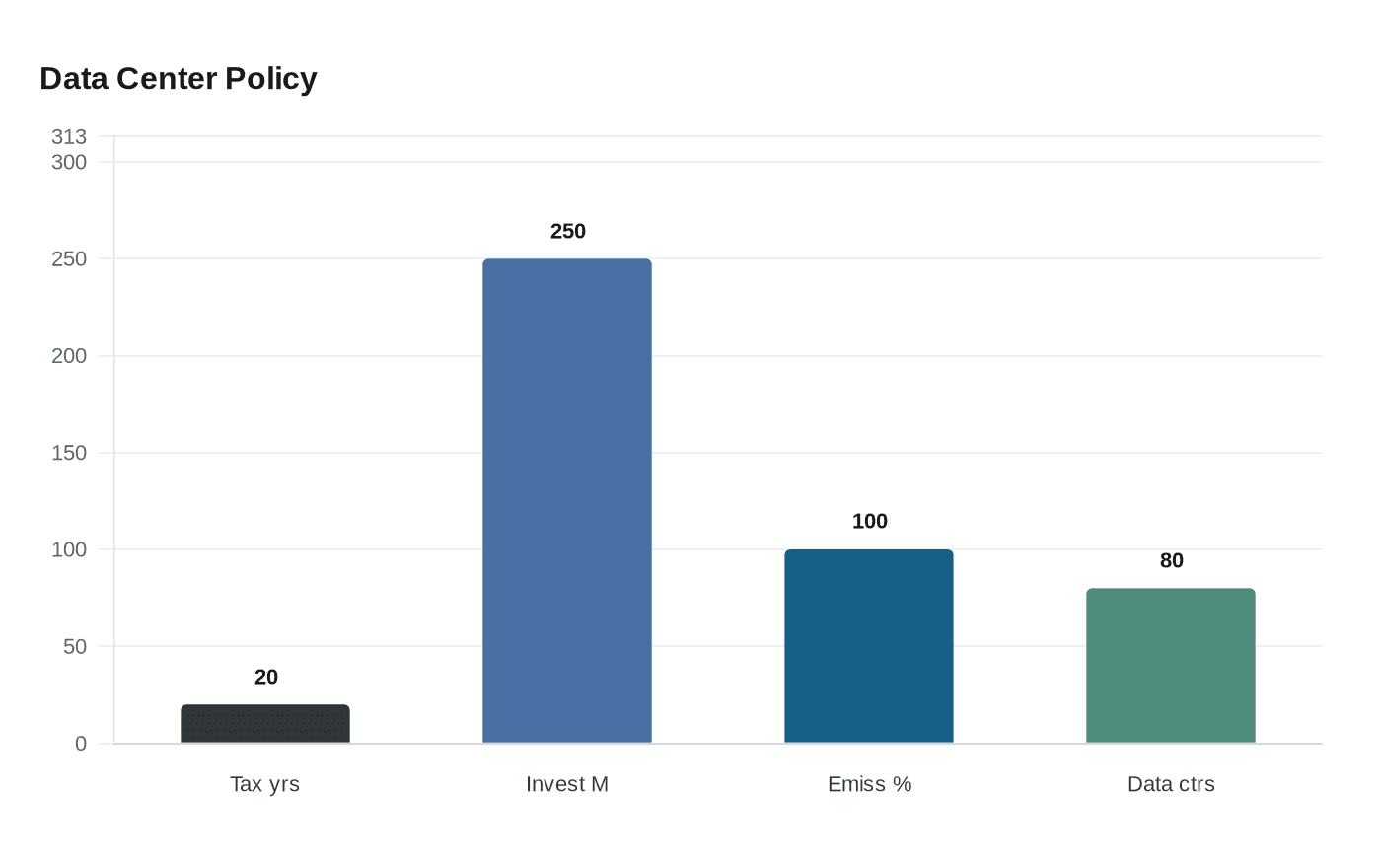
Lawmakers are weighing a 20-year sales tax exemption tied to a $250 million investment against a rival bill requiring 100 percent emissions-free power for new large data centers.

Colorado’s Capitol is debating two competing approaches that could reshape where and how data centers are built in Logan County and across the state. House Bill 26-1030 would offer a 20-year sales and use tax exemption on purchases such as computer equipment, software, energy storage and environmental control systems if an operator commits to a $250 million investment within five years and meets green building and sustainability plan conditions. Rep. Alex Valdez, a sponsor, framed the stakes in economic terms, saying, “Ultimately it’s a competitiveness factor,” and warning that Colorado risks losing projects without incentives.
Senate Bill 26-102 takes the opposite route, imposing statewide guardrails on all large data center development with no tax incentives. Sponsors Sen. Cathy Kipp and Rep. Kyle Brown have pushed energy sourcing requirements described in coverage as 100 percent emissions-free power for new large-scale facilities, or alternatively electricity supplied from newly built renewable sources including solar, wind, geothermal, biomass and limited small hydro. Environmental groups have rallied behind SB26-102; Megan Kemp of Earthjustice’s Rocky Mountain office warned, “We want to make sure that as data centers come here, they come on our terms.”
HB26-1030 would also create a nine-member oversight board appointed by legislative leaders and the governor, with members drawn from water resource management, renewable energy, data center development and construction trades, to set the standards that qualify projects for the incentive. The bill’s backers include a Colorado coalition of data center developers and operators that has urged lawmakers to approve the incentive package as a jobs and revenue generator. Industry advocates argue, as one supporter put it in coverage, that “Data centers power the technology we depend upon and strengthen our economy.”
The policy contrast matters for Logan County because Colorado already hosts at least 80 data centers operating or in development, most concentrated in the Denver area, according to S&P Global 451 Research cited in reporting. Local governments across the state have enacted moratoriums while the legislature debates new rules, and both HB26-1030 and SB26-102 cite preventing infrastructure upgrade costs from being pushed onto residential electric customers as a shared objective. That fiscal fairness argument is one of the few points of overlap between incentive proponents and regulation advocates.
Projections cited in coverage underscore the scale of decisions lawmakers face: the industry expects U.S. data center electricity demand to reach roughly 80 gigawatts by 2030, up from about 25 gigawatts two years earlier. If HB26-1030 or SB26-102 becomes law, the choice between conditional incentives overseen by a new board and blanket statewide standards tied to new renewable generation will influence whether future projects head to Denver, seek sites in places such as Logan County, or shift to other states. As the late February to early March 2026 legislative session intensified and media outlets tracked hearings, the coming weeks will determine whether the state adopts an incentive-led approach, a regulator-style approach, or a negotiated middle ground.
Sources:
Know something we missed? Have a correction or additional information?
Submit a Tip