London heat forces climate week event on extreme heat to cancel
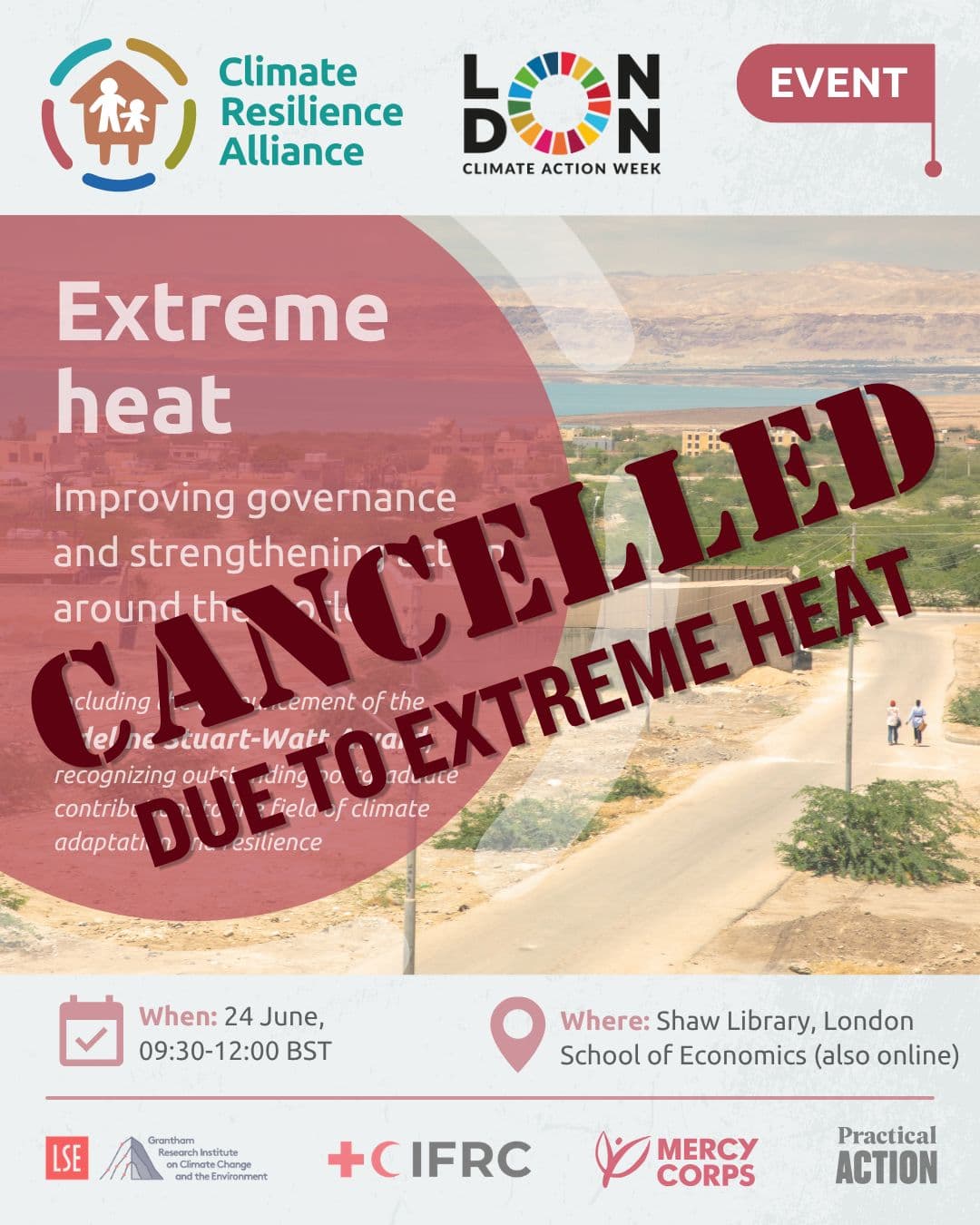
A climate week session on extreme heat was canceled because the room was too hot, as Britain hit a provisional June record of 36.1C in Gosport.

A London School of Economics event on extreme heat was canceled after the venue became too hot. The organizers called the session off because of a public-health risk.
The cancellation came during a red extreme heat warning from the Met Office, which covered Wednesday and Thursday and later put Britain’s June maximum temperature record at a provisional 36.1C in Gosport. The UK Health Security Agency also issued red heat-health alerts for London, the East of England, East Midlands, South East, South West and West Midlands, while schools closed and officials warned of dangerous conditions across much of England.
London Climate Action Week ran from 20-28 June and marked its eighth year. LSE billed it as the largest independent climate gathering in Europe, and Reuters put attendance at more than 75,000 people across about 1,300 events in government, business, finance and civil society. The canceled heat session was one of several events in a week built around resilience to heat, drought, floods and storms, and LSE’s listings showed at least one finance roundtable was also scrapped.
Chris Anderson of Practical Action called the cancellation ironic because an event on helping vulnerable people adapt to extreme heat had to be abandoned in a temperate, wealthy country. Climate Group chief executive Helen Clarkson called the heatwave proof that science had come to life and that more extreme heat was clearly coming.
The Lancet Countdown’s 2025 assessment put heat-related deaths at an average of 546,000 a year worldwide, up 23 percent since the 1990s, a rise driven by hotter temperatures and a growing vulnerable population. The Climate Change Committee projects heat-related deaths could exceed 10,000 a year by 2050 and puts the cost of closing the heat resilience gap at about £11 billion a year. It also puts more than a third of railway and road kilometres at flood risk, while extreme heat can buckle rails and sag power lines, making transport and energy systems more fragile just as demand and exposure climb.
At a finance forum, António Guterres pressed leaders to close the climate finance gap and invest in resilience, and at a separate London address he tied the climate and energy crises to fossil-fuel dependence. British climate minister Ed Miliband and the leader of Palau also called for faster action.
This article was produced by Prism’s automated news system from verified source data, official records, and press releases, then run through automated quality and moderation checks before publishing. The system is built and supervised by the people who set the standards it runs under. Read our full AI policy.
Did this article answer your question?