Longer-dated Treasury yields jump as oil surge revives inflation fears
Treasury yields hit their highest levels in a year as oil jumped 3%, lifting mortgage, credit-card and federal borrowing costs while inflation data stayed hot.
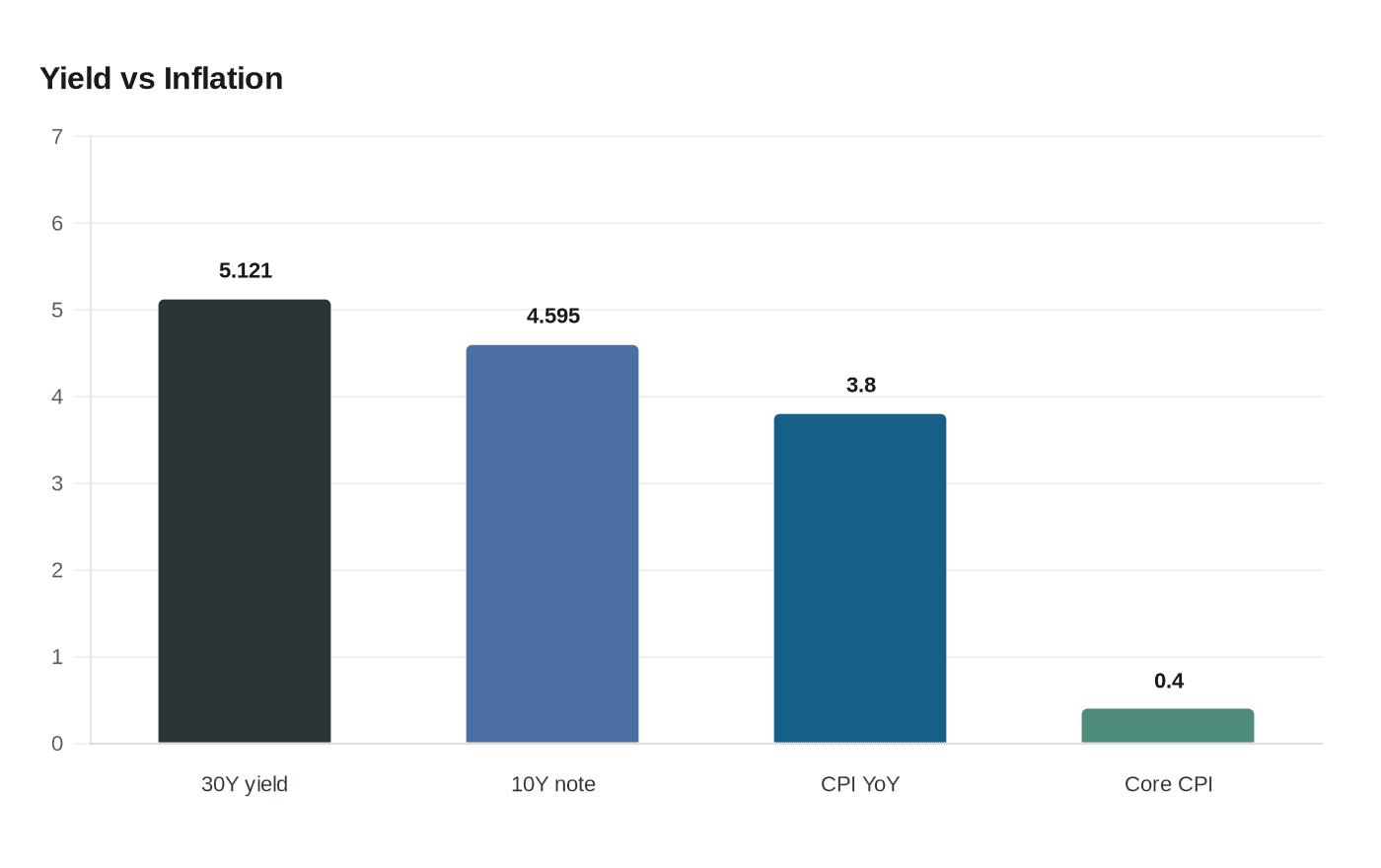
Higher Treasury yields are feeding directly into the real economy: mortgage rates, credit-card APRs, business loans and the federal government’s own financing bill all get more expensive when long-term borrowing costs rise. That pressure sharpened on Friday when the 30-year Treasury yield climbed to 5.121 percent, its highest level since May 22, 2025, while the 10-year note rose to 4.595 percent.
The jump reflected more than a routine bond selloff. Oil prices gained 3 percent as traders reacted to renewed energy disruptions in the Middle East, and fresh inflation data showed price pressures had not faded as quickly as many investors had hoped. The U.S. Bureau of Labor Statistics said the Consumer Price Index rose 0.6 percent in April and 3.8 percent over the prior 12 months, the fastest annual pace since May 2023. Core CPI increased 0.4 percent, underscoring that inflation was not being driven by energy alone.
That combination matters because long-dated yields are especially sensitive to the risk that inflation stays sticky for months, not weeks. The latest energy shock is colliding with a broader supply picture that remains tight. On April 28, the World Bank said Middle East war-related disruptions represented a historic shock to commodity markets and could lift energy prices by 24 percent in 2026, with average commodity prices up 16 percent if the most acute disruption eases by October.
The International Energy Agency added to that concern in its May oil market report, saying global oil supply fell by another 1.8 million barrels per day in April to 95.1 million barrels per day, bringing total losses since February to 12.8 million barrels per day. Those figures help explain why investors are demanding higher compensation to hold long-term debt: the market is no longer treating the inflation threat as confined to a single data point or a single month.
The policy backdrop is also unsettled. On May 13, the U.S. Senate confirmed Kevin Warsh as the next Federal Reserve chair in a 54-45 vote, just as traders were recalibrating expectations for the rate path. Higher yields tend to hit growth stocks hardest because they reduce the present value of future earnings, but the broader message is bigger than equities. The bond market is pricing a world in which inflation is harder to extinguish, borrowing stays expensive longer, and the cost of capital remains a drag on households, companies and Washington alike.
This article was produced by Prism’s automated news system from verified source data, official records, and press releases, then run through automated quality and moderation checks before publishing. The system is built and supervised by the people who set the standards it runs under. Read our full AI policy.
Did this article answer your question?
%3Amax_bytes(150000)%3Astrip_icc()%2FCertificate-of-deposit-2301f2164ceb4e91b100cb92aa6f868a.jpg&w=1920&q=75)