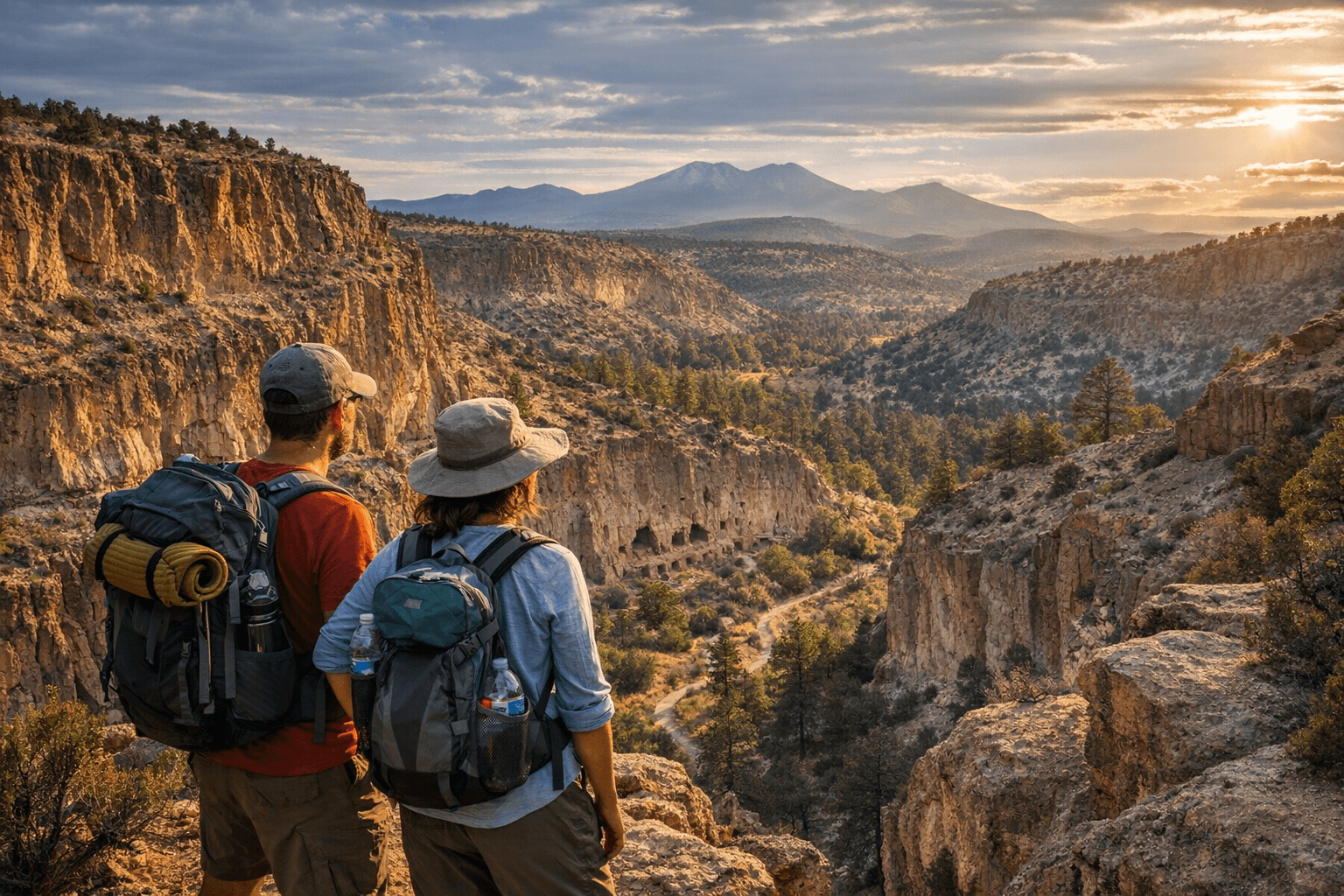
Los Alamos Photographers Capture March 3 Total Lunar Eclipse over Pajarito Plateau
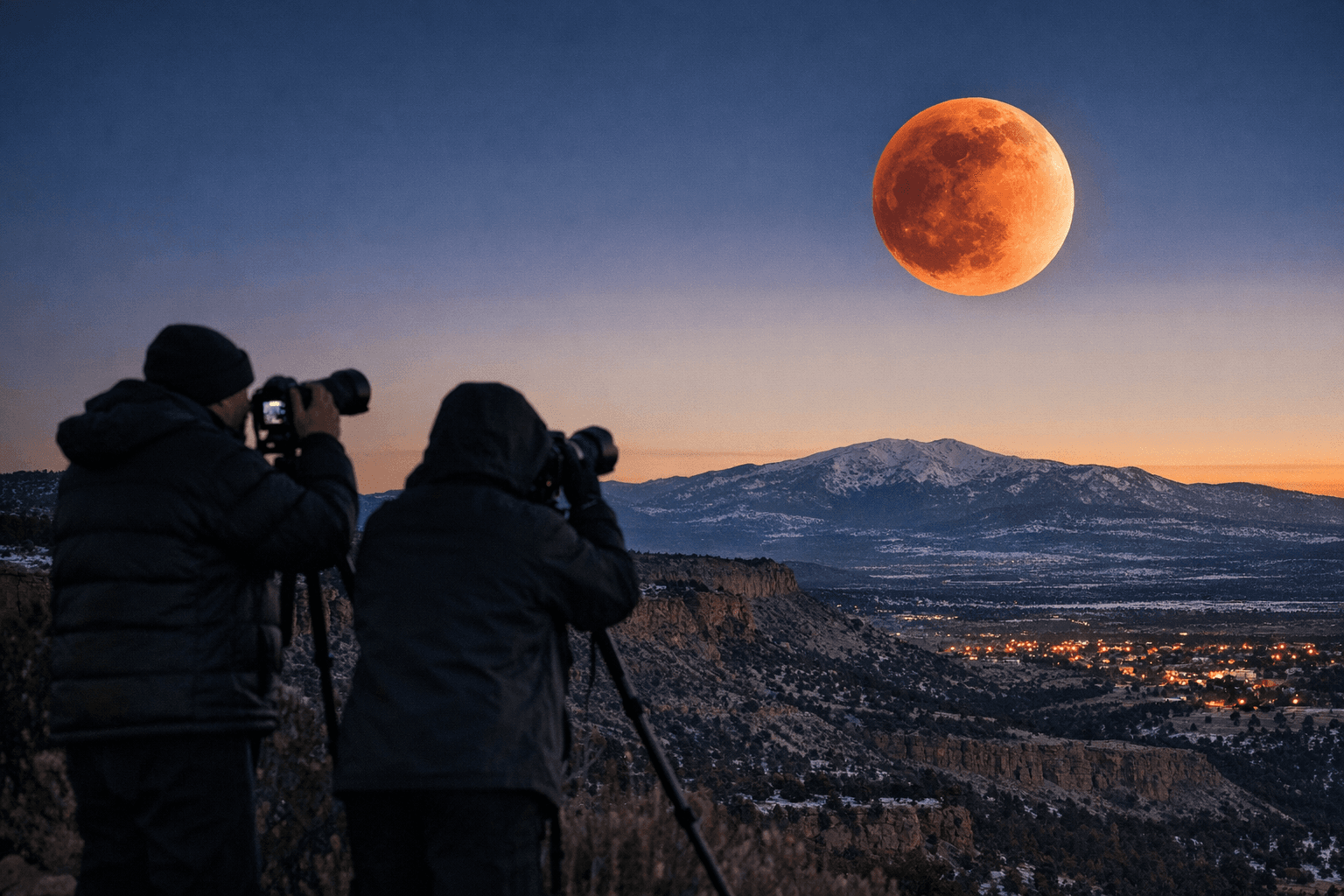
Los Alamos photographers captured the March 3 total lunar eclipse from the Pajarito Plateau in pre-dawn hours; one local image was credited to Marc Baily.
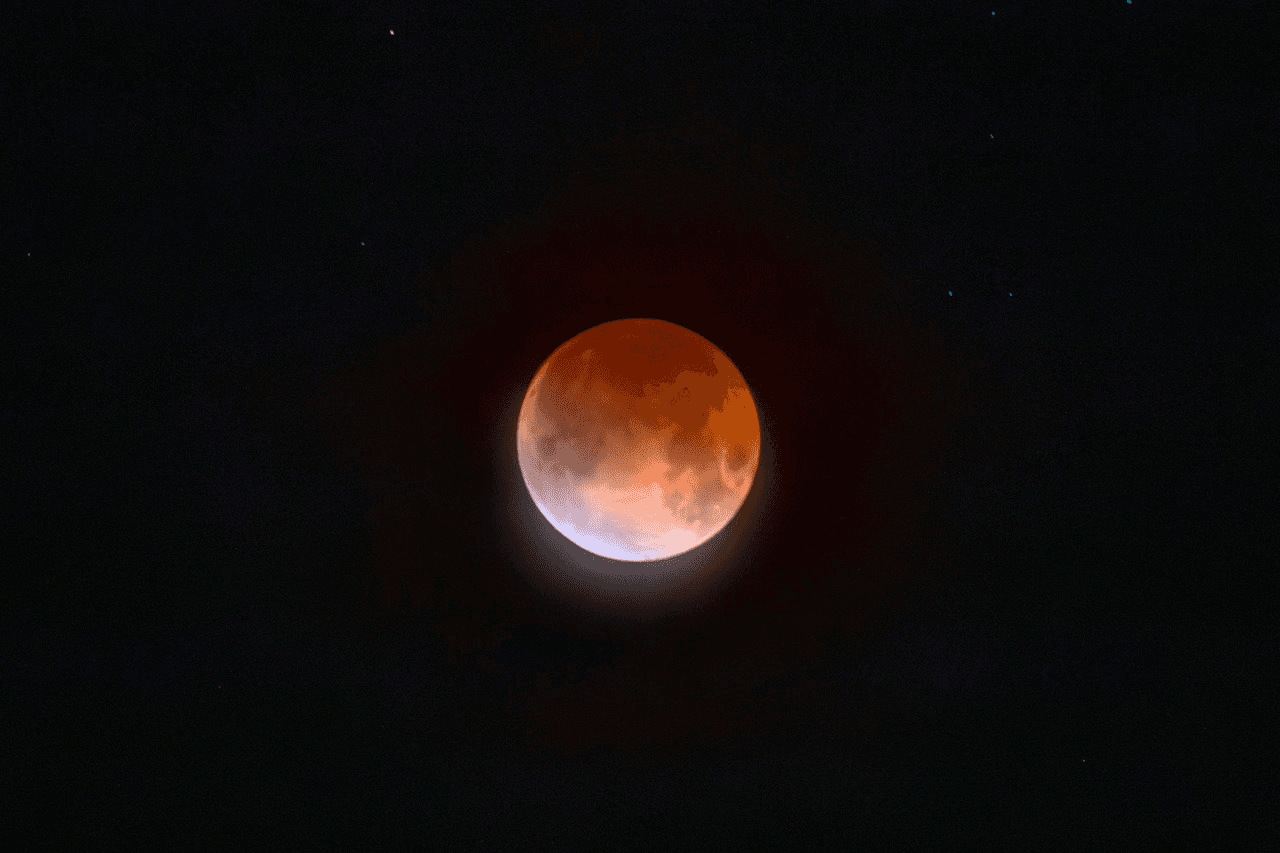
Observers in Los Alamos photographed a total lunar eclipse visible over the Pajarito Plateau in the pre-dawn hours of March 3, 2026, and local photographers and community media shared images showing the moon in partial and total stages, with one photo in local coverage credited to Marc Baily. The Pajarito Plateau images joined a wider set of photographs and videos circulated the same day from sites as distant as Auckland, Los Angeles and New Zealand observatories.
National and international outlets assembled early views from multiple contributors. Space.com posted a gallery that included a still credited to Mirko Harnisch and images from the Dunedin Astronomical Society taken via The Virtual Telescope Project livestream; the piece described how "Earth's curved inner shadow began its slow journey across the lunar disk" as the umbral phase developed. Space.com also noted the March full moon is commonly called the Worm Moon, "named for the time of year when the ground softens to allow earthworms and burrowing beetles to emerge."
Photographers on March 3 captured the color shift that marks totality, with captions across outlets using phrasing such as "orange-red full moon," "red full moon," and the familiar "blood moon." Space.com described one New Zealand capture as showing how "sunlight filtered by Earth's atmosphere was bent onto its ancient surface, transforming the worm moon into a dramatic blood moon." Other captioned views in that coverage emphasized a silver crescent of direct sunlight against a largely shadowed lunar disk.
Timing details published for the global event gave a closing milestone: Space.com reported the March 3 eclipse drew to a close at 9:23 a.m. EST (1423 GMT) when the outer part of Earth's shadow, known as its penumbral shadow, departed the lunar disk. Local Los Alamos accounts did not supply a specific clock time for the Pajarito Plateau observations beyond the "pre-dawn" window cited in local coverage.
Video and time-lapse footage supplemented still imagery on March 3. The Griffith Observatory in California provided a time-lapse that was posted the same day to the VideoFromSpace YouTube channel under the title "Blood moon returns in lunar eclipse time-lapse from California"; that upload was posted March 3, 2026, carried the credit line "Credit: Griffith Observatory | edited by Space.com," and showed 21,421 views and 421 likes on the channel listed with 2,069,999 subscribers in the provided metadata.
International photo galleries and social posts documented the eclipse over landmarks from Lotte World Tower in Seoul to the Simatai Great Wall in Beijing, and The Guardian's gallery included captions noting multiple-exposure techniques in Auckland and scenes from San Salvador, Molfetta, Yangon, Limassol, Pachuca and Pathum Thani during Makha Bucha celebrations. Social captions also reflected varied techniques; an Instagram caption fragment included with the coverage read, "Lunar Eclipse 3/3/26. Quick edit of this morning's total lunar eclipse taken with a wide-angle lens capturing the green hills," linking field conditions and equipment choices to local landscape shots.
Los Alamos' photographic record for March 3, 2026 now sits alongside livestream stills, time-lapses and international gallery images as part of the visual archive for the Worm Moon blood moon. Space.com's editor invited readers to contribute images and details by sending photos "along with your comments, name and location" to spacephotos@space.com, ensuring the Pajarito Plateau views can be compared with the global set of captures from that night.
Know something we missed? Have a correction or additional information?
Submit a Tip