Louden-Henritze Archaeology Museum at Trinidad State College Reopens Feb. 12 After Renovation
Trinidad State College’s archaeology museum reopened with expanded fossil and artifact displays and a new region-spanning topographic model, welcoming about 50 people to the Feb. 12 grand re-opening.
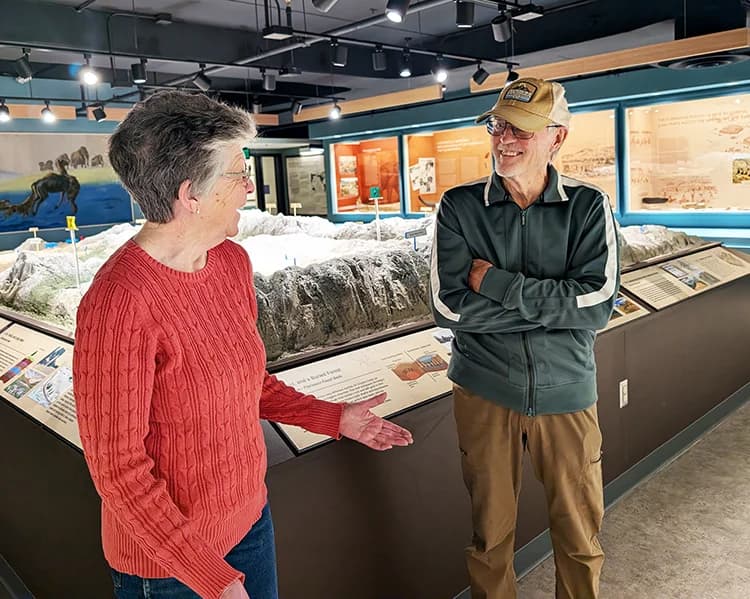
Trinidad State College’s Louden-Henritze Archaeology Museum reopened after a major renovation, expanding fossil and archaeological displays and unveiling a large topographic model that maps Trinidad and neighboring sites. The renovated museum, housed on the ground floor of the Samuel Freudenthal Memorial Library, formally reopened to the public on Feb. 12 and welcomed approximately fifty people to the grand re-opening.
The college lists the museum’s current public hours as Monday through Thursday, 10 a.m. to 3 p.m., and identifies Loretta Martin as museum director and primary contact. Group tours and information may be arranged by calling 719-846-5508 or emailing loretta.martin@trinidadstate.edu. Admission has been listed historically as free; visitors seeking confirmation are advised to contact the museum directly.
Museum displays have been both expanded and refreshed. Exhibits on display include items from the Donnelly Ranch Site, a mammoth tusk, a mosasaur fossil, artifacts from Trinchera Cave Shelter and Trinidad Lake excavations, petroglyphs including a goat with horns and a big horn sheep, a dinosaur footprint fossil, and a T‑Rex statue and museum map among the gallery images. Renovation materials describe longstanding exhibits that depict the region’s development from thousands of years ago to the present as expanded, and new items have been added to public displays.
The most striking new installation is a large topographic model that depicts places east of the Sangre de Cristo Mountains, Trinidad, Stonewall, Weston, Branson and Trinchera, extends to the San Luis Valley, reaches north to Cañon City, and continues south through the volcanic fields of northern New Mexico. That geographic scope is intended to situate local archaeological and geological finds within a broader landscape of trade routes and natural features.

The museum traces its origins to 1954 when it opened to support the college’s archaeology program, and it bears the names of the Louden brothers and Ruth Henritze in recognition of their roles in major digs and lab work. Loretta Martin, who has worked with the museum and its archaeology collection for more than 40 years, recalled the quality of preservation at Trinchera Shelter: "There was so much found in that dig, you wouldn't believe it. And everything was so well-preserved because it was protected by the overhang." Martin has also emphasized the role of geology in dating finds: "Geology is very important to archaeologists, because the age of the rocks can date the archaeological finds."
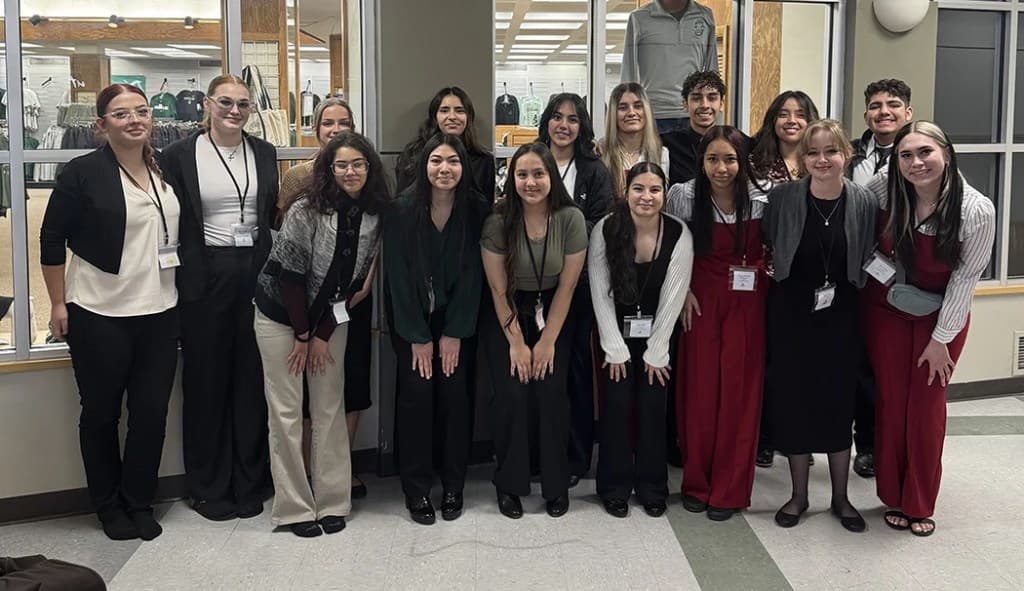
Community turnout and campus participation marked the Feb. 12 event. Photographs show Martin speaking with Mike Mangino, a once‑student at the college, and social posts list Lynette Bates and Loretta Martin among guests invited to explore the newly refreshed museum space. The college frames the museum’s work within its educational mission: "Enriching our diverse communities through quality educational experiences and lifelong learning."
Visitors planning a trip or arranging class visits should note the posted Monday–Thursday, 10 a.m.–3 p.m. hours, call 719-846-5508 for group arrangements, or email loretta.martin@trinidadstate.edu for more information.
Sources:
Know something we missed? Have a correction or additional information?
Submit a Tip