Louis Vuitton’s Nicolas Ghesquière shapes the brand’s future in luxury
Louis Vuitton keeps its heritage alive by making Nicolas Ghesquière's surprises feel like part of the house code. That balance now defines the brand's next chapter.
Heritage as a living design system
Louis Vuitton’s power comes from a rare luxury paradox: the brand is instantly recognizable because it keeps changing. Founded in Paris in 1854, the house began as a specialist in travel goods, and its first store opened at 4 Rue Neuve-des-Capucines, a location that anchored the company in the city’s commercial and cultural life. The original breakthrough was practical and elegant at once. In 1858, Louis Vuitton introduced a flat-topped trunk that was lighter, stronger, and stackable, a direct answer to the rounded trunks of the era.
That invention still matters because it explains the brand’s logic today. Louis Vuitton’s heritage is not only about prestige or nostalgia, but about solving real problems for elite travel with better construction, better materials, and sharper utility. Over time, that trunk-making expertise evolved into lightweight canvas, signature patterns, and the tumbler lock, all of which helped turn craftsmanship into a visual language that can still be read at a glance.
The house has never stopped at luggage. It now stretches across fashion, leather goods, accessories, jewelry, watches, and other luxury categories, but the original travel DNA remains visible in how the brand thinks about shape, structure, and movement. That continuity is what gives Louis Vuitton room to expand without losing its center.
Why Nicolas Ghesquière matters now
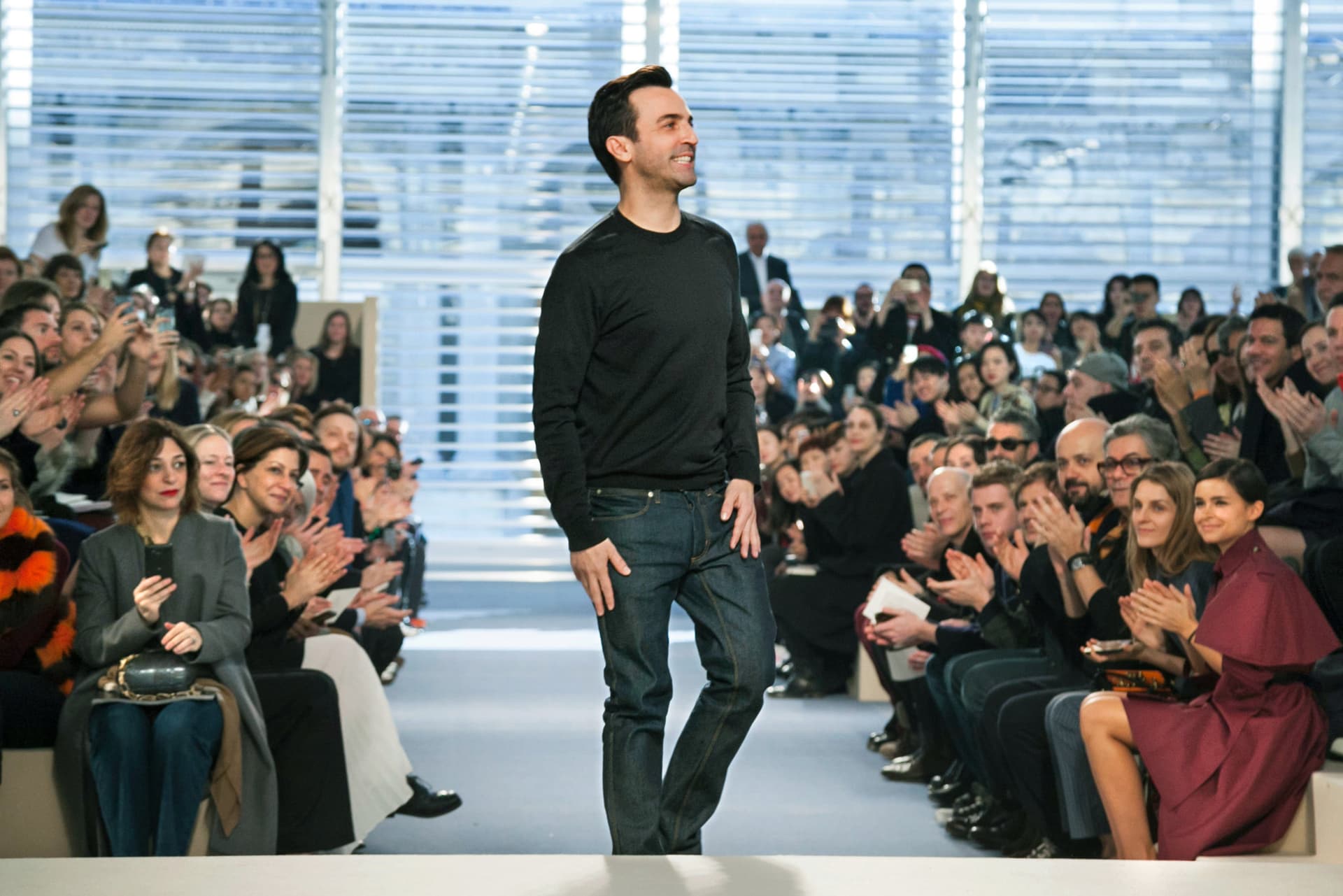
Nicolas Ghesquière has been artistic director of women’s collections since November 4, 2013, and his long tenure has become one of the clearest signs that Louis Vuitton sees creative leadership as strategy, not decoration. He arrived after a long run at Balenciaga, bringing a reputation for sharp, forward-looking design, and Louis Vuitton describes him as embodying the Maison’s visionary spirit. That is a high standard for any designer, but it fits a house that needs to preserve its codes while refusing to fossilize them.
His role is not simply to make beautiful clothes. It is to keep a heritage brand from feeling trapped by its own archives. Louis Vuitton’s official materials point to a 10-year retrospective of his work, which shows how central his creations have been to the brand’s modern identity. The retrospective frame matters because it places his output in the same category as institutional memory, as if his collections are already part of the house story rather than an interruption of it.
Ghesquière’s value lies in contrast. Louis Vuitton’s past is built on utility, travel, and craftsmanship; his task is to make that legacy feel contemporary without flattening it into a costume. He shapes the future by designing the unexpected, a method that keeps the brand alert in a market where luxury can easily become repetitive.
The scale behind the reinvention
Louis Vuitton does not operate as a small heritage label preserving a niche following. It sits inside LVMH, which reported €84.7 billion in revenue in 2024, underscoring the scale of the corporate machine supporting the brand. That scale matters because a house of this size has to speak to global demand while maintaining enough distinctiveness to justify its position at the top of the market. The larger the audience, the more pressure there is to evolve without losing clarity.
The brand has also been described as the world’s largest luxury brand, which helps explain why its design decisions carry such outsized weight. When a house of this magnitude changes its creative language, it influences how luxury shoppers think about status, modernity, and consistency. Louis Vuitton’s success depends on making its heritage legible to new customers while keeping long-time clients convinced that the brand still has something fresh to say.
That tension is especially visible in the way the house manages symbolism. A trunk is not just luggage here. It is a shorthand for movement, privilege, and craftsmanship, and it still informs the larger fashion system around the label. The challenge is to keep that symbolism alive without letting it harden into museum language.
How the brand keeps heritage from turning stale
Louis Vuitton’s playbook is built on repetition with variation. The familiar codes stay in place, but they are reinterpreted often enough that they feel active rather than archived. That approach allows the house to move from the practical origins of trunks and travel goods into runway fashion, accessories, and fine jewelry while still sounding like itself.
Several elements keep that balance in motion:
- The flat-topped trunk remains the foundational idea, a symbol of utility turned into luxury.
- Signature patterns and the tumbler lock keep the brand visually coherent across categories.
- Women’s collections under Ghesquière give the house a runway vocabulary that can surprise without breaking the brand.
- The move from trunk-maker to full luxury empire shows how a heritage brand can widen its reach without abandoning its origin story.
This is where Louis Vuitton’s modern identity becomes especially instructive. Heritage can become stale when it is treated as a fixed image. Louis Vuitton avoids that trap by treating heritage as material, something to cut, recut, and reassemble under each new creative regime. Ghesquière’s long tenure shows that the brand is willing to let continuity come through reinvention rather than imitation.
A future built on recognizable disruption
Louis Vuitton’s future depends on a precise kind of tension. The house must stay recognizable enough to preserve its authority, but restless enough to feel current in a market shaped by global consumer demand, celebrity attention, and constant image circulation. Ghesquière’s work sits at the center of that balancing act because he makes change feel native to the brand.
That is why his tenure has become more than a management story. It is a case study in how a luxury house protects its heritage by refusing to freeze it. Louis Vuitton started with a better trunk in Paris and grew into a vast luxury brand backed by one of the world’s biggest fashion groups. Under Ghesquière, it continues to prove that the most durable form of luxury is not stasis, but disciplined reinvention.
This article was produced by Prism’s automated news system from verified source data, official records, and press releases, then run through automated quality and moderation checks before publishing. The system is built and supervised by the people who set the standards it runs under. Read our full AI policy.
Did this article answer your question?