Louisiana voters head to the polls amid battle over Black districts
Louisiana voters cast ballots as the state froze House primaries, while courts and lawmakers fought over whether one of its two Black districts would survive.
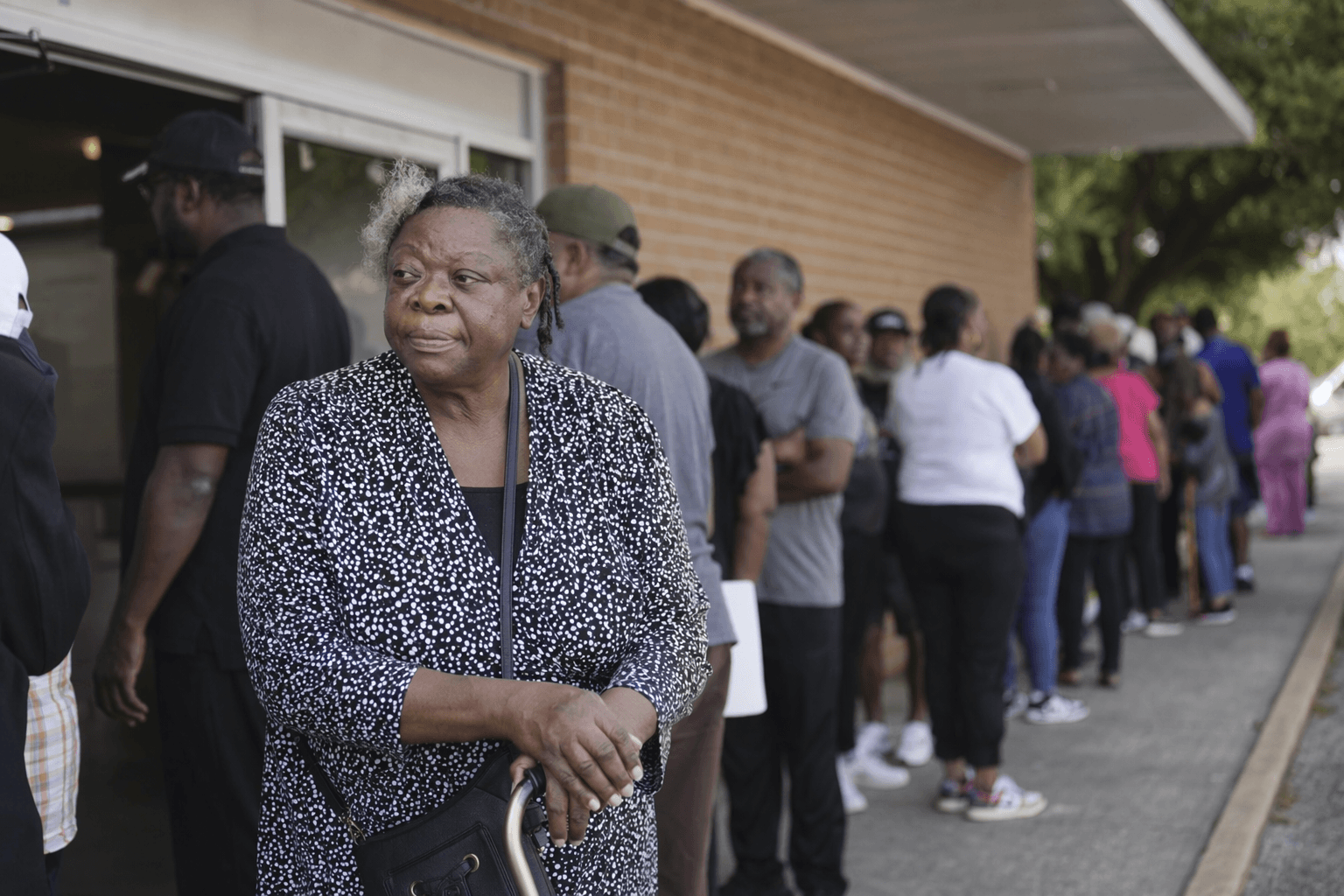
Louisiana voters headed to the polls Saturday with one of the state’s most consequential elections already thrown into legal uncertainty, as a suspended congressional primary collided with a fast-moving fight over Black voting power and the future of the Voting Rights Act.
The turmoil began after the U.S. Supreme Court struck down Louisiana’s congressional map on April 30 in Louisiana v. Callais, ruling 6-3 that the state’s version with two majority-Black districts was an unconstitutional racial gerrymander. Governor Jeff Landry responded by suspending the U.S. House primary set for May 16 and the runoff scheduled for June 27, even as early voting for those congressional races had been due to begin May 2.
Other contests on the May 16 ballot went ahead as planned, including the U.S. Senate race and statewide ballot items, leaving voters to sort through a patchwork of races that were on, off, or still in limbo. The result was a race-day atmosphere shaped less by routine turnout than by legal confusion, with the state’s congressional map still unresolved even as ballots were being cast.
At the center of the dispute was a majority-Black district now held by Democrat Cleo Fields, whose return to Congress in 2024 followed nearly two years of litigation over Louisiana’s map. The state’s redistricting battles have long been tied to Section 2 of the Voting Rights Act, and to repeated challenges over whether Black voters, who make up about one-third of Louisiana’s population, can elect candidates of their choice in proportion to their numbers.
In response to the Supreme Court ruling, Louisiana lawmakers advanced a new 5-1 congressional map that would eliminate one of the state’s two majority-Black, Democratic-leaning districts while keeping one Black opportunity district. If enacted, the plan would leave Republicans with a 5-1 advantage in Louisiana’s six-seat U.S. House delegation, a sharp shift in a state where representation fights have repeatedly spilled into federal court.

Supporters of the new map said it was needed to comply with the Supreme Court decision and bring clarity to the 2026 cycle. Opponents warned it would erase Black voting power and vowed another round of lawsuits. The effect of the ruling may not fully hit until 2028, because most filing deadlines for this year’s congressional races have already passed, but the Louisiana clash has already become a national test case for how far states can go in redrawing maps after court intervention.
With lawmakers, judges and voters all moving on different timetables, Louisiana’s ballot fight has become more than a local redistricting dispute. It now stands as an early measure of how fragile congressional maps, and the protections around them, may be heading into the next election cycle.
This article was produced by Prism’s automated news system from verified source data, official records, and press releases, then run through automated quality and moderation checks before publishing. The system is built and supervised by the people who set the standards it runs under. Read our full AI policy.
Did this article answer your question?

