Lubing switches: the high-impact mod for smoother, deeper thock
Lubing switches smooths travel, reduces ping, and shifts sound toward a deeper thock. This guide explains tools, step-by-step technique, and common mistakes so you can mod with confidence.
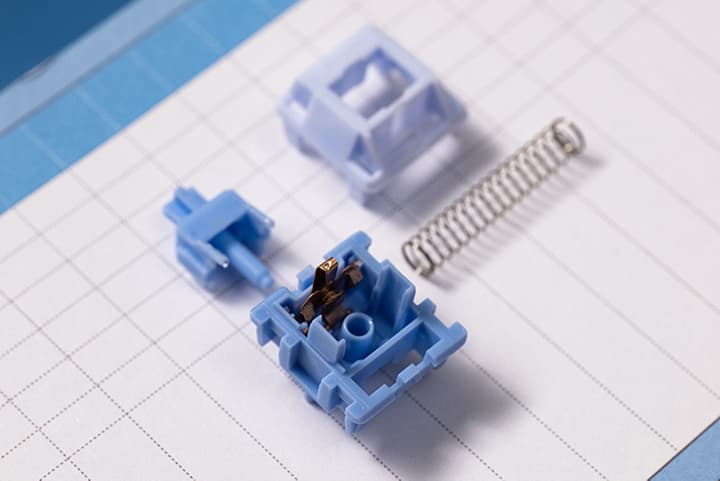
Lubing switches remains one of the most effective, low-cost ways to change how a keyboard feels and sounds. Proper lubrication reduces scratchiness, smooths travel, and tames ping and rattle, often turning a bright click into a deeper thock. Linears and many tactile switches are the usual targets; clicky switches are generally left alone to preserve their snap.
Gathering the right materials makes the job far easier. You will want a switch opener for MX-style switches or a small flat tool, a small synthetic brush in size 00 or 000, anti-static tweezers, and a tray or mat to organize tiny parts. Common lubes include Krytox GPL 205g0 for a thick, thocky result, Krytox GPL 105 or blends of 105/205 for lighter coverage, and thinner oils such as Tribosys 3204 for tactile leaves. A pin vice or holder is handy for spring work, and optional extras include switch films to reduce wobble and a spring swap kit.
Work methodically. Start with a clean, well-lit surface and organize housings, stems, springs, and the little metal contact leaf. Use the opener to split top and bottom housings, then remove stem and spring. Lightly brush a thin coat of lube along the top housing rails where the stem moves; avoid pooling. For linear stems, apply a thin, even layer along the stem rails and the underside where it contacts the housing. For tactile stems, avoid lubing the bump area or use a very precise, microscopic dot; heavy lube will mute the tactile bump. For clicky mechanisms do not lube the click leaf or related interfaces unless you know the consequences.
Spring lubing is common to reduce ping. Wind the spring around a pin vice or hold it with tweezers and wipe a tiny amount of light grease; too much changes feel and can make shorter springs feel sluggish. Reassemble each switch and test with your hand before installing them in a board. If switches feel sticky or gummy, disassemble and remove excess lube. Once mounted, sound and feel often settle after a day as the lube disperses.
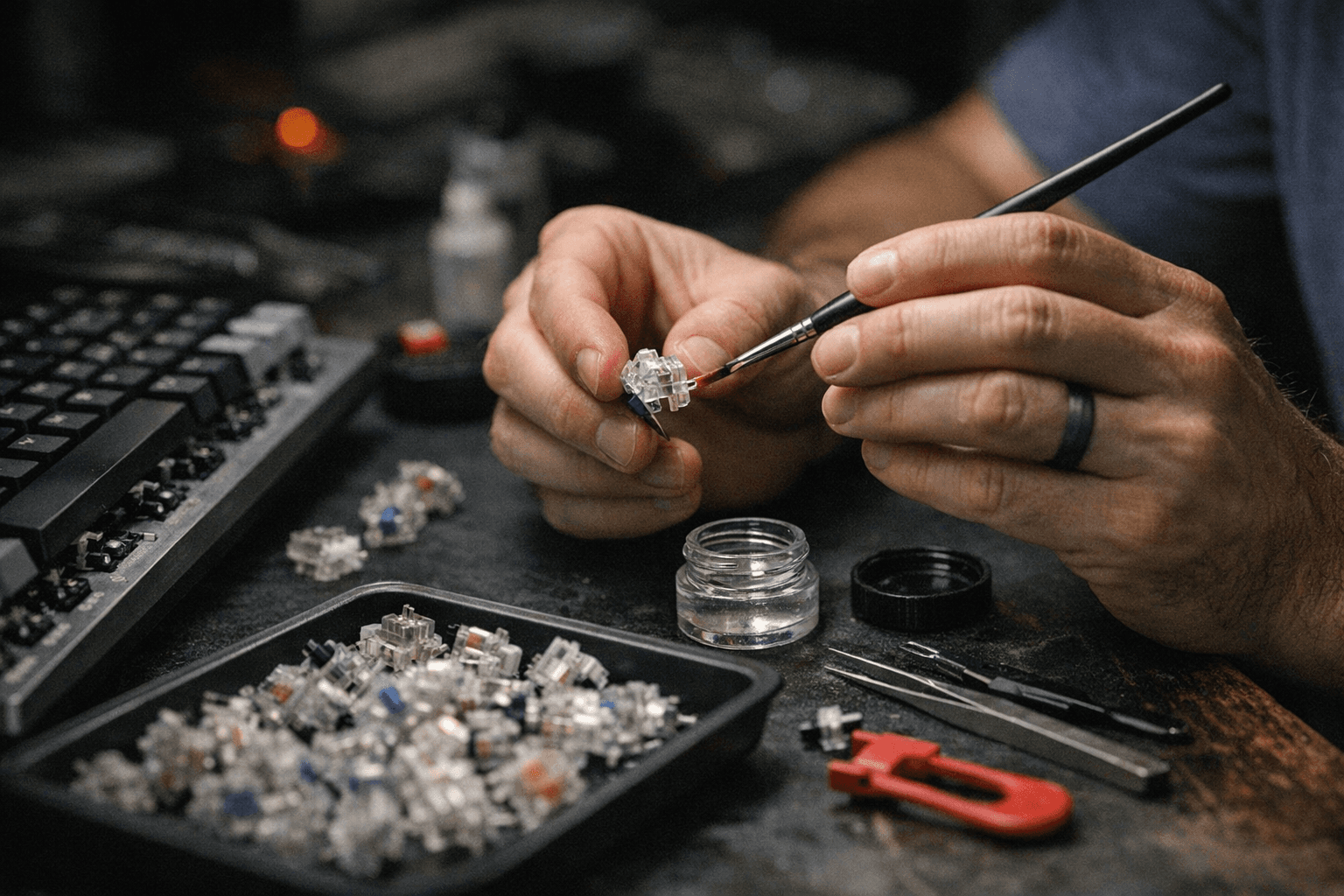
Start small and practice on a handful of switches before committing to a full set. Consider adding films and doing spring swaps before lubing to address wobble and baseline feel; lubing complements these mods. Advanced builders sometimes ultrasonic clean switches first to strip factory oils, and combine lubes such as 105 on springs with 205g0 on stems to fine-tune tone.
If done carefully, lubing delivers smoother travel, reduced noise, and a more satisfying thock without breaking the bank. Try a few switches, tune your lube choices to the sound you want, and resist the urge to overapply—gentle, deliberate work will get you the best results and keep your board feeling great.
Know something we missed? Have a correction or additional information?
Submit a Tip