Choosing Mechanical Keyboard Switch Spring Weights: Ranges and Tuning Tips
A practical primer on switch spring weights explains ranges from 35-80g and offers tuning tips to match typing, gaming, and larger keys.

Spring weight is one of the simplest mod options that changes how a keyboard feels and performs. Measured in gram-force (g), spring weight controls the force to bottom out and the perceived resistance under the fingers. Picking the right spring weight can reduce fatigue, improve double-tap responsiveness, and give larger keys a more balanced feel.
Common ranges map to clear use cases. Light springs, about 35-45g, favor fast, low-effort typing and quick double-taps. Medium springs, roughly 45-60g, are the general all-rounder that balance typing comfort and gaming control. Heavy springs, in the 60-80g band, suit deliberate typists and are often chosen for larger keys such as Space and Enter or for builders who prefer firm feedback.
Choosing the right weight depends on play style, hand size, and key function. Pick lighter springs for fast gaming or smaller hands that benefit from less travel force. Choose medium springs when you need a hybrid setup for both work and play. Opt for heavier springs for a more deliberate typing feel and when stabilizer-heavy keys need stronger return force. Consider progressive springing, using heavier springs on larger keys so Space and Enter feel consistent with alphas without making every key stiff.
Practical tuning techniques make testing low-risk and affordable. Swap a single spring into one key on a hot-swap board to audition the change before committing to a full set. Adjust spring weights for modifiers and the space bar separately, then pair springs with switch dampers or films to fine-tune acoustics and reduce ping. If precision matters, measure springs with a simple digital force gauge; if not, use feel-first testing.
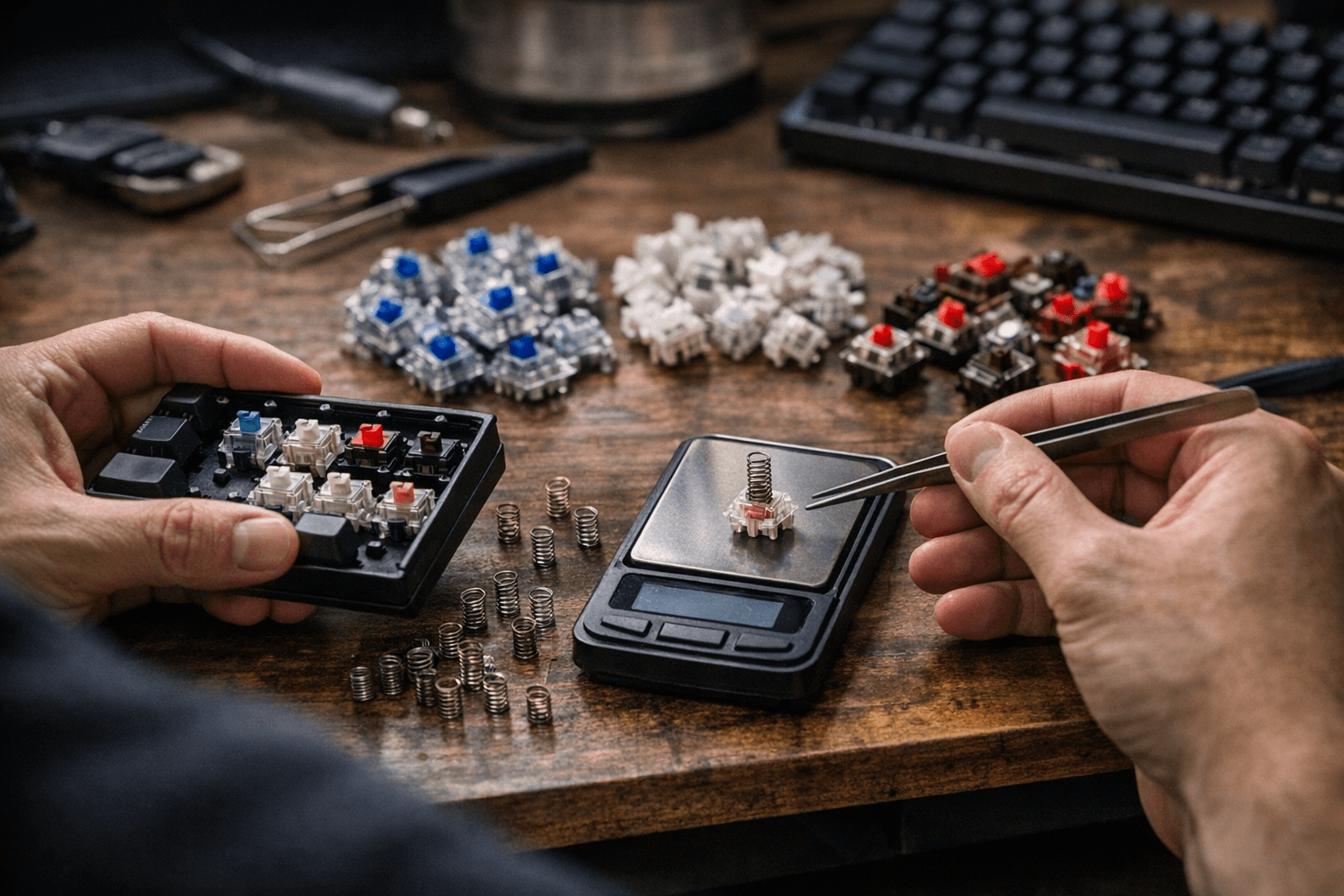
Adopt a measured workflow: test a single replacement spring for a week to build muscle memory around the new force curve, then iterate. Hot-swap boards and individual spring sales make this a low-cost experiment. Progressive springing and selective damping help create a more cohesive sound and feel across different key sizes.
For builders and modders, spring tuning is a high-value, low-effort upgrade. It’s an accessible way to dial in ergonomics and acoustics without swapping entire switch types. Expect small changes to have outsized effects on comfort and performance, and plan tests one key at a time before committing to a full switch overhaul.
Know something we missed? Have a correction or additional information?
Submit a Tip