Lulu Garcia-Navarro on interviewing Tucker Carlson amid Trump rift
Lulu Garcia-Navarro’s Carlson interview becomes a test of journalistic discipline: how to press hard, avoid amplification, and still let a polarizing figure answer for himself.
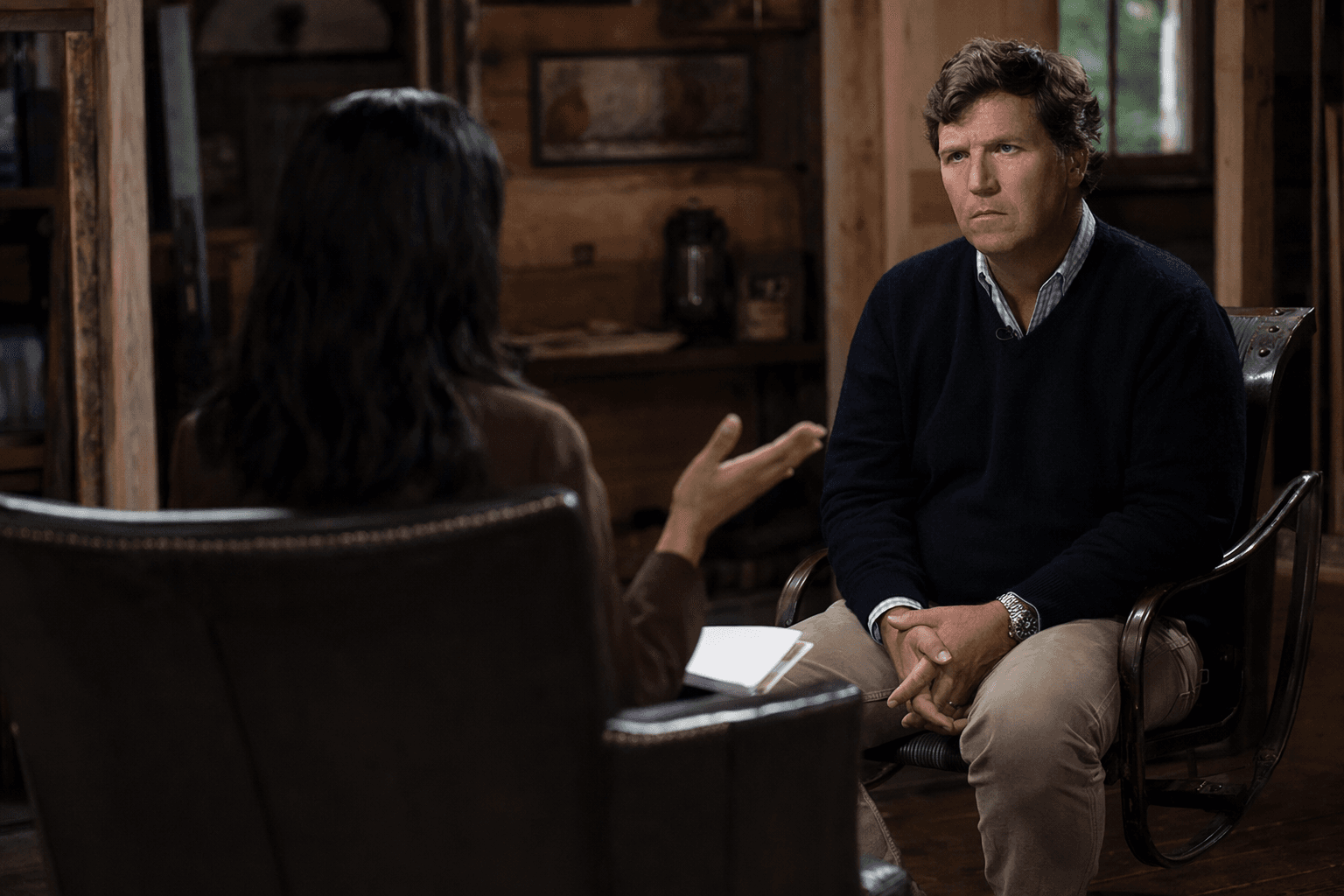
The interview was a stress test for modern journalism
Lulu Garcia-Navarro’s conversation with Tucker Carlson is not just another high-profile sit-down. It is a case study in what happens when a newsroom decides that access to a polarizing figure is worth the risk, but only if the interviewer can keep the exchange accountable in real time. The New York Times framed the discussion around her preparation, her live judgments, and the hard calls that come when a subject is provocative, influential, and still in the center of national argument.
That tension matters because Carlson is not a peripheral personality. The Times described him as a figure who has sat at the center of U.S. political conversation and conservative media for a decade, which means every choice in the interview carries consequences beyond the transcript. When a broadcaster with that kind of reach is talking about war, power, and party conflict, the interviewer is not just managing tone. She is managing public meaning.
Why Garcia-Navarro was a fitting interviewer
Garcia-Navarro brought a résumé built for this kind of assignment. She is a two-time Peabody Award-winning journalist, a former NPR correspondent, and a former host of Weekend Edition. She now leads The New York Times’s flagship audio franchise, The Interview, which has already put her across from figures as varied as Vice President JD Vance and Miley Cyrus.
That background matters because the best interviews with difficult subjects rarely depend on confrontation alone. They depend on pacing, credibility, and the ability to recognize when a claim needs immediate challenge and when a sharper follow-up will do more work than an interruption. Garcia-Navarro’s experience across politics, culture, and international reporting gives her the range to hold a subject like Carlson in frame without collapsing the conversation into theatrics.
Her role also reflects a broader editorial choice. Publications increasingly use long-form interviews not only to extract information, but to expose how a public figure thinks under pressure. That only works if the interviewer resists becoming a stage prop for the guest’s performance. Garcia-Navarro’s comments about deciding, moment by moment, which questions to pursue and when to challenge, show that the real craft is often invisible: the discipline of not overcorrecting, and the discipline of not letting a damaging answer pass as mere conversation.

Why Carlson’s reach still shapes the stakes
The Carlson interview lands in the shadow of his break with Donald Trump over U.S. strikes on Iran, a rupture that has drawn intense attention because Carlson has long been one of the most influential voices in Trump-era conservatism. That split gives the interview immediate political weight. It is not simply about one broadcaster’s opinion. It is about a fracture inside a political movement that has helped define the country’s media and policy arguments.
His audience history explains why journalists keep returning to him. During his Fox News tenure, Carlson was among the network’s biggest primetime draws, and prior reporting noted nightly audiences of more than 3 million viewers. Other 2026 reporting put Jesse Watters Primetime at an average of 3.4 million viewers in the first quarter of 2026, compared with Carlson’s 3.2 million in the first quarter of 2023 before his departure. The exact comparison underscores a larger point: Carlson’s influence was never just reputational. It was measurable, nightly, and tied to one of the most powerful platforms in cable news.
That scale is exactly why interviews with him cannot be treated as neutral access exercises. When a figure with that audience speaks about the Iran war, antisemitism, or Trump, the stakes include what millions of viewers may hear, repeat, and absorb. In that setting, the interviewer’s duty is not to score points, but to make sure the public gets something more useful than a polished monologue.
Where the line sits between letting him speak and challenging him
The editorial challenge in Garcia-Navarro’s approach is the same one facing many newsroom interviews with polarizing guests: let the subject finish a thought, but do not let completion become permission. A journalist owes audiences enough space to hear a public figure’s argument in full, yet that same obligation includes interrupting falsehoods, pressing vague claims, and refusing to normalize provocation as insight.
That line is especially important when the interview becomes adversarial. At that point, the risk is not only that the subject will deflect, but that the interview itself becomes a story about journalistic process instead of the substance. Media accountability gets muddied when a newsroom acts as though the mere act of asking tough questions is the end point. It is not. The audience deserves clarity about whether the interviewer challenged the claim at the right moment, whether the follow-up was specific enough, and whether the line of questioning made the subject’s public power legible.
Garcia-Navarro’s real-time judgment calls point to the most important part of the enterprise: editorial restraint. In a conversation with a figure like Carlson, the goal is not to dominate the room. It is to prevent the room from becoming a megaphone. That means challenging claims without feeding the performance, and pressing for specificity without turning the exchange into a shouting match that lets the guest dodge the underlying questions.
What this episode says about newsroom responsibility
The companion Times piece on takeaways from the Carlson interview suggests that the newsroom sees the conversation as more than a personality profile. It is being treated as a reporting event that reveals how a powerful media figure is positioning himself amid conflict with Trump, and how an interviewer can keep the encounter accountable without pretending neutrality means passivity.
That is the deeper lesson for any newsroom weighing whether to platform a provocative subject. Access is not the prize. Informed public understanding is. When a figure like Carlson brings a decade of influence, a large audience, and a talent for turning confrontation into content, the journalistic job is to narrow the gap between what he wants to say and what the public needs to know.
Garcia-Navarro’s interview shows how hard that is in practice. It also shows why the best accountability work does not end with securing the conversation. It begins with the editorial decisions that shape it, continues through the questions that refuse to blink, and ends only when the audience has been given something sturdier than spectacle.
This article was produced by Prism’s automated news system from verified source data, official records, and press releases, then run through automated quality and moderation checks before publishing. The system is built and supervised by the people who set the standards it runs under. Read our full AI policy.
Did this article answer your question?

