Lyrid meteor shower peaks this week, could bring 20 meteors hourly
A 27% moon and a late-night peak give the Lyrids a stronger-than-usual showing, but 20 an hour is a best-case number, not a promise.
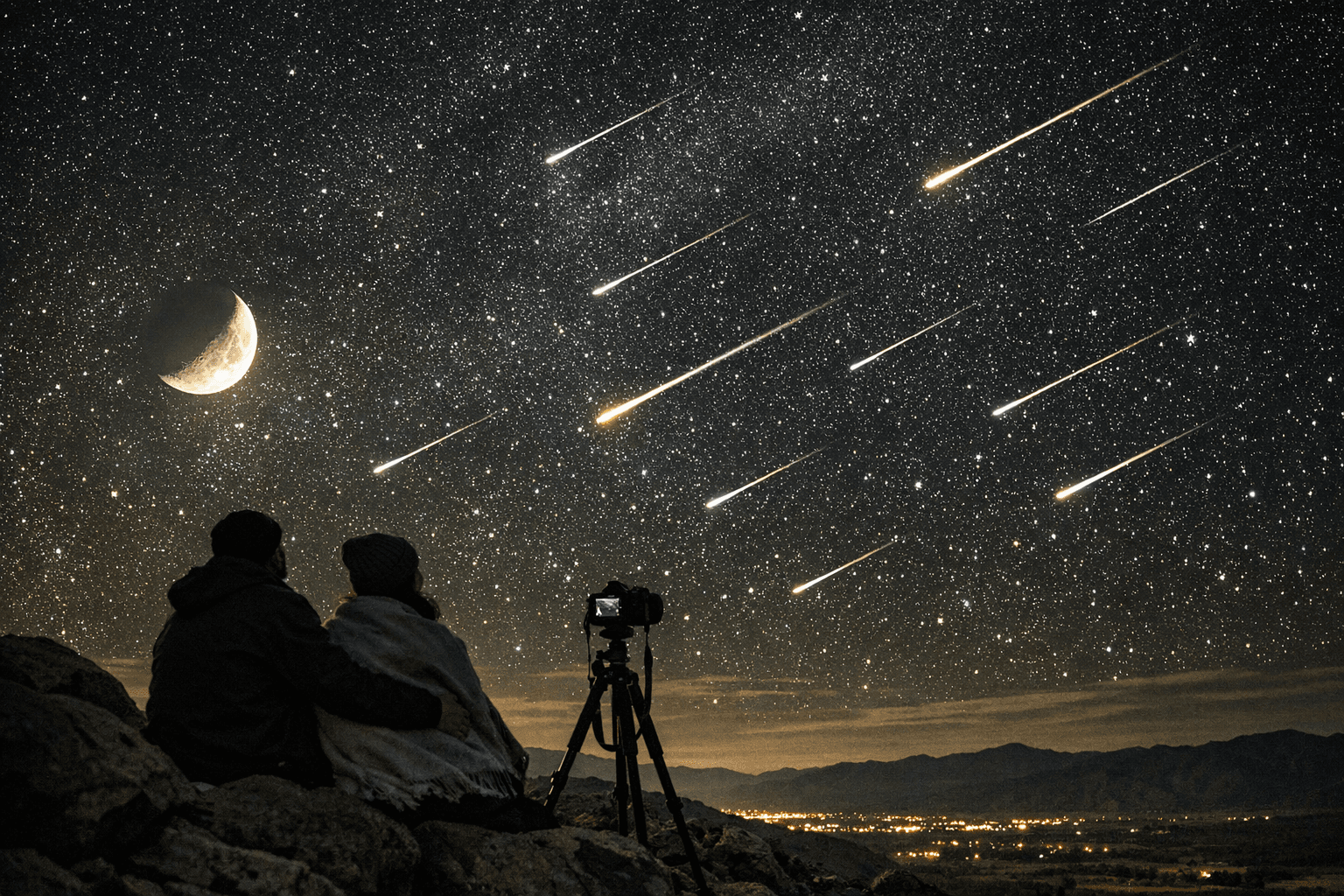
A crescent moon and an ancient stream of comet debris should give skywatchers one of the better Lyrid viewing windows in years, with the shower peaking late Tuesday night into Wednesday morning and the clearest viewing starting around 10 p.m. on April 21.
NASA says the best chance to catch the meteors runs through the night into April 22, looking east toward Vega in the constellation Lyra. The American Meteor Society says the shower remains active through April 30, but the peak night matters most because the moon will be about 27% full, a far easier backdrop than a bright full moon. That lighter moon phase should help preserve darker skies, especially after midnight, when Lyra climbs higher and the radiant stands a better chance of sending more streaks across the sky.
The Lyrids are one of the oldest known meteor showers, observed for about 2,700 years, and historical records place sightings as far back as 687 BC. The display comes from debris left by Comet C/1861 G1 Thatcher, a long-period comet that takes about 415 years to orbit the Sun. When Earth crosses that debris trail, tiny pieces burn up in the atmosphere and create the flashes that make the shower visible from the ground.
The headline estimate of 20 meteors per hour is real, but it is also a ceiling. It is closest to what observers might see under dark, open skies with the radiant high overhead and little light pollution. Most people will count fewer than that because the shower is still building early in the evening, the radiant is low at first, and city glow, trees and buildings cut down the view. The number also includes faint meteors that can be easy to miss without a wide, unobstructed patch of sky.
NASA and the American Meteor Society say the Lyrids can produce fireballs, brighter bursts that stand out even when the overall shower is modest. EarthSky notes the shower can also deliver outbursts roughly every 60 years, with the next one expected in 2042, a reminder that the Lyrids can occasionally turn from a steady annual display into something much more dramatic. For now, though, the 2026 setup is simple: go outside after 10 p.m., face east, and keep watching through the night.
This article was produced by Prism’s automated news system from verified source data, official records, and press releases, then run through automated quality and moderation checks before publishing. The system is built and supervised by the people who set the standards it runs under. Read our full AI policy.
Did this article answer your question?