Madonna announces Confessions on a Dance Floor sequel for July release
Madonna will return on July 3 with Confessions on a Dance Floor: Part II, her first album in seven years and a sequel to a career peak.
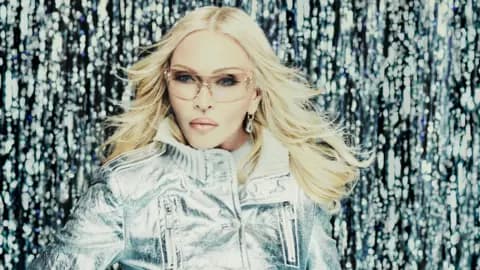
Madonna is reviving one of her sharpest commercial and creative statements with Confessions on a Dance Floor: Part II, a new album set for July 3, 2026, through Warner Records. The project, also called Confessions II, will be her first full-length release since 2019’s Madame X and arrives more than two decades after the album that helped define her mid-2000s reinvention.
The original Confessions on a Dance Floor, released in 2005, delivered some of Madonna’s most durable dance-pop material, including Hung Up, Sorry, Get Together and Jump. It went platinum, won the Grammy for best electronic/dance album in 2006, and cemented a version of Madonna that fused club culture with mainstream pop precision. Bringing that title back now suggests more than nostalgia. It points to an artist drawing on a proven era while also testing whether a legacy album can still function as a live creative framework rather than just a catalog reference point.
Madonna had been signaling the project for months. In December 2024, she posted a studio video with Stuart Price, the producer who helped shape the sound of the original Confessions album. She later re-signed with Warner Records in September 2025, returning to the label that released the first 25 years of her career. The new campaign leans into that symmetry, with cover art that echoes the 2005 album image and preorder options rolled out across CD, vinyl and cassette editions.
On streaming platforms, Confessions II is being presented as a 16-track set, a detail that underscores how carefully the rollout is being framed for both collectors and digital listeners. The use of multiple physical formats also signals the album’s dual appeal: a new release built for the present market, while trading on the recognizability of one of Madonna’s most successful eras.
Madonna has paired the announcement with a manifesto-like statement about the record’s themes, describing the dance floor as a ritualistic space tied to transcendence, community and self-discovery. A preview snippet featuring the line “I feel so free” points back to the emotional release that powered the first album, while also suggesting a fresh bid to connect personal reinvention with pop longevity. For Madonna, the sequel is not just a callback. It is a test of whether one of pop’s most influential catalogs can still move culture by re-entering the room on its own terms.
This article was produced by Prism’s automated news system from verified source data, official records, and press releases, then run through automated quality and moderation checks before publishing. The system is built and supervised by the people who set the standards it runs under. Read our full AI policy.
Did this article answer your question?