Paris engineer wins $1 million Picasso in $117 charity raffle
A Paris engineer won Picasso’s 1941 “Head of a Woman” with a 100-euro raffle ticket as the fundraiser brought in 12 million euros for Alzheimer’s research.
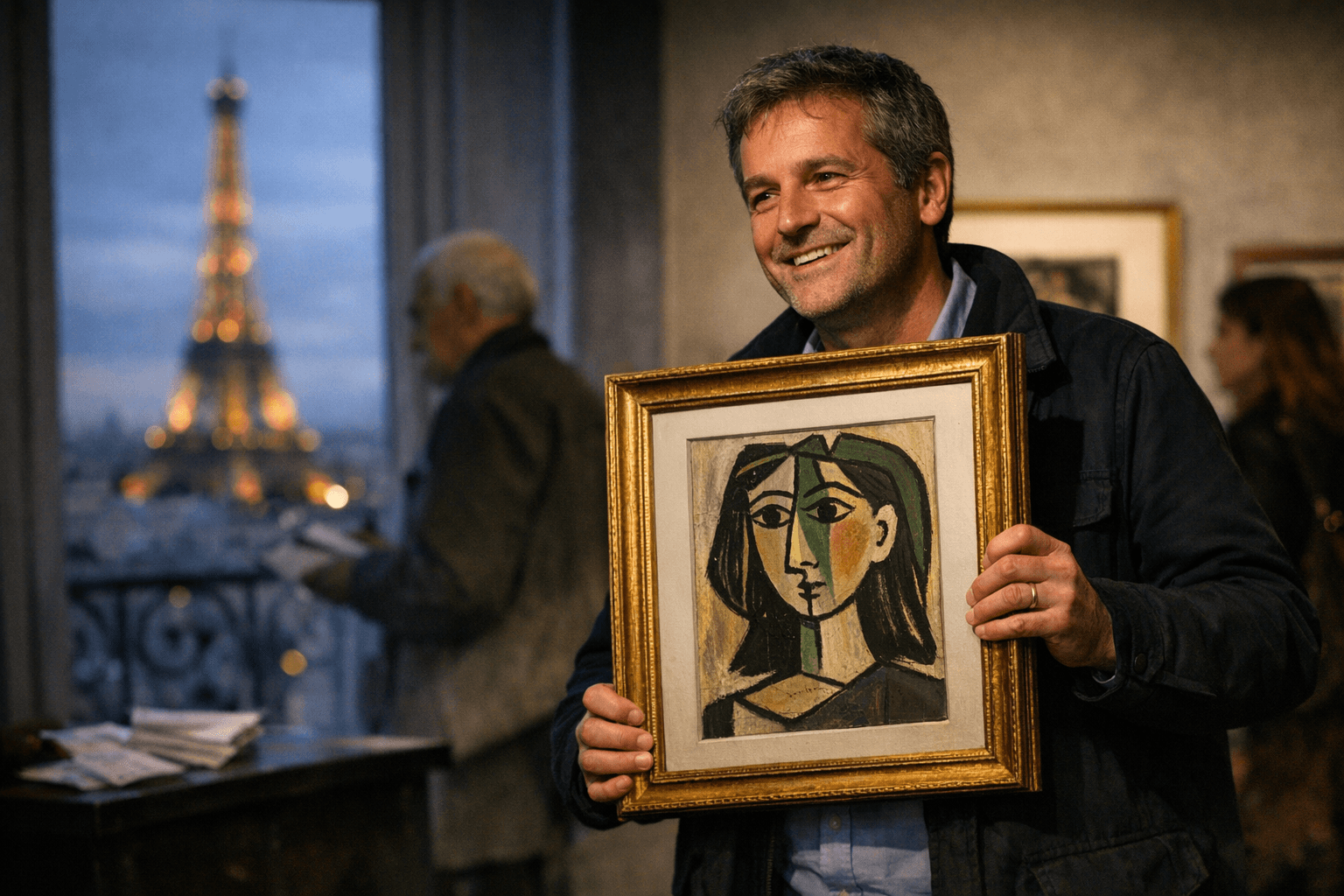
A 58-year-old sales engineer from Paris walked away with Pablo Picasso’s 1941 “Head of a Woman” after buying a 100-euro ticket, a result that turned an elite artwork into a lottery prize and then back into a symbol of scarcity.
The winner, Ari Hodara, said he was an amateur art lover and a fan of Picasso’s work. When organizers called him after the draw at Christie’s auction house in Paris on Tuesday, April 14, 2026, he reportedly asked, “How do I check that it’s not a hoax?” The reaction captured the odd mix at the center of the fundraiser: the thrill of access, and the disbelief that still surrounds art priced at the level of private wealth.
Organizers said about 120,000 tickets were sold in the “1 Picasso for 100 euros” campaign founded by Peri Cochin. The raffle raised around 12 million euros for Alzheimer’s research, with several million euros earmarked for the Alzheimer’s Research Foundation. The painting itself, a gouache-on-paper work also identified as “Tête de Femme,” was valued at about 1 million euros, or roughly $1 million to $1.18 million depending on the exchange rate reported.
That structure is what gives the scheme its democratic sheen. For 100 euros, far less than the price of a painting by Picasso, tens of thousands of people could buy a chance at ownership. Yet the model also makes scarcity more visible, not less. The winning ticket created a single household beneficiary while the rest of the participants financed a charitable payout and the spectacle of access to a work that would otherwise sit far beyond public reach. A lower entry price opens the door, but only if the buyer already has disposable income.
The painting had been displayed publicly in Paris on Friday, April 10, 2026, ahead of the draw, offering a brief moment when an object associated with private collectors and auction houses was available to the public on view. That public display, followed by the raffle at Christie’s, showed how organizers can borrow the language of access while still operating inside the machinery of luxury art marketing.
The fundraiser also sat on a record of similar campaigns. Organizers said the two previous Picasso raffles raised more than 10 million euros combined for cultural work in Lebanon and for water and hygiene programs in Africa. In that sense, the raffle was both charity and branding, channeling attention toward urgent causes while using the prestige of Picasso to produce revenue. The result was real money for Alzheimer’s research, but also a reminder that elite art remains a financial instrument, even when it is sold as democratized chance.
This article was produced by Prism’s automated news system from verified source data, official records, and press releases, then run through automated quality and moderation checks before publishing. The system is built and supervised by the people who set the standards it runs under. Read our full AI policy.
Did this article answer your question?