Maersk halts Hormuz and Suez transit as Brent spikes to $82 a barrel
Maersk paused transits through the Strait of Hormuz and Suez, and Brent crude rose as much as 13% to $82 a barrel, after U.S. and Israeli strikes on Iran halted regional shipping.
Maersk announced it was halting passage through the Strait of Hormuz and the Suez Canal, and Brent crude surged as much as 13% to $82 a barrel in early trading, as markets reeled from U.S. and Israeli strikes on Iran that have effectively halted traffic through the narrow Gulf chokepoint. The interruptions are already pressuring fuel markets and global trade routes.
The strikes and subsequent Iranian retaliation have disrupted seaborne oil flows through the Strait of Hormuz, which industry analysts and traders describe as vital to global energy supplies. “Roughly one-fifth of global oil and LNG flows squeeze through the Strait of Hormuz. This is not an obscure canal. It is the aorta of the global energy system,” said Stephen Innes of SPI Asset Management, highlighting the immediate strategic significance of the stoppage.
Market snapshots from different trading venues captured the shock. U.S. benchmark crude rose to about $73 a barrel, jumping roughly 9% on Monday, while other reporting showed U.S. crude up about 6% as of Monday morning and global prices sitting in the high $70s in some accounts (AP; CNBC; NPR). Those variations reflect different benchmarks and timestamps. Retail gasoline in the United States is already reacting: the average price of unleaded was reported at $2.997 a gallon, up 2% from a week earlier (AAA via CNBC).
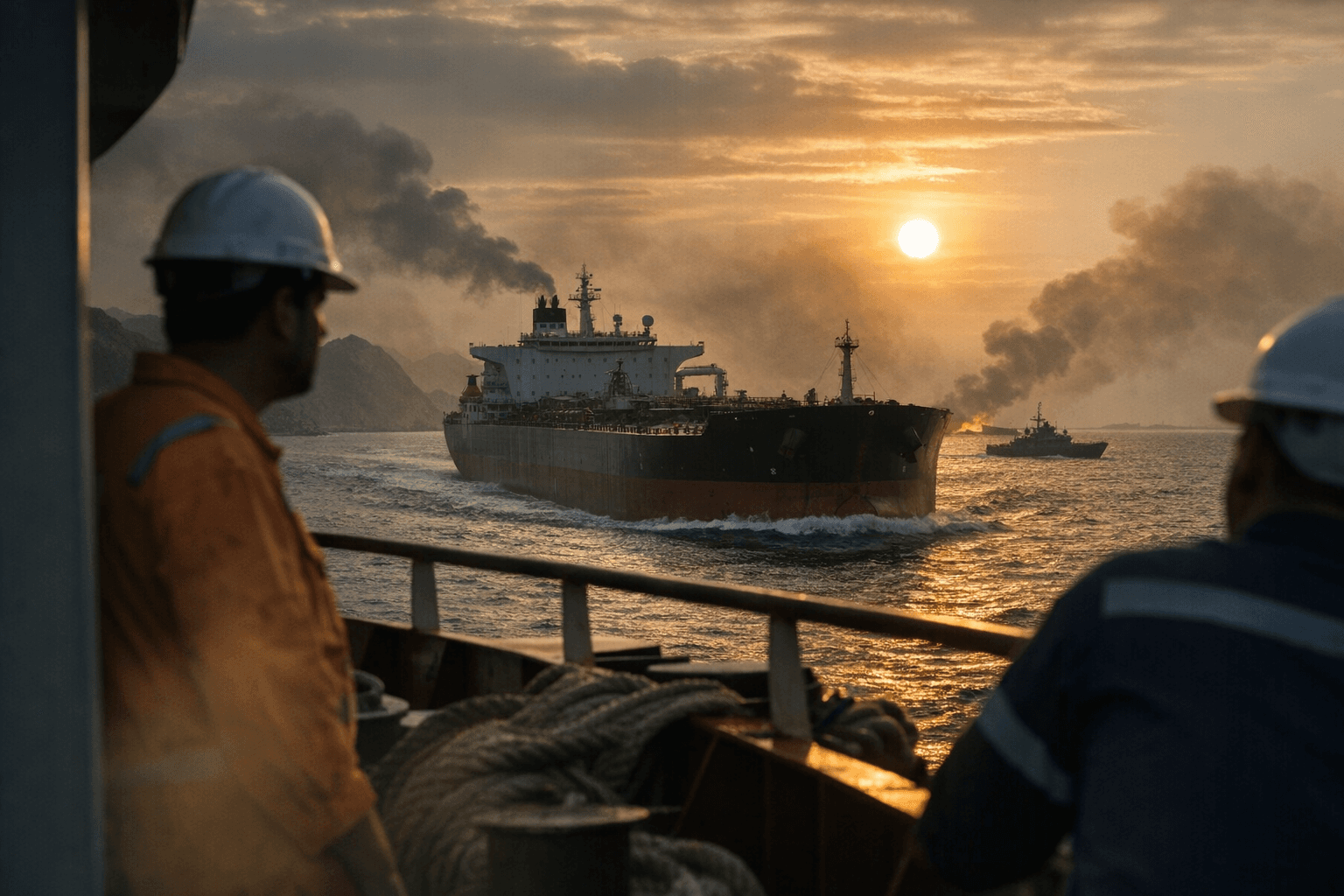
The causes of the halt are stark. Within hours of the strikes, Tehran warned tankers that passage would not be allowed and UK Maritime Trade Operations reported two ships were attacked in the strait, one off Oman and the other off the UAE, prompting shipping companies to suspend transits for safety. Maersk’s decision to stop sailings through both the Hormuz and Suez arteries underscores the cascading risk: if alternative corridors are constrained, the cost of shipping consumer goods and energy will rise.
Energy analysts warned of further upside in oil if the conflict is prolonged or actively disrupts Iranian exports. William Jackson, chief emerging markets economist at Capital Economics, said the conflict “could cause oil prices to jump, perhaps to around $100 per barrel” if supply is hit. Multiple analysts similarly warned a sustained shutdown of Hormuz traffic could push prices above $100 a barrel (DW; CNBC; Guardian).
Supply-side mechanics make gasoline prices sensitive to crude moves. The Energy Information Administration notes that crude oil is the largest component of retail gasoline costs, and “the supply chain immediately kick-starts how that cost is passed along,” Medlock said. “If we see restrictions through the Strait of Hormuz… inevitably we will see the price of crude oil jump… that will trickle through to the price of gasoline,” Medlock added (CNBC).
Financial markets reflected the shock beyond energy. U.S. futures and Asian markets fell, and European stocks opened sharply lower: Germany’s DAX was down 2.2 at 24,737.47, Paris’s CAC 40 lost 1.9 to 8,413.91, and Britain’s FTSE 100 slipped 1% to 10,800.63 (AP). Defense contractors and oil companies gained in some sessions, helping limit broader losses.
Complicating supply calculations, OPEC+ agreed to a modest output boost of 206,000 barrels a day for April, but Iran’s share of global output is small enough that even a partial disruption matters: estimates in reporting place Iran at about 3-4% of global oil output or roughly 4.5% in other accounts (DW; Guardian). For consumers and importers worldwide, the immediate consequence is clear: higher fuel costs and more expensive goods if shipping detours and insurance hikes persist. Authorities and markets are watching UKMTO advisories, OPEC+ statements, EIA data, and shipping company updates for the next directional signal.
This article was produced by Prism’s automated news system from verified source data, official records, and press releases, then run through automated quality and moderation checks before publishing. The system is built and supervised by the people who set the standards it runs under. Read our full AI policy.
Did this article answer your question?

