Magnificent Seven's Grip on S&P 500 Has Quietly Broken Down
The tight lock-step relationship between Big Tech's biggest names and the broader market has fractured, opening a rare window for independent gains.
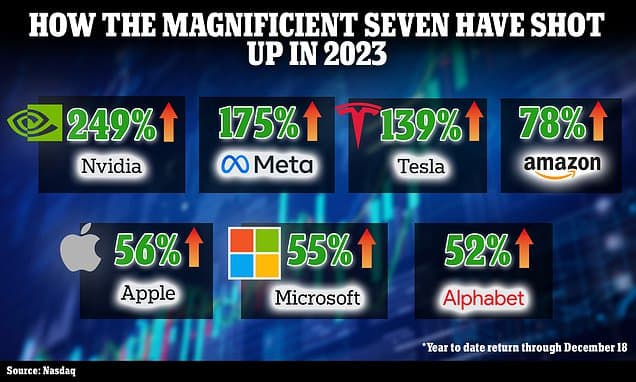
The Magnificent Seven no longer move with the market the way they used to, and that statistical break may be the most important shift in equity positioning that most investors haven't yet priced in.
A data analysis published Saturday found that the correlation between a Magnificent Seven index and an equal-weight S&P 500 has materially weakened. For years, the cluster of mega-cap technology companies, including Apple, Nvidia, Microsoft, Alphabet, Amazon, Meta, and Tesla, acted almost in perfect unison with the broader index, rising and falling together in a relationship so tight that diversification across the two was largely illusory. That relationship has now cracked.
The implications are significant. When mega-cap tech traded in lockstep with the S&P 500, a bet on the Magnificent Seven was essentially a leveraged bet on the broader market, amplified by momentum and passive fund flows. Investors who thought they were diversified by holding both a tech-heavy portfolio and a broad index fund were, by the numbers, doubling down on the same underlying risk.
A breakdown in correlation changes that calculus entirely. It means the Magnificent Seven can now rally, or fall, independently of what the equal-weighted market is doing. For bulls, this is an opening: if macro headwinds continue to weigh on the broader economy through rate sensitivity, regional bank stress, or consumer spending slowdowns, large-cap tech could decouple and outperform on the strength of its own earnings power, cash reserves, and artificial intelligence investment cycles.
That case rests on fundamentals that remain genuinely strong. The seven companies collectively generate hundreds of billions in free cash flow annually, carry fortress balance sheets, and are positioned at the center of the most capital-intensive technology buildout in decades. AI infrastructure spending, in particular, has shown little sign of contraction even as other corporate capital expenditures have tightened under higher borrowing costs.
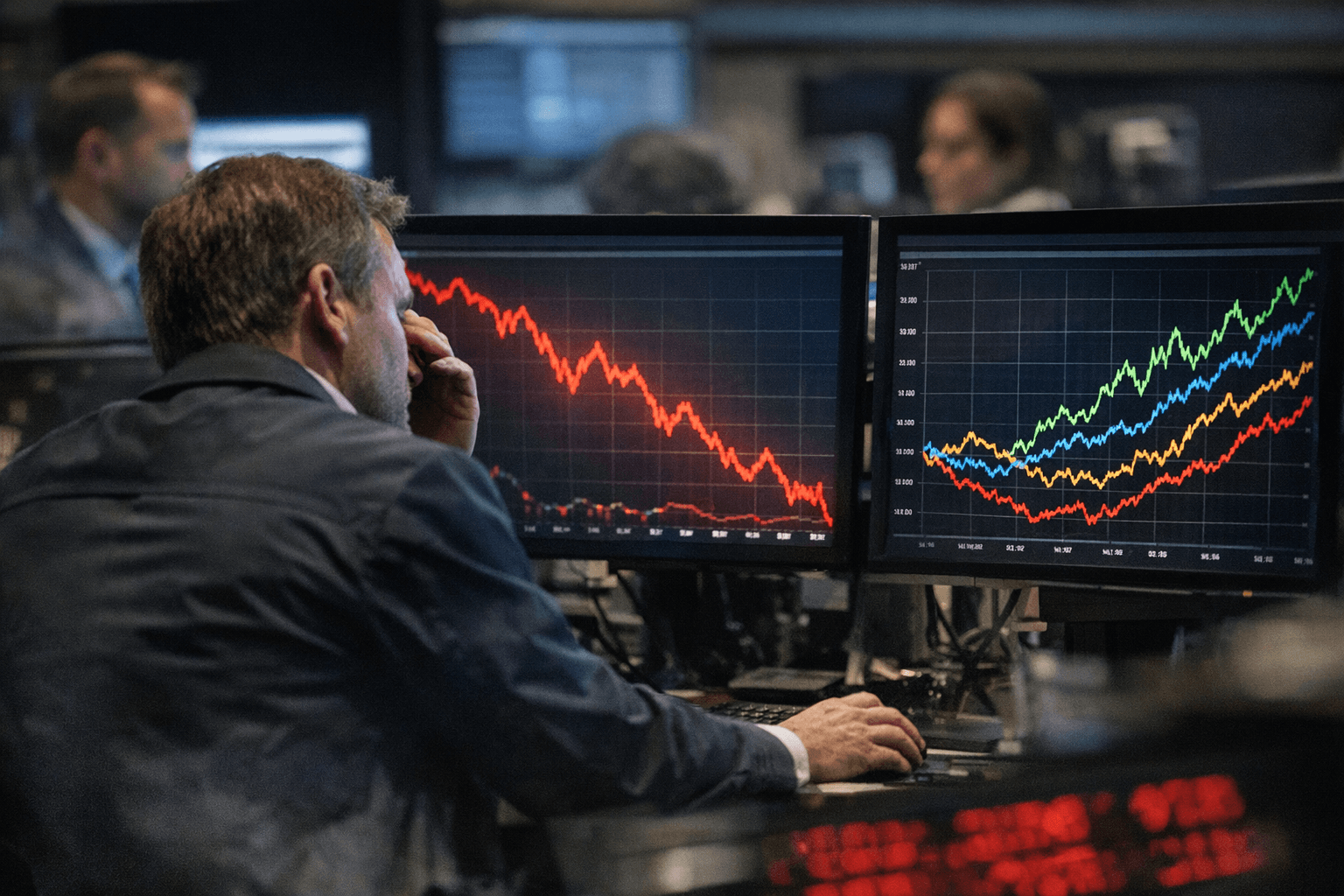
The bear case for the decoupling is less discussed but equally plausible. Correlation breakdowns can also signal that the Magnificent Seven are beginning to reflect risks specific to their own sector, including antitrust scrutiny in Europe and the United States, regulatory pressure on AI development, and the possibility that AI monetization timelines are longer than current valuations assume. A correlation break, in other words, is not inherently bullish; it is a signal of divergence, and divergence cuts both ways.
What makes the current moment analytically interesting is the timing. The correlation shift emerged as markets have been processing a complex macro backdrop: Federal Reserve policy uncertainty, persistent inflation in services, and geopolitical trade tensions that have hit industrial and consumer sectors harder than technology. In that environment, the Magnificent Seven's relative insulation from tariff exposure and their domestic revenue bases gave them a structural buffer the rest of the market lacks.
Whether this correlation breakdown proves durable will depend on whether the AI investment cycle continues to justify the premium these companies command. If earnings revisions for the group hold or move higher while the equal-weight index faces downward pressure, the decoupling becomes self-reinforcing. If AI spending disappoints and regulators tighten their grip simultaneously, the gap closes in the other direction.
For portfolio managers running against a benchmark, the shift demands a reassessment of how Big Tech exposure is categorized: no longer a proxy for the market, but a distinct asset with its own risk and return profile.
This article was produced by Prism’s automated news system from verified source data, official records, and press releases, then run through automated quality and moderation checks before publishing. The system is built and supervised by the people who set the standards it runs under. Read our full AI policy.
Did this article answer your question?

