Magnitude 6.0 Earthquake Strikes Offshore Noda - No Tsunami Alert
A magnitude-6.0 earthquake struck offshore east of Noda in Iwate Prefecture on January 1, 2026, the U.S. Geological Survey recorded, but Japan’s Meteorological Agency issued no tsunami warning or advisory. The tremor adds to heightened seismic activity in northern Japan in December and underscores continued vigilance for coastal communities.
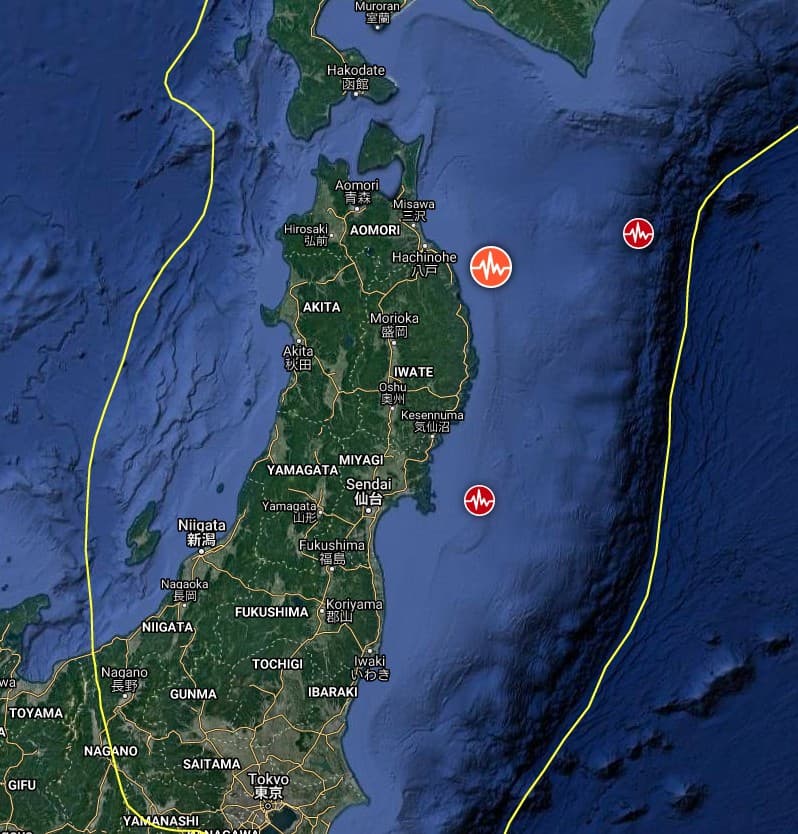
A magnitude-6.0 earthquake was recorded offshore in the Pacific Ocean about 91 kilometers east of Noda, a coastal town in Iwate Prefecture on Honshu’s northeastern shore, the U.S. Geological Survey reported. The event’s epicenter is at approximately 40.112°N, 142.889°E, and initial depth measurements cluster near 19.3 kilometers beneath the seafloor, although at least one alternate reading put the hypocenter deeper, near 41 kilometers. Japan’s Meteorological Agency said no tsunami warning or advisory was issued and that the situation is being closely monitored.
Local authorities reported no immediate major damage or casualties following the quake. Emergency services and municipal offices in Iwate and neighboring prefectures were placed on alert as a precaution, and coastal communities that experienced alerts earlier in the month remained watchful. The event occurs against a backdrop of intensified seismicity in northern Japan during December, including a magnitude-7.5 earthquake on Dec. 8 that injured 23 people and prompted tsunami advisories for Hokkaido, Aomori and Iwate. That earlier event produced observed sea-level changes in some ports estimated between 20 and 70 centimeters and prompted temporary evacuations before all advisories were lifted.
Japan’s public messaging has emphasized preparedness rather than alarm. Satoshi Harada, an official in the JMA earthquake and volcano division, urged continued readiness after the December events, saying people "need to prepare, assuming that a disaster like that could happen again." The current quake, while moderate by Japan’s standards, reinforces that guidance for residents and municipal officials who must manage emergency shelters, communications and infrastructure checks during winter months when cold weather can complicate evacuation and recovery.
Seismologists note that offshore earthquakes of this size commonly produce strong local shaking but do not always generate destructive tsunamis. The lack of a tsunami advisory from JMA reflects that assessment, and monitoring systems remained active across the northern Pacific coast. Local transportation operators reported temporary disruptions to ferry and coastal services while officials completed rapid inspections of ports, ports of call and coastal facilities.

Some reporting showed discrepancies in the event timestamp, with the USGS event log indicating an origin on Jan. 1, 2026 while several local time accounts placed the tremor late on Dec. 31, 2025; such differences underline the need to reconcile UTC and Japan Standard Time stamps. For authoritative confirmation of the exact origin time and definitive depth measurement, officials and interested parties should consult the USGS event log and the Japan Meteorological Agency bulletin.
As officials continue to assess the immediate aftermath, the broader question for authorities remains whether the recent cluster of quakes represents a temporary surge or part of longer-term activity. For now, the prevailing message from scientists and disaster managers is steady preparedness and clear communication to coastal residents who have lived through the region’s recurrent seismic cycles.
This article was produced by Prism’s automated news system from verified source data, official records, and press releases, then run through automated quality and moderation checks before publishing. The system is built and supervised by the people who set the standards it runs under. Read our full AI policy.
Did this article answer your question?


