MagSafe iPhone device adds keyboard-based transcription across apps
A $129 MagSafe mic promises cross-app dictation, but Apple’s keyboard rules and iOS limits may decide whether it scales or stalls.

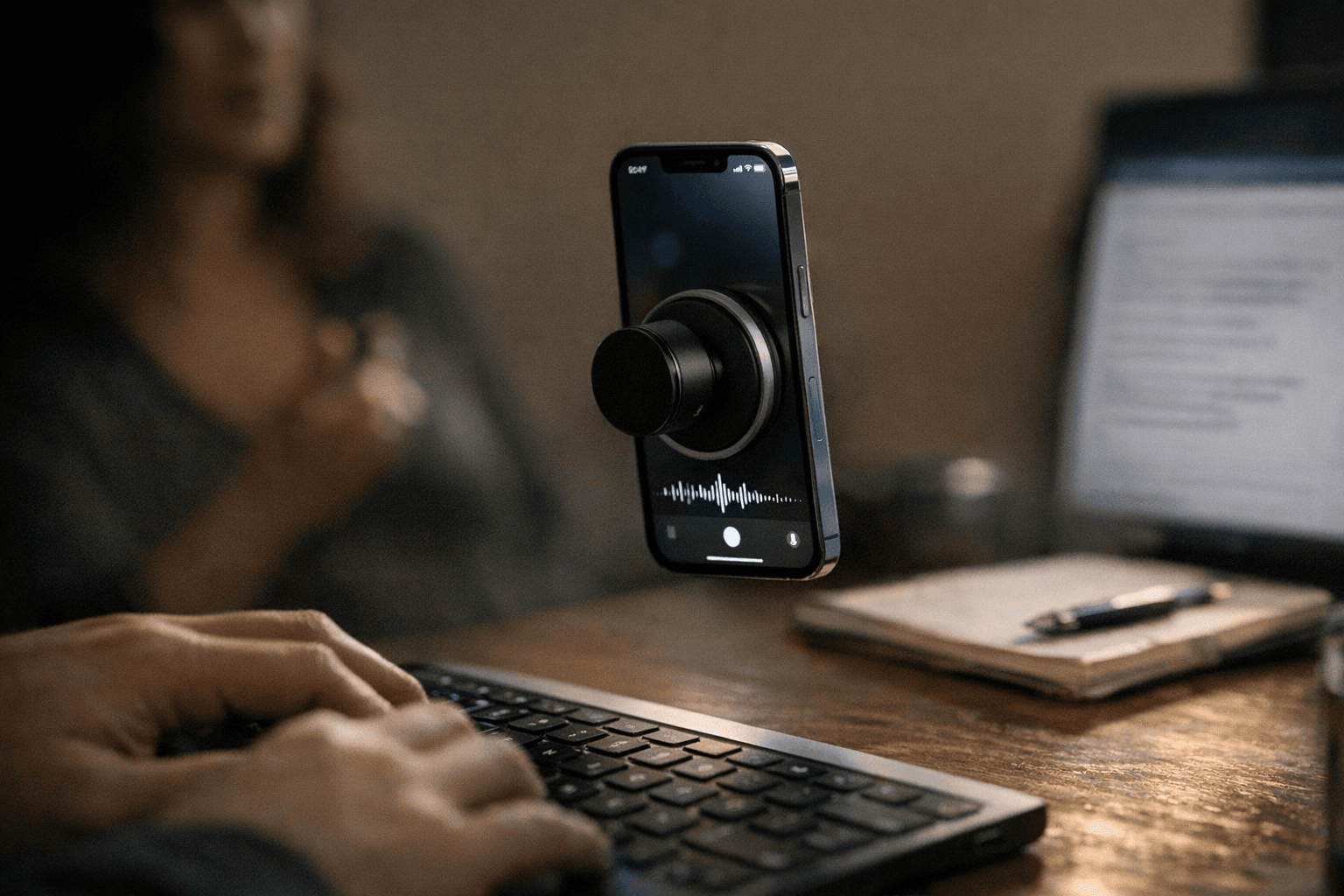
A $129 MagSafe device is trying to make dictation feel as simple as typing, but its success may hinge less on hardware than on Apple’s rules. SpeakOn’s iPhone companion app works as a keyboard-based dictation tool across apps, using its own microphone instead of the iPhone’s built-in one, and the company says the setup is meant to keep the phone’s microphone from staying active the way some other dictation tools do.
The device weighs 25 grams, attaches to the back of an iPhone with MagSafe, and uses a single microphone that SpeakOn says can capture speech from within about 2 feet. Dictation works in any app as long as the software keyboard is open, which makes the accessory feel useful in the most ordinary moments of phone use, from notes to messages to email. Apple already allows dictation anywhere text can be entered, and says many dictation requests are processed on-device without an internet connection, underscoring how closely SpeakOn is operating inside an ecosystem Apple already controls.
That is the core market mismatch. SpeakOn is targeting a real pain point, frictionless voice input that does not force users into a separate app, but it is doing so in a system where Apple already supplies native dictation and decides how keyboards, microphone access and app switching behave. Apple introduced MagSafe as a quick-attach accessory system with iPhone 12, which made a clipped-on dictation device physically plausible. The harder problem is not attachment; it is whether iOS will let the accessory behave as seamlessly as the company wants.
The limitations show up in the user experience. The reviewer said they wanted to double-tap the record button and have the SpeakOn keyboard appear automatically, or begin speaking without switching keyboards, but described those as system-level constraints that may be difficult to overcome. The reviewer also said the microphones sometimes struggled in noisy surroundings, a reminder that a product built around speech capture lives or dies on input quality before any artificial intelligence enters the picture.
SpeakOn’s software layer did not escape scrutiny either. The reviewer said some of the AI tone edits felt unnecessary, including rewrites that made plain speech sound more formal or altered in ways the user did not want, and turned off the app’s “attune” feature. That matters in a crowded category where Wispr Flow, Google’s offline-first AI dictation app, and multiple note-taking devices are all chasing the same promise: voice input that feels natural, fast and cross-app. SpeakOn has identified the opening, but Apple’s platform rules may determine whether it becomes a useful accessory or another clever idea constrained by the system it depends on.
This article was produced by Prism’s automated news system from verified source data, official records, and press releases, then run through automated quality and moderation checks before publishing. The system is built and supervised by the people who set the standards it runs under. Read our full AI policy.
Did this article answer your question?