Magyar’s anti-corruption surge topples Orbán in Hungary’s election
Péter Magyar turned anger over corruption and stagnation into a credible challenge, forcing Viktor Orbán to concede after 16 years in power.
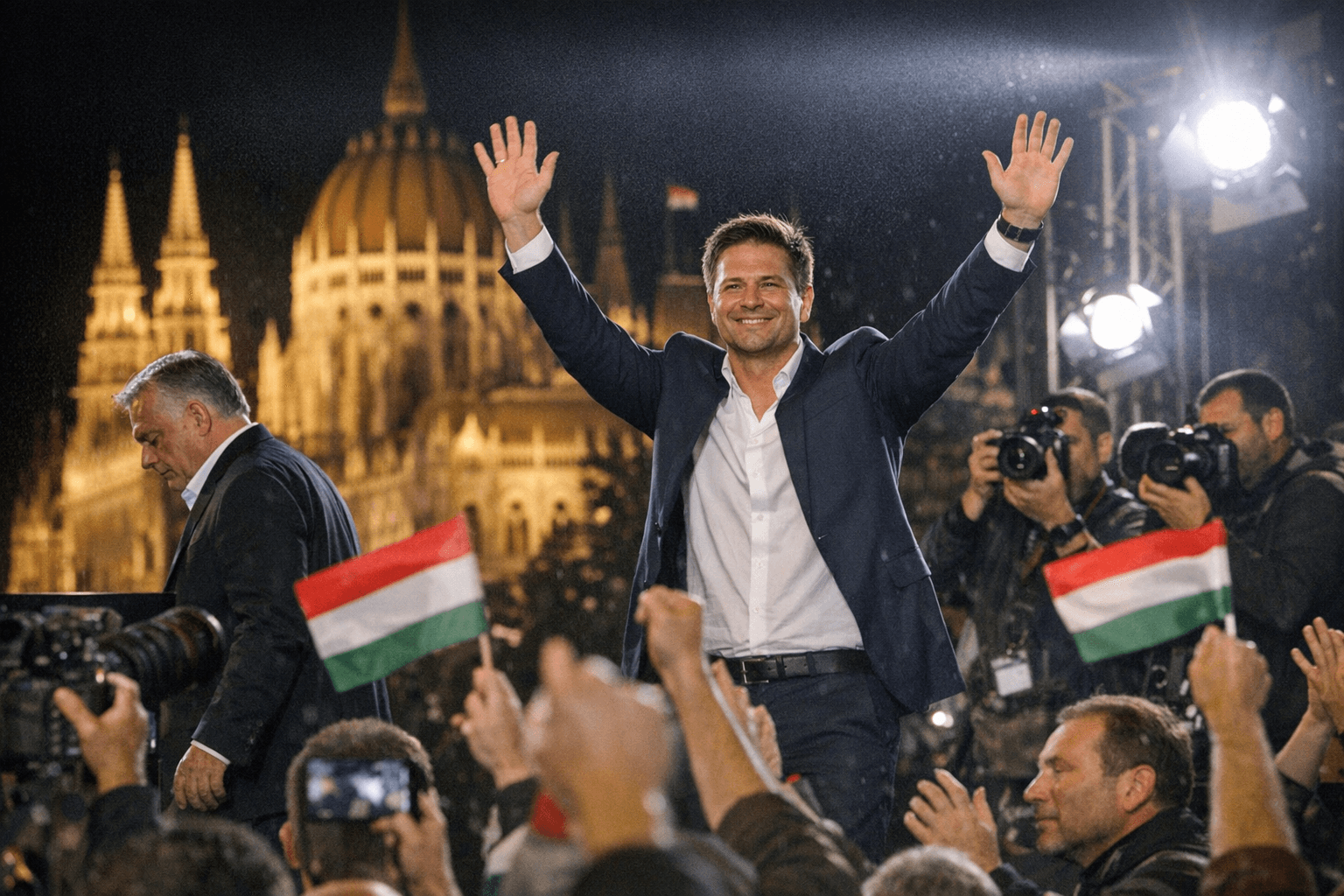
Péter Magyar turned a government-scandal backlash into the first truly serious challenge to Viktor Orbán in years, and by election day his Tisza movement had become a vehicle for voters desperate to end a system many saw as exhausted. Early official results on April 12, 2026, put Magyar’s party ahead, and Orbán later conceded defeat, closing out 16 years of rule.
Magyar’s rise has unsettled Hungarian politics because it looks, at once, like a protest wave and a test of whether a former insider can rebrand himself as a reformer. He moved from being a mid-level civil servant into national prominence after accusations of abuse inside Orbán’s government orbit triggered public anger. By 2024, he had taken over the Tisza party, which won 30% of the vote in that year’s European Parliament election and established Magyar as a force able to compete beyond Budapest and the country’s liberal opposition base.
He built that momentum by touring cities across Hungary, tapping into frustration that crossed ideological lines. Analysts described the 2026 vote as Orbán’s biggest test in 16 years in power, and the challenge was unusually steep: Hungary’s electoral system has long favored Fidesz through district design and seat-allocation mechanics. Even so, Magyar’s campaign on anti-corruption, better living standards and stronger public services found an audience in a country that remains one of the European Union’s poorest members and ranks among the more corrupt in international indices.
The stakes reached far beyond Hungary. Orbán had become one of Europe’s most prominent nationalist leaders, a close ally of Donald Trump and Vladimir Putin, and a persistent antagonist of the European Union over rule of law, corruption, press freedom and frozen EU funds. Magyar argued that normalizing relations with Brussels and unlocking that money was essential to reversing economic stagnation and cost-of-living strain, a message that resonated as many Hungarians felt shut out of the gains promised by Orbán’s long rule.
The result leaves Magyar with a mandate built on both anger and expectation. Whether he proves to be a genuine ideological break, a reformist insider, or a protest figure who rode a system already fraying, his ascent has already redrawn the political map. For Hungary, the end of Orbán’s 16-year era opened a new contest over whether anti-corruption politics can also deliver durable change.
This article was produced by Prism’s automated news system from verified source data, official records, and press releases, then run through automated quality and moderation checks before publishing. The system is built and supervised by the people who set the standards it runs under. Read our full AI policy.
Did this article answer your question?

