Major Aid Agencies DOGE Criticized Received Billions as Developing World Groups Were Cut Out
Despite DOGE labeling major aid agencies as wasteful, a new analysis found those same organizations received billions while local groups in the developing world were nearly frozen out entirely.
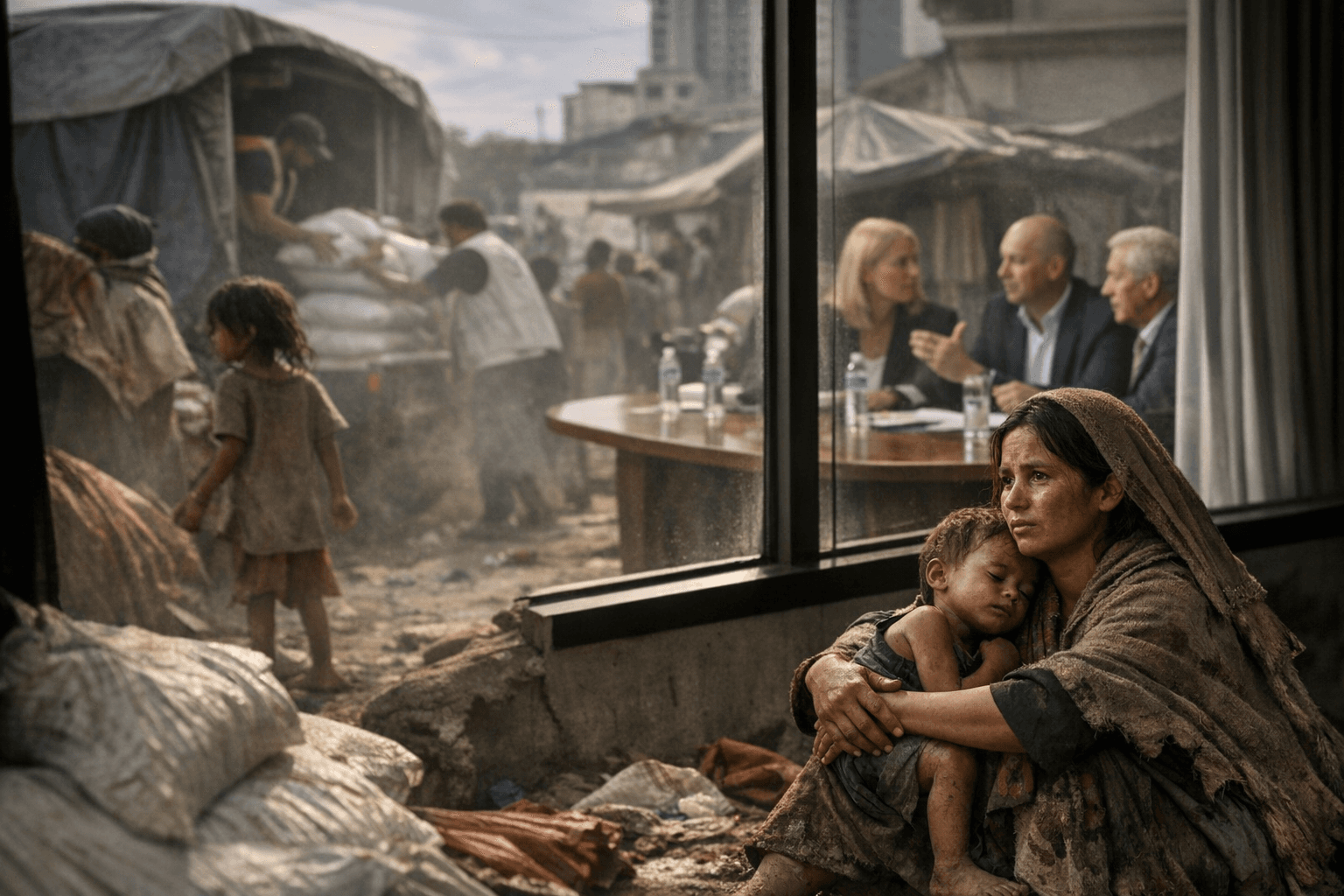
The organizations that the Department of Government Efficiency publicly denounced as symbols of foreign aid excess, including large multilateral agencies and well-funded Western-based nonprofits, continued receiving billions in contracts and disbursements even as the Trump administration's sweeping cuts fell almost entirely on local groups operating in the developing world, a new analysis found.
The pattern contradicts the stated rationale for gutting U.S. foreign assistance. DOGE, the advisory body led by Elon Musk, singled out the U.S. Agency for International Development and the broader aid architecture as riddled with waste and fraud. Musk called USAID "a criminal organization" and said it was "time for it to die." The agency's website was taken down, nearly 10,000 employees were fired or placed on indefinite leave, and the Trump administration announced it would eliminate 90 percent of USAID contracts. But when the dust settled on where surviving and newly directed dollars actually went, it was the large institutions, not local civil society groups in Africa, Asia, or Latin America, that held onto the money.
USAID's Office of Inspector General issued a report finding that DOGE's cuts were preventing oversight of billions of dollars in humanitarian aid, leaving taxpayer dollars susceptible to loss through waste, fraud, or even theft by violent extremist groups in conflict zones. The irony was not lost on development policy experts: the cuts justified in the name of ending wasteful spending were, according to the inspector general, themselves generating the conditions for waste.
A CBS News review of over 5,000 terminated USAID grants, awards, and contracts found at least $1.39 billion in global health efforts canceled, including $1.1 billion in malaria programs, along with $171.7 million in food and clean water access and $435.2 million in education abroad. Those eliminated programs had largely been implemented through local partners on the ground, the organizations now nearly shut out.
DOGE removed details on canceled USAID contracts from its online tracking system, making it difficult to independently verify the full scope of which organizations were losing funding.
Meanwhile, Congress partially pushed back. Congress gave $6 billion this fiscal year to fight HIV and AIDS worldwide, the same as the previous year, with much of that money flowing through large multilateral and U.S.-based agencies that had been publicly targeted by DOGE's rhetoric. U.S.-based organizations stood to gain, having received $28.9 billion from USAID contracts and assistance in prior years, and many retained significant funding streams even as smaller, locally rooted groups in recipient countries saw their contracts vanish entirely.
The human toll of who actually lost funding has been staggering. Senator Brian Schatz, the ranking member of the Senate Appropriations Subcommittee on State and Foreign Operations, noted that over 360,000 people had already died as a result of the funding cuts. According to estimates by Professor Brooke Nichols, DOGE cuts to foreign aid programs had led to some 300,000 deaths by May 2025, mostly children.
Bill Gates warned that the gutting of USAID would lead to millions of deaths around the world. His warning, and now this latest analysis, point to a troubling gap between DOGE's stated mission and its measurable outcomes: the agencies it called wasteful kept their billions, while the on-the-ground organizations closest to those dying were the ones that got cut.
This article was produced by Prism’s automated news system from verified source data, official records, and press releases, then run through automated quality and moderation checks before publishing. The system is built and supervised by the people who set the standards it runs under. Read our full AI policy.
Did this article answer your question?