Major carriers suspend and trim Middle East routes as airspace stays closed
Airlines including Air France, SWISS, Lufthansa and Wizz Air cut services and rerouted flights, leaving limited schedules at Gulf hubs and forcing refunds, rebookings and repatriation plans.
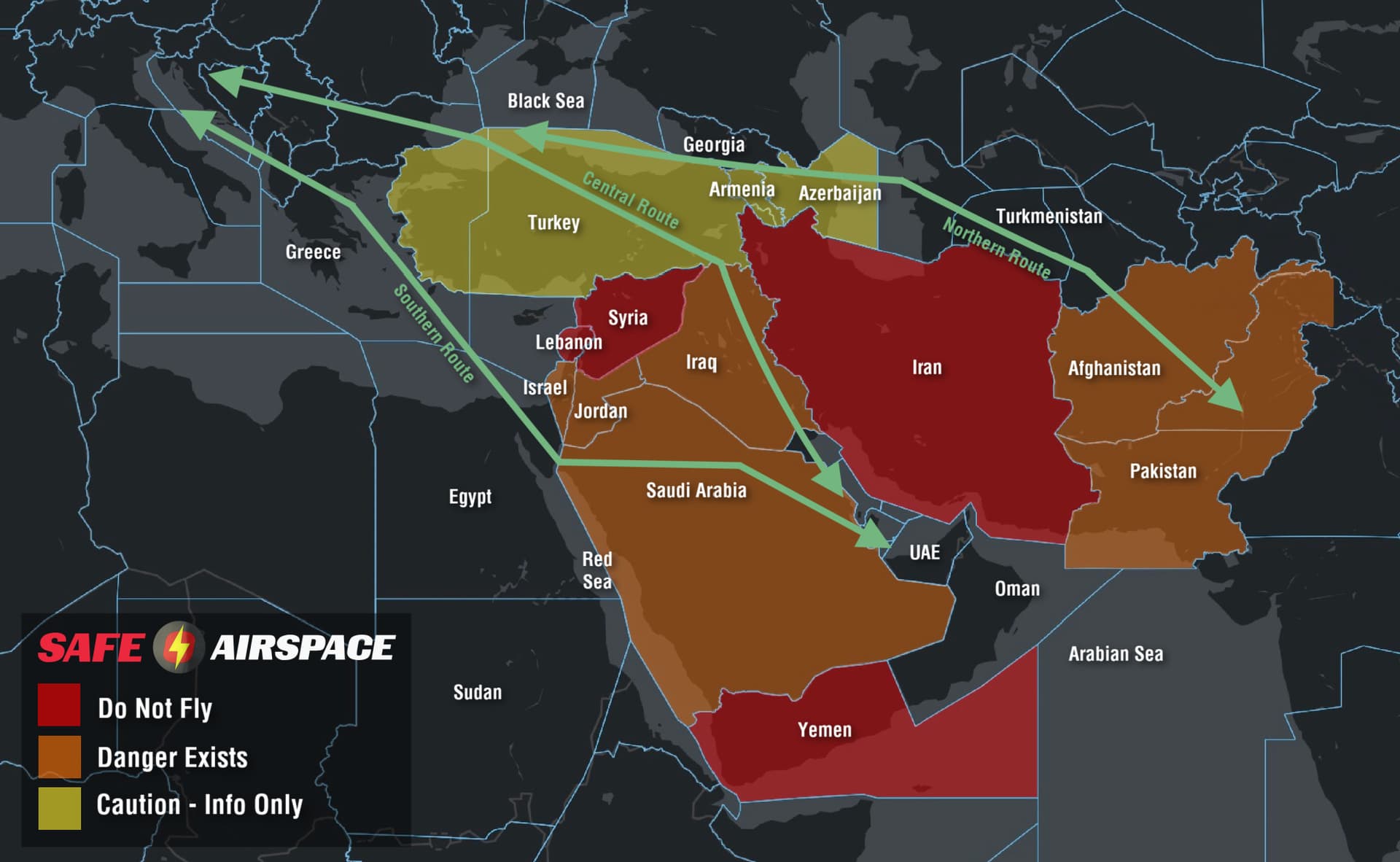
Major international carriers repeatedly suspended and rerouted services to and through the Middle East on March 7 and 8 as airspace closures, missile and drone activity and precautionary safety measures continued to ripple through global aviation. Air France and Swiss International Air Lines immediately grounded all flights to and from Tel Aviv and Beirut, citing an "unpredictable security landscape," and offered affected passengers complimentary rebooking or full refunds.
Lufthansa halted services to and from Tel Aviv, Beirut and Amman through at least March 7 while conducting an "ongoing and rigorous assessment" of conditions, and separately announced a suspension of flights to and from Dubai until March 10. The carrier is working with the German government to mount repatriation flights from Muscat to Frankfurt for stranded travelers.
Wizz Air said it had immediately grounded routes that connect Israel, Dubai, Abu Dhabi and Amman and remained in "constant contact" with international aviation safety agencies to determine when it would be safe to resume operations. Budget and regional operators were also affected: flydubai said it had not issued a total suspension but acknowledged that "several routes have been severely disrupted or diverted due to the temporary closure of Iraqi, Iranian, and Israeli airspace."
The disruption has not been uniform across the Gulf. Emirates and Etihad are operating limited schedules and are gradually adding routes as conditions permit. Limited departures resumed at Dubai International and Al Maktoum airports and at Zayed International in Abu Dhabi, and carriers said passengers were being contacted directly if they had been rebooked onto confirmed flights. Virgin Atlantic has resumed services between London Heathrow and Dubai and Riyadh, while noting on its website that "we have also rerouted some of our flights. As a result, some of our services are operating on adjusted routings and may experience slightly longer flight times."
British Airways introduced flexible rebooking options for customers booked between London Heathrow and Abu Dhabi, Amman, Bahrain, Doha, Dubai or Tel Aviv up to and including March 15. The airline said affected customers may change their travel date free of charge for departures on or before March 29, and customers due to travel up to and including March 8 may request a full refund via the Manage My Booking portal.

Gulf-based carriers faced disruption tied to national airspace closures. Gulf Air confirmed flights remained temporarily suspended while Bahraini airspace was closed, with service resuming only after the Bahrain Civil Aviation Affairs confirmed operations were safe to restart. Egyptian and regional carriers also extended suspensions: one national carrier has pushed indefinite suspensions across multiple cities as authorities and airlines reassess routes.
Diplomatic missions in the region have urged foreign nationals to exercise extreme caution and avoid non-essential travel, and civil aviation authorities have implemented controlled corridors in parts of the region to allow a gradual resumption of flights where risk is judged manageable. The immediate effect has been a contraction in commercial connectivity, a surge in rebooking and refund requests and the diversion of some flights onto longer routings.
The timetable for a broader recovery hinges on reopening of Iraqi, Iranian, Israeli and Bahraini airspace and on settled assessments from aviation regulators and military authorities. Until those clearances are issued, airlines say they will continue to prioritize passenger safety while coordinating repatriation and contingency services.
This article was produced by Prism’s automated news system from verified source data, official records, and press releases, then run through automated quality and moderation checks before publishing. The system is built and supervised by the people who set the standards it runs under. Read our full AI policy.
Did this article answer your question?