Major Gulf hubs remain closed as 1,200+ flights cancel, hundreds of thousands stranded
Dubai, Abu Dhabi and Doha airports stayed shuttered for a third day, grounding flights and leaving tens of thousands of pilgrims, tourists and workers unable to travel.
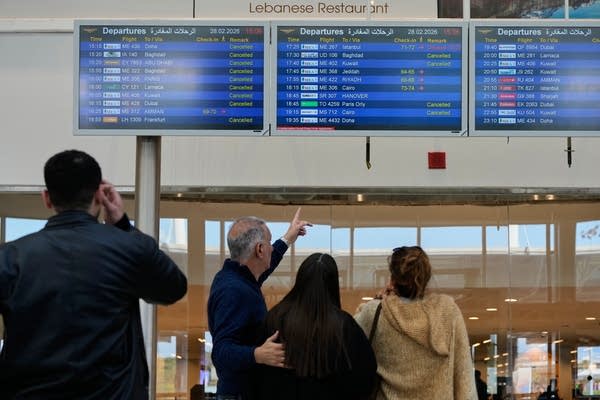
Dubai International Airport, Abu Dhabi and Doha remained closed for a third consecutive day, grounding more than 1,200 flights early Monday and leaving hundreds of thousands of passengers stranded across the Middle East and beyond. Flight-tracking platforms recorded waves of cancellations over the weekend and into Monday as regional airspace was declared unsafe and rerouted traffic surged.
Civil aviation authorities in the region have ordered widespread airspace closures. Jordanian authorities announced that Jordanian airspace would be closed from later in the evening "until further notice, in order to ensure the safety and security of civil aviation in Jordanian airspace." The Iraqi Civil Aviation Authority said the "complete closure of the country's airspace to civilian traffic would be extended for at least 48 hours due to 'ongoing security concerns in region.'"
Flight-tracking data showed airspace over Iran, Iraq, Kuwait, Israel, Bahrain, the United Arab Emirates and Qatar was largely empty, forcing operating aircraft onto longer routes and creating logistical bottlenecks for crews and aircraft staging. Early Monday more than 1,239 cancellations were recorded on FlightAware, following nearly 2,800 cancellations on Saturday and 3,156 on Sunday, according to aggregated tracking tallies. Ian Petchenik, communications director at Flightradar24, warned: "The risk of protracted disruption is the main concern from a commercial aviation perspective."
Airlines scrambled to adjust schedules and help passengers. Emirates said it would resume operating a "limited number of flights" on Monday evening but had earlier announced a suspension through mid-afternoon Tuesday; the carrier said, "We are accommodating customers with earlier bookings as a priority," and advised people not to go to the airport unless they were notified. FlyDubai announced a slim slate of evening operations, listing four departures and five arrivals. Major carriers including Etihad, Qatar Airways and leading flag carriers canceled hundreds of services, and Air France suspended flights to and from Tel Aviv, Beirut, Dubai and Riyadh. Air India and KLM also issued suspensions and advisories for affected routes.
The human toll was immediate. More than 58,000 Indonesians visiting Mecca and Medina for Ramadan were left in limbo in Saudi Arabia. Roughly 30,000 German tourists were reported stranded on cruise ships, in hotels or at closed airports. Images at Manila's international terminal showed Overseas Filipino Workers sleeping in lounges beside grounded aircraft as they awaited flight information.
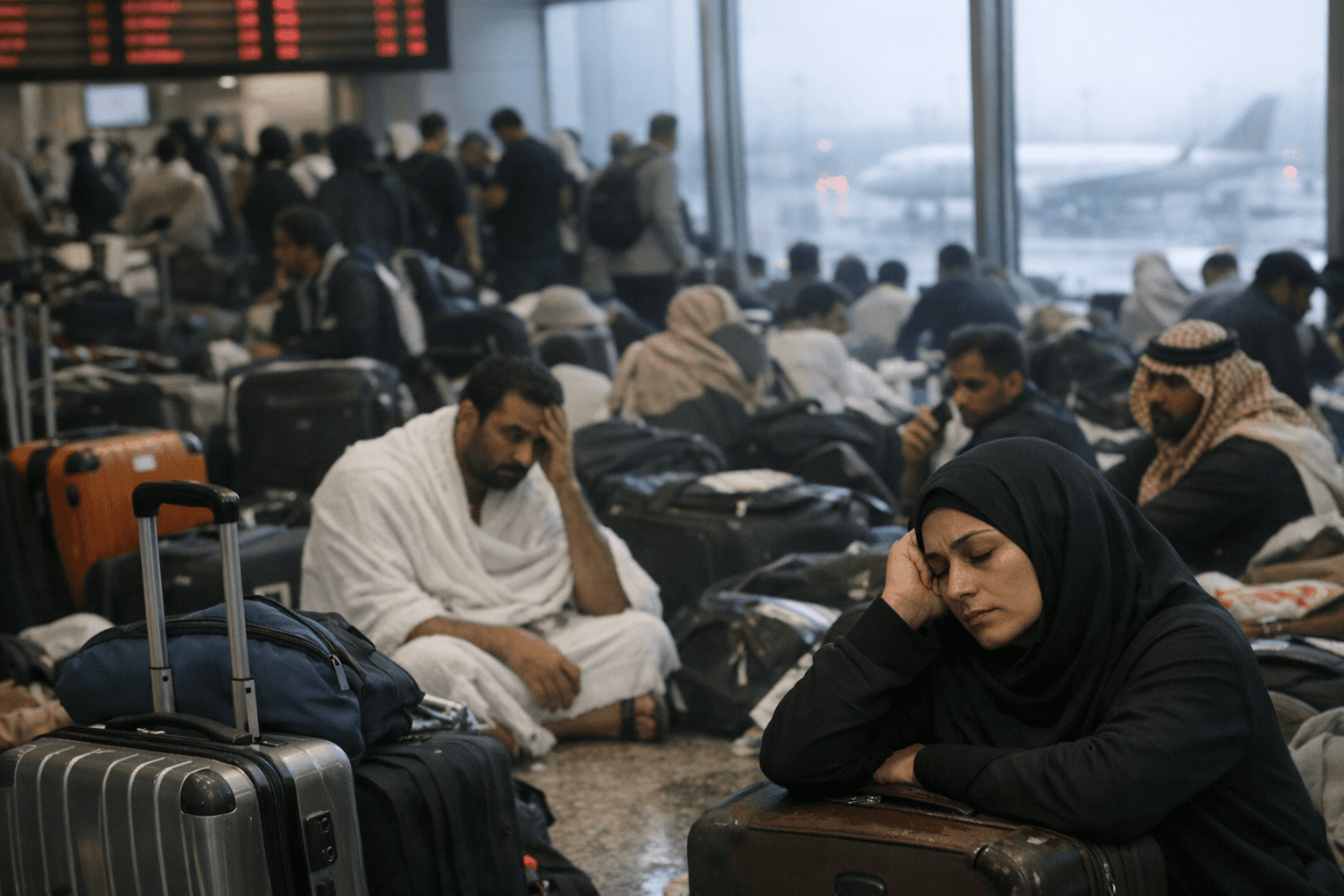
Airports and ports sustained physical damage in the strikes that precipitated the closures. Dubai International sustained damage during the attacks and smoke was seen billowing from Jebel Ali port after an assault. Airports in Abu Dhabi and Kuwait were also reported hit, prompting national directives to shelter in place and suspend civilian traffic.
The disruption reached airline operations and markets. Crew and pilots were scattered worldwide, complicating resumption when corridors reopen, and longer routings are increasing fuel and operational costs. Private jet demand spiked, with a Saudi-based broker citing prices up to $350,000 for one-off evacuations from Riyadh to Europe. Airline stocks came under pressure as traders priced in an uncertain recovery for regional operations.
Authorities urged patience and to follow official notices. Governments and carriers are advising travelers to await direct airline communications before traveling to airports. With regional airspace closures extended and operational gaps in relief logistics, the industry faces a complex recovery task that will test contingency systems at airlines, regulators and international aviation bodies.
This article was produced by Prism’s automated news system from verified source data, official records, and press releases, then run through automated quality and moderation checks before publishing. The system is built and supervised by the people who set the standards it runs under. Read our full AI policy.
Did this article answer your question?

