Makerfield by-election could decide Keir Starmer’s political future
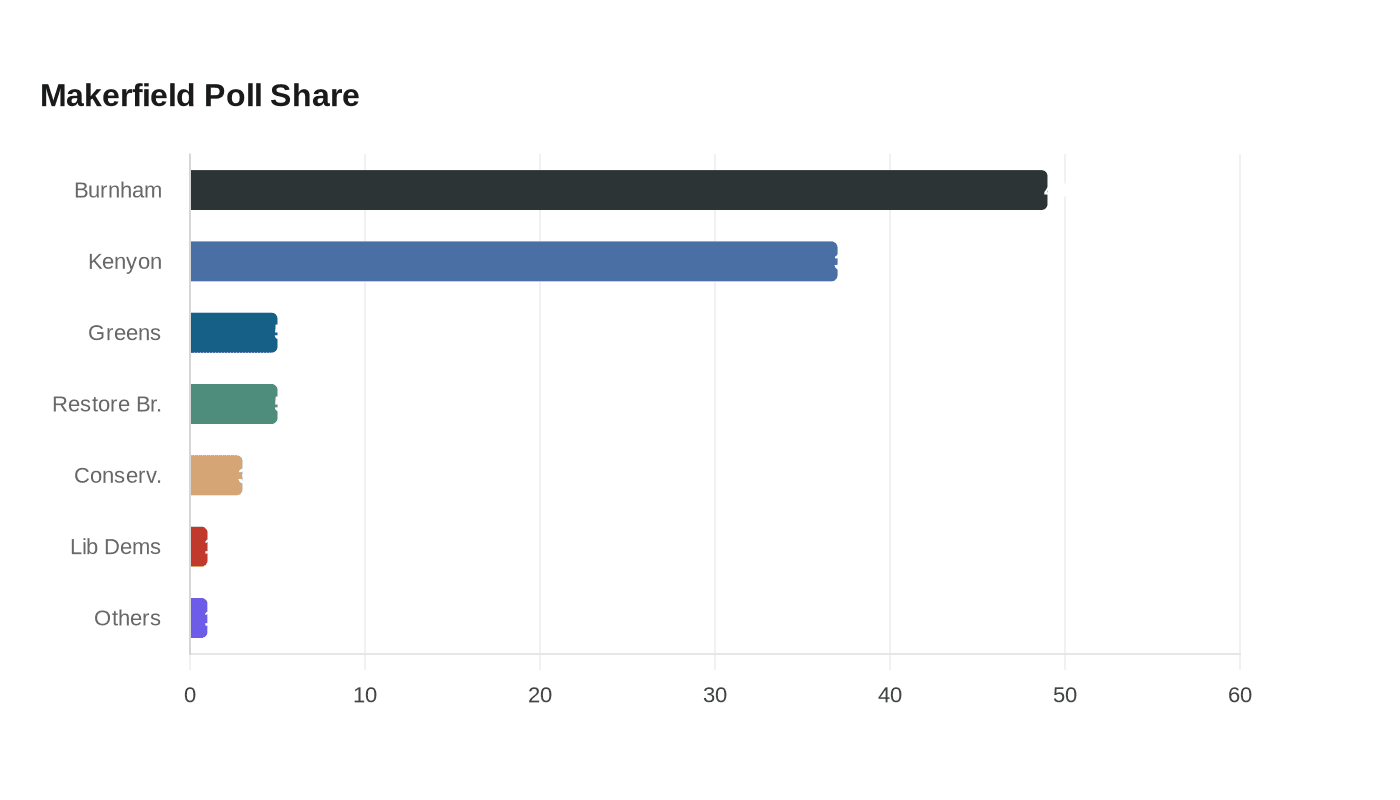
Makerfield's 14-candidate contest had Burnham ahead 49% to 37%, turning Labour's 5,399 majority into a national test of Starmer's authority.

Voters in Makerfield went to the polls Thursday in a by-election that had become a proxy fight over Keir Starmer’s authority, Labour’s grip on northern England and the chances of a fresh leadership challenge from within the party. The seat was opened up when Labour MP Josh Simons resigned on 14 May 2026 so Greater Manchester Mayor Andy Burnham could seek a return to Parliament.
Burnham was Labour’s candidate, and his presence turned a routine vacancy into a contest with national consequences. If he won, he would re-enter Westminster with a mandate that could embolden critics of Starmer and revive talk of a challenge from the party’s own ranks. If Labour underperformed, the result would deepen questions about whether Starmer’s coalition still held together in the North West of England, where Makerfield sits.

The numbers made the race look far tighter than Labour would have wanted. At the 2024 general election, Simons held the seat with a majority of 5,399 in a constituency with an electorate of 76,641 and turnout of 52.5%. PollCheck’s latest summary, based on fieldwork from 2 to 12 June 2026, put Burnham on 49% and Reform UK’s Robert Kenyon on 37%, with the Greens and Restore Britain on 5% each, the Conservatives on 3%, the Liberal Democrats on 1% and others on 1%.
That poll reinforced the sense that Makerfield had shifted from a Labour stronghold into a Labour-Reform marginal. Simons had won the seat over a Reform UK candidate in 2024, but Reform’s rise since then and Labour’s softer standing have made the by-election a national stress test. PollCheck said Labour selected Burnham on 15 May and that nominations closed on 26 May.
The ballot paper contained 14 names, underlining both the fragmentation of the field and the symbolic weight attached to the contest. Alongside Burnham and Kenyon were Conservative candidate Michael Winstanley, Green candidate Sarah Wakefield, Liberal Democrat Jake Austin, Restore Britain’s Rebecca Shepherd, Rejoin EU’s Peter Ward and satirical candidate Count Binface.
Simons said he was stepping aside so Burnham could “return to his home, fight to re-enter Parliament, and if elected, drive the change our country is crying out for.” That calculation made the by-election more than a local contest: it became a referendum on whether Labour’s 2024 victory in Makerfield was a foundation for government, or a warning that Starmer’s political future was already being put to the test.
This article was produced by Prism’s automated news system from verified source data, official records, and press releases, then run through automated quality and moderation checks before publishing. The system is built and supervised by the people who set the standards it runs under. Read our full AI policy.
Know something we missed? Have a correction or additional information?
Submit a Tip