Malaysia court rejects Najib Razak request for home confinement
A Kuala Lumpur High Court on Dec. 22, 2025 rejected former prime minister Najib Razak’s attempt to serve the remainder of his graft sentence under house arrest, finding a purported royal addendum procedurally invalid. The decision closes a legal route that could have shortened his time in prison, while his legal team prepares an appeal and the possibility of a fresh pardon.
A Kuala Lumpur High Court on Dec. 22, 2025 dismissed an application by jailed former prime minister Najib Razak to serve the remainder of his sentence at home, ruling that a claimed royal addendum converting his custody status lacked the proper constitutional procedure. Judge Alice Loke Yee Ching delivered the ruling at the Kuala Lumpur High Court Complex, concluding the document could not be enforced because it had not been processed through the constitutionally required channels.
The judge said the alleged addendum or royal document "was not made following the procedure prescribed under Article 42 of the Federal Constitution and is therefore not a valid order." The court found that the purported supplementary directive had not been deliberated by the Pardons Board, and therefore Najib could not compel the government to recognise it.
Najib, once Malaysia’s most powerful political figure, was convicted in July 2020 in the SRC International case, part of broader legal fallout from the multibillion dollar 1MDB scandal. He was found guilty of abuse of power, criminal breach of trust and money laundering over 42 million ringgit believed to have been siphoned from SRC International Sdn Bhd. Initially sentenced to 12 years in prison and a fine of RM210 million, his term was later reduced by a Pardons Board chaired by the then King, Sultan Abdullah Ahmad Shah, to six years and the fine to RM50 million.
Najib began serving his sentence in August 2022. In recent months his lawyers asserted that the former monarch had issued an addendum converting the balance of the sentence to house arrest, a claim the government did not accept and that spawned the judicial challenge heard this week. The High Court ruling effectively closes that legal avenue by focusing on process rather than the merits of royal intervention.
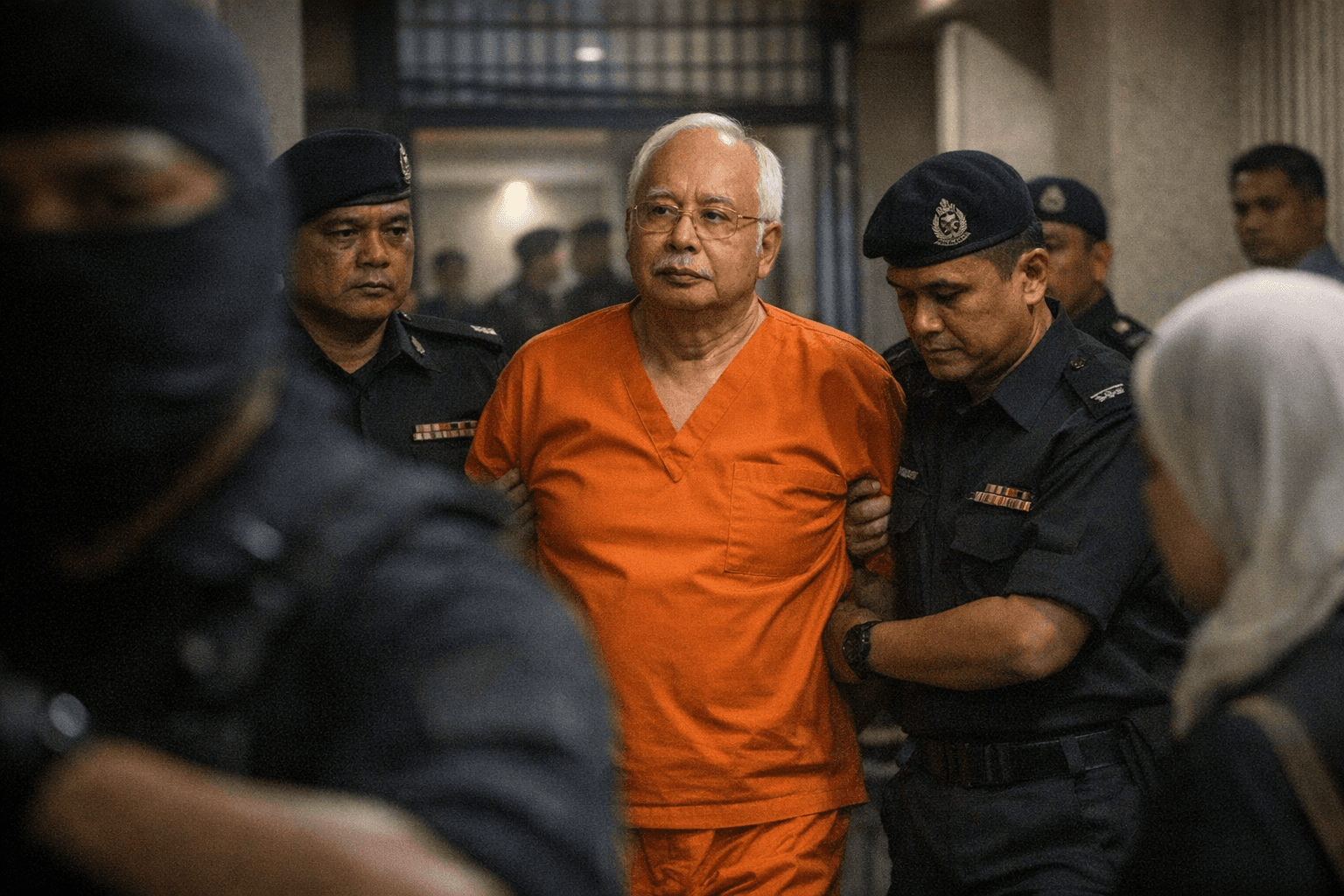
Najib’s lead counsel, Muhammad Shafee Abdullah, said the defence will appeal the decision and may seek a fresh pardon from Malaysia’s current King, Sultan Ibrahim Iskandar. Supporters of the former prime minister gathered outside the court complex for the hearing, underscoring the emotive public dimension of the case.
The decision arrives as the first of two significant rulings Najib faces this week related to the 1MDB investigations. Beyond the SRC International conviction, Najib remains connected to other cases stemming from the same scandal. If convicted on additional 1MDB related counts, a defendant could face up to 20 years in prison on each charge and fines that reach up to five times the value of the alleged misappropriation.
The dismissal underscores the centrality of constitutional procedure in matters involving royal clemency and the Pardons Board, and it highlights ongoing tensions in Malaysian politics over accountability, legal process and the symbolic power of the monarchy. With an appeal likely and a possible fresh pardon route open, the case will remain a focal point of legal and political debate in Kuala Lumpur and beyond as Malaysia continues to reckon with the legacy of 1MDB.
This article was produced by Prism’s automated news system from verified source data, official records, and press releases, then run through automated quality and moderation checks before publishing. The system is built and supervised by the people who set the standards it runs under. Read our full AI policy.
Did this article answer your question?


