Mamdani and Obama Promote Free Child Care at Bronx Preschool Event
Obama and Mamdani sang “Wheels on the Bus” in the Bronx, but the real story was how New York plans to pay for 2,000 free child-care seats first.
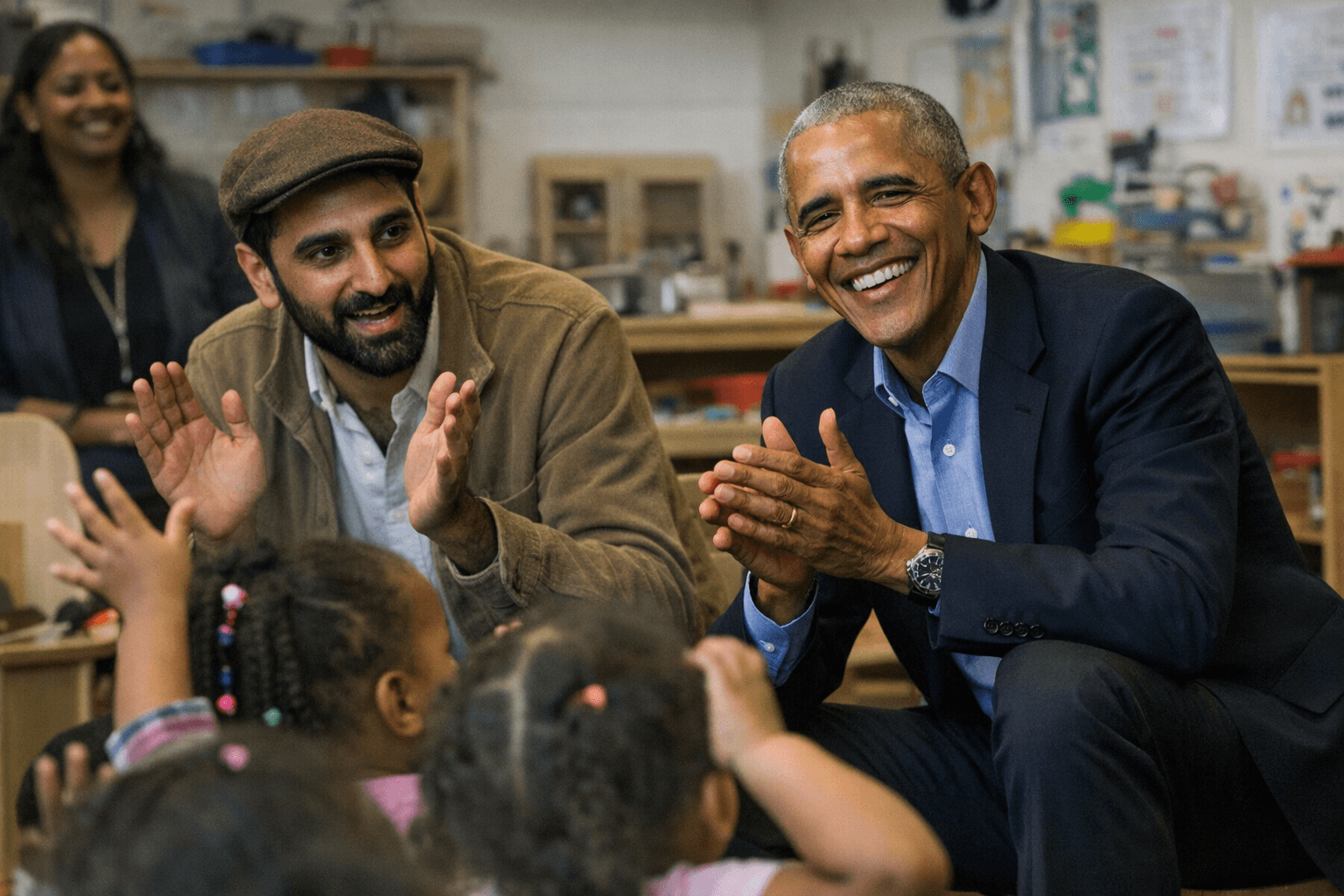
Zohran Mamdani turned a Bronx preschool into a stage for one of his central governing promises: free child care, and the hard question of how to scale it in New York City. He and former President Barack Obama met in person for the first time on Saturday at Learning Through Play Pre-K Center in the South Bronx, where they spoke privately before reading to preschoolers and joining a singalong that included “Wheels on the Bus.”
The appearance was their first public event together and came just over a week after Mamdani marked 100 days in office. Obama had previously offered to be a “sounding board” for Mamdani, and the visit gave the mayor a national figure to help sell a local affordability agenda built around child care as much as housing or transit. In a city where child care can consume a major share of a family budget, the political value of the photo op was obvious. The policy challenge was clearer still.
Mamdani and Gov. Kathy Hochul announced their free child-care partnership on January 8, with the aim of delivering free care for two-year-olds in New York City and strengthening early childhood care statewide. By March 3, they said the first 2,000 free 2-K seats would go to four New York City communities this fall. The state said the effort is backed by a $1.2 billion commitment, including $73 million to establish those first 2,000 seats.
The design matters. Most of the new 2-K seats will run full-day and full-year, from 8:00 a.m. to 6:00 p.m., for 260 days a year. That schedule makes the program more than a symbolic subsidy; it is structured around the workday of parents who cannot rely on part-time care. It also shows how limited the initial rollout remains. Four selected communities will get the first seats, while city officials work toward a far larger expansion.
Mamdani has said he wants 2-K to reach 12,000 seats across all boroughs by next year, a leap that would test staffing, classroom space, and long-term financing in one of the country’s most expensive child-care markets. The city also launched a child care map and resource center in April, a practical step that reflects the scale of unmet need. For Mamdani, the Bronx event offered a cheerful image. The governing test is whether New York can turn 2,000 seats, then 12,000, into a durable model for affordability without losing momentum, money, or political support.
Know something we missed? Have a correction or additional information?
Submit a Tip