Mamdani Pushes New York City Millionaire Tax to Close Budget Gap
Mamdani’s 2-point millionaire tax would target incomes above $1 million as New York City faces a $5.4 billion gap, reviving the fight over whether the rich really flee.
Zohran Mamdani’s push to lift New York City’s millionaire income tax from 3.9% to 5.9% turned a familiar political fight into a testable fiscal claim: whether higher taxes will drive away enough wealthy residents to erase the money they are supposed to raise. Combined with New York State’s levy, the city’s highest earners would face the steepest income-tax burden in the country.
The plan sits at the center of a budget problem that has sharpened the stakes. A March 2026 Groundwork Collaborative analysis said New York City was heading into a $5.4 billion FY2027 gap, after four years of what it called underbudgeting under Mayor Eric Adams that left $12 billion in unaccounted-for spending obligations. The Fair Share Act, backed by Mamdani and sponsored by state Sen. John Liu and Assemblymember Phara Souffrant Forrest, would authorize a 2% surcharge on annual city taxable income above $1 million and could bring in about $4 billion a year.
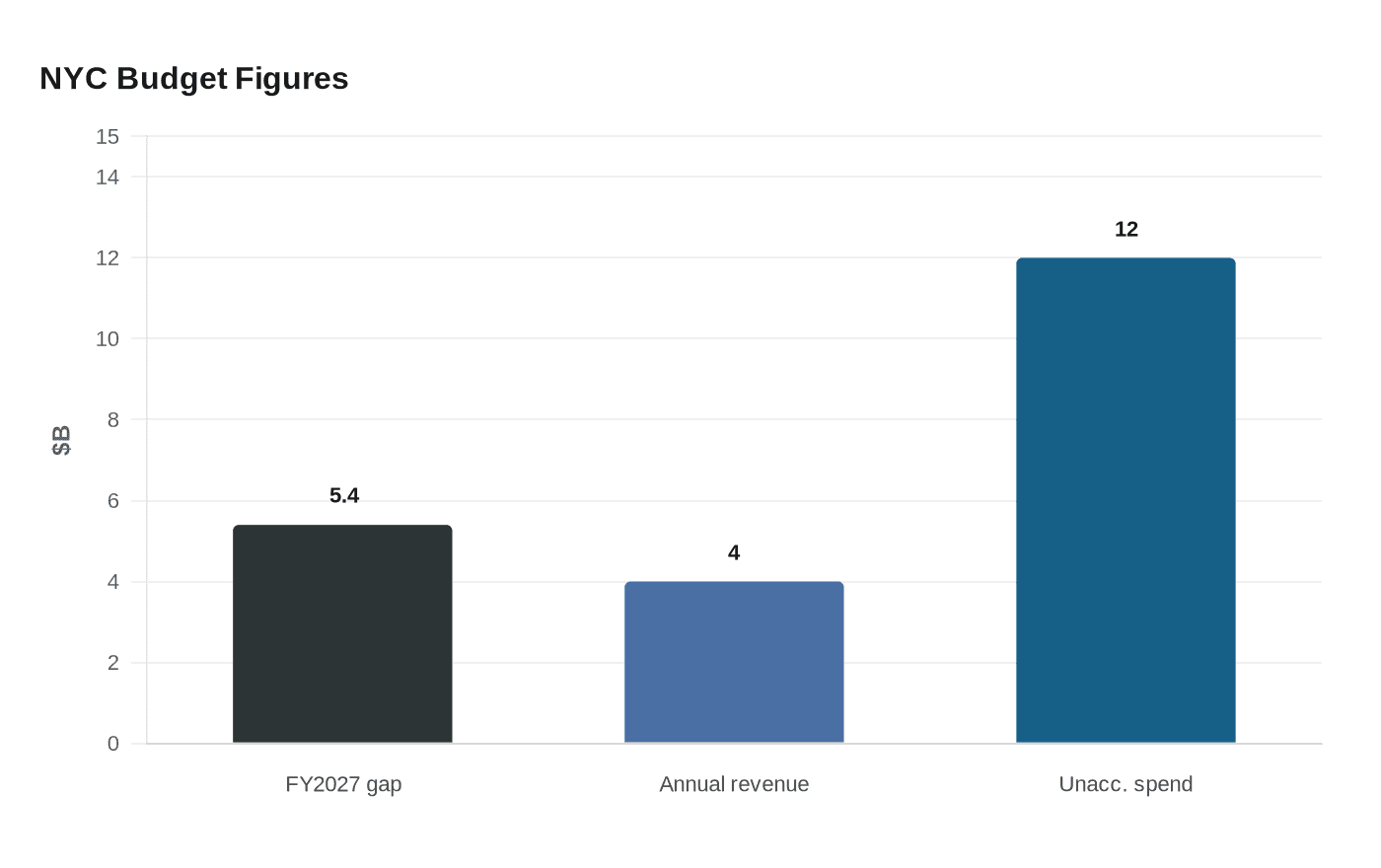
That revenue estimate is what makes the policy debate concrete. If the city lost enough millionaire tax revenue to wipe out roughly $4 billion in annual collections, the tax would fail on its own terms. Against that benchmark, supporters argue the flight threat is overstated and that the city cannot cover its gap with cuts alone.
Opposition has been loud. Hedge fund billionaire Bill Ackman said wealthy residents and businesses had already begun making arrangements to leave. Andrew Cuomo said before the election that if Mamdani won, “even I will move to Florida.” Gov. Kathy Hochul has also warned against pushing further, saying the state cannot have wealthy residents leave.
But the evidence cited by Mamdani’s allies points the other way. Cristobal Young of Cornell wrote in December 2025 that millionaires move at relatively low rates, about 2.4% a year, and that only about 15% of millionaire movers end up with a lower tax bill. He said New York’s top destination for millionaire movers is Connecticut, not Florida, and that many departures are offset by moves into higher-tax states.
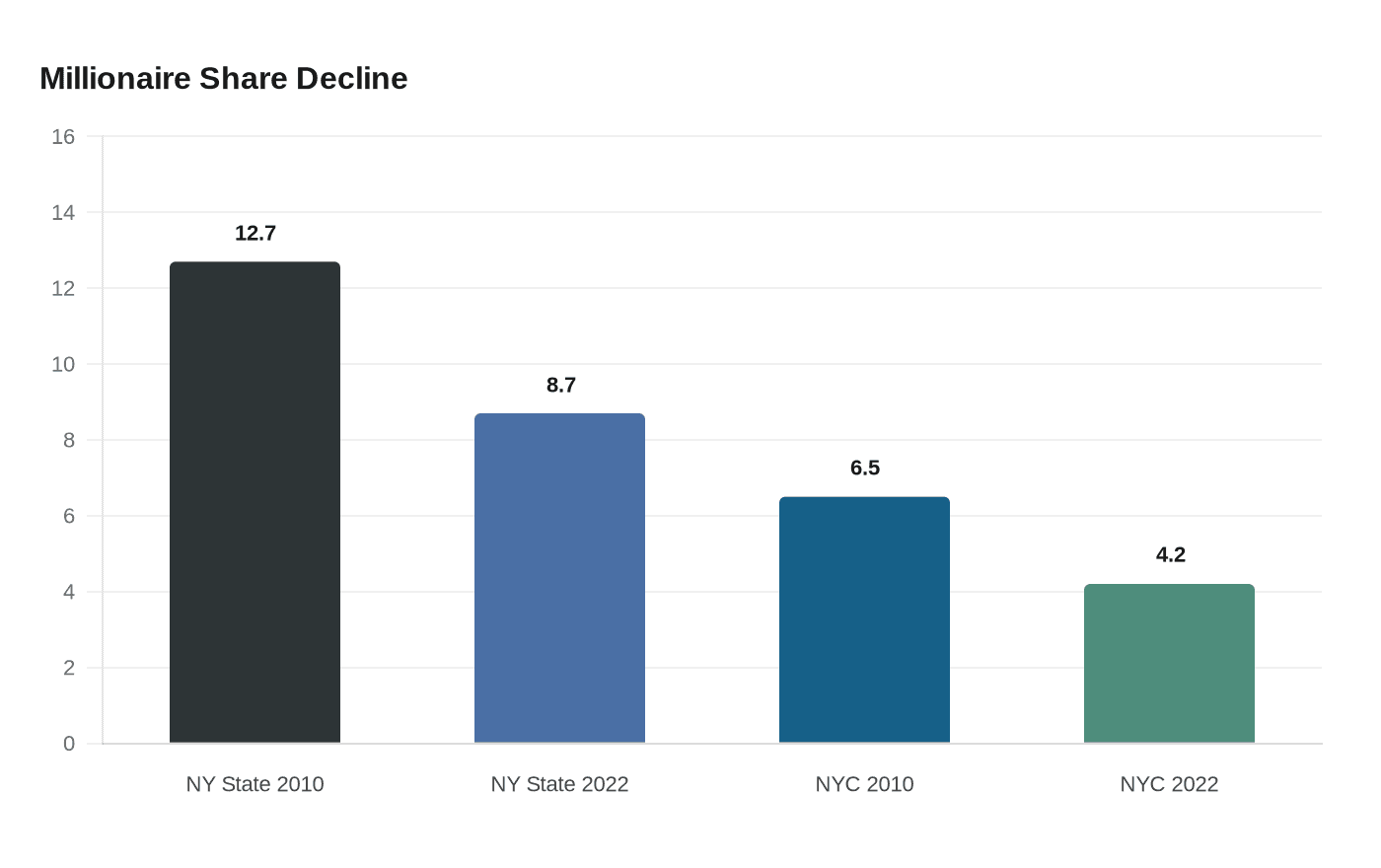
The longer-term data complicate the warning of a mass exodus. The Citizens Budget Commission said New York’s share of U.S. millionaires fell from 12.7% in 2010 to 8.7% in 2022, while New York City’s share dropped from 6.5% to 4.2%. Even so, millionaires still generated $34 billion in state and city personal income-tax revenue in 2022. If the state and city had kept their 2010 share of national millionaires, the commission estimated they would have collected more than $13 billion more in 2022, including $10.7 billion for the state and $2.5 billion for the city.
New York has gone down this road before. Before 2021, the state’s top marginal income-tax rate was 8.82%. It rose to 9.65% that year, with brackets added at 10.3% above $5 million and 10.9% above $25 million. Gov. Hochul extended those surcharges through 2032, and lawmakers in Albany have continued to press for more. The question now is not whether New York can tax its wealthiest residents more. It is whether the city can do so without losing enough of them to make the arithmetic fail.
This article was produced by Prism’s automated news system from verified source data, official records, and press releases, then run through automated quality and moderation checks before publishing. The system is built and supervised by the people who set the standards it runs under. Read our full AI policy.
Did this article answer your question?

