Mamdani rolls out housing plan to repair NYCHA and boost building
Mamdani is betting on zoning changes and private partners to tackle NYCHA’s $80 billion repair gap, even as tenants wait in crumbling buildings.
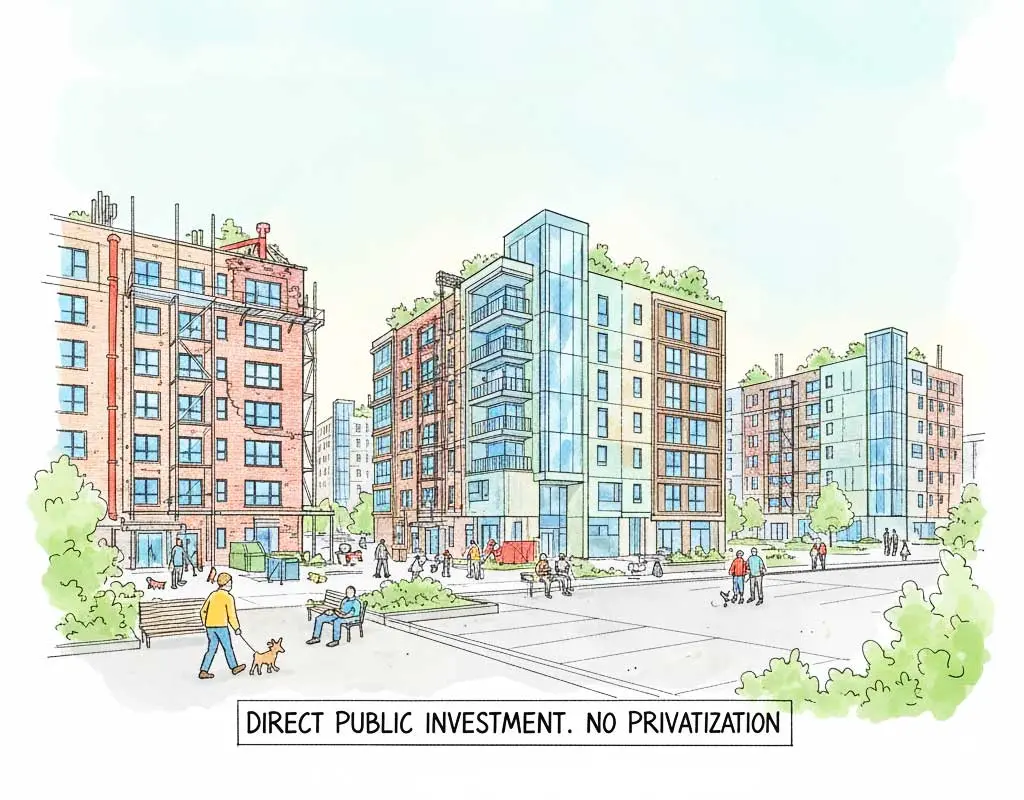
Zohran Mamdani is rolling out a housing plan that tries to solve two problems at once: New York City’s shortage of affordable homes and the collapse of its largest public-housing system. The proposal pairs zoning and land-use changes meant to speed building with a repair strategy for NYCHA that still depends, in part, on private capital.
The broader agenda is designed to help Mamdani deliver on his campaign promise to build 200,000 affordable homes over 10 years. City Hall has said it will look at land-use changes in neighborhoods that have produced the least affordable housing and at citywide zoning reforms to allow more housing near transit. That push comes as New York’s rental vacancy rate sits at 1.4 percent, the lowest in more than 50 years, leaving lower-income renters with especially few options.
The public-housing piece is where the stakes are most severe. NYCHA, created in 1934, says it serves 520,808 authorized residents in 177,569 apartments across 335 developments, about 1 in 17 New Yorkers. The authority says decades of federal disinvestment have left nearly $80 billion in major repairs across its portfolio. City Limits, using NYCHA’s 2023 Physical Needs Assessment, estimated the system needs about $78 billion in capital repairs over the next 20 years. NYCHA’s 2026-2030 capital plan sets out $7.78 billion in investments, a fraction of the overall need.

Mamdani’s plan leans on NYCHA’s Permanent Affordability Commitment Together program, better known as PACT, to help finance some of those repairs. NYCHA describes PACT as one of its most successful modernization tools. It brings in private and nonprofit development partners selected with resident input, while NYCHA keeps ownership of the land and buildings, administers subsidies and the waitlist, and monitors conditions. Under the federal Rental Assistance Demonstration program, developments are converted to project-based Section 8. HUD says RAD is meant to preserve and improve affordable housing supported by public housing and related programs.
That model remains politically fraught. Public-housing residents and advocates have long criticized privatization-linked conversions, and some groups have urged Mamdani to pause PACT and other Section 8 conversion efforts. The tension captures the contradiction at the center of the plan: City Hall says it wants to repair public housing, but some of the money to do it still comes through a market-driven structure that many tenants distrust. NYCHA says the approach can unlock funding for comprehensive repairs and even new homes while preserving permanent affordability and resident rights.

The stakes are not theoretical. NYCHA says its Real Estate Development Department secured a record $2.9 billion in PACT investments in 2025, and more than 800 capital projects totaling over $5.1 billion were completed over the past five years. At the same time, Mamdani’s office has launched “NYCHA in Your Neighborhood” events in May and June to connect residents with senior city officials and services, a signal that the administration knows repair work will not be enough unless tenants feel heard while they wait for apartments to be fixed.
This article was produced by Prism’s automated news system from verified source data, official records, and press releases, then run through automated quality and moderation checks before publishing. The system is built and supervised by the people who set the standards it runs under. Read our full AI policy.
Did this article answer your question?