Mamdani to unveil city-owned grocery store plan at historic La Marqueta
Mamdani chose East Harlem’s La Marqueta as the first test of whether New York can lower grocery prices in city-owned space, with a five-borough rollout in view.
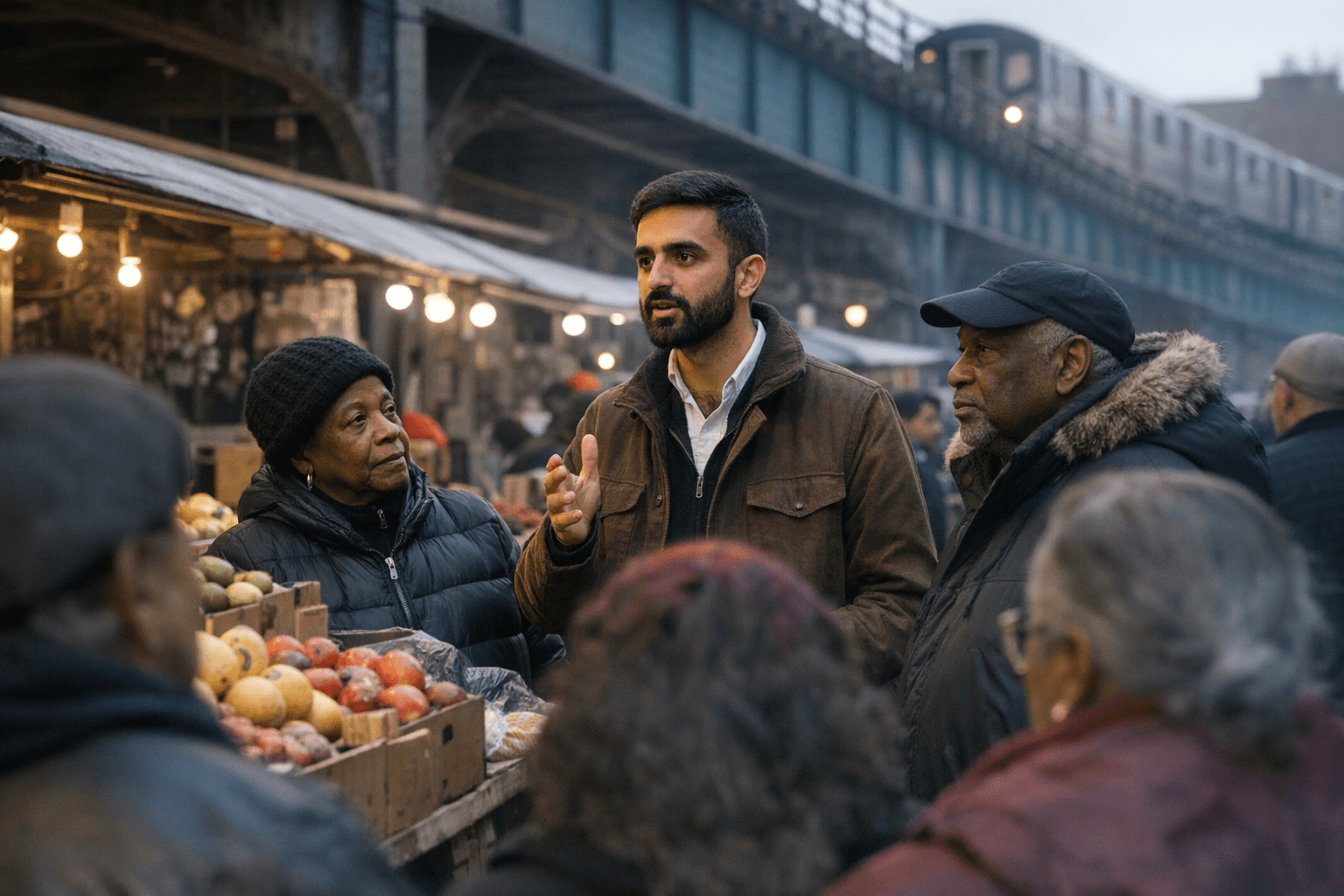
Zohran Mamdani used historic La Marqueta in East Harlem to turn a campaign pledge into a policy test: can New York City run a grocery store that lowers prices better than the private market, while still keeping food fresh, accessible and affordable?
The proposal would place a city-owned grocery store at one of the city’s best-known public markets, under the Metro-North Railroad’s Park Avenue viaduct, in a neighborhood long associated with food access fights and the rise and fall of public retail. Mamdani has cast the store as part of a broader affordability agenda, and the measure of success is straightforward: whether the city can bring down food costs in a place where residents have long been promised better options but have not consistently received them.
La Marqueta carries a history that makes it a fitting proving ground. City records say the market dates to 1936, when the Park Avenue Retail Market opened to bring East Harlem’s pushcart vendors under one roof. WXY Studio’s feasibility study said the market once hosted 300 merchants at its peak. Later, as the neighborhood shifted from Italian Harlem to Spanish Harlem after World War II, the market became known as La Marqueta.
But the site has also become a symbol of how hard it is to restore a public market after years of decline. City Limits reported in 2023 that La Marqueta had only four food vendors, that promised upgrades had not materialized and that a 2017 city plan backed by a $25 million City Council allocation had moved slowly because of construction on the viaduct. Vendors also said they had been forced to use an external commercial kitchen and pay hourly rents of $27 to $40 for access.
Mamdani’s plan enters a field with some precedent and some warning signs. New York City already operates three public retail markets through the New York City Economic Development Corporation: Essex Market, La Marqueta and Moore Street Market. Gothamist reported that those three directly managed markets lost about $3.6 million combined in fiscal year 2024. The city says the markets are meant to supply reliable, affordable fresh food, not maximize profit, and Gothamist noted that La Marqueta and Moore Street had even lower base rents than Essex Market.
The broader city-backed grocery push has already drawn skepticism. Gristedes chief executive John Catsimatidis dismissed the idea as a “delusional notion in the name of radical socialism.” Still, Bloomberg reported in February 2026 that the administration had begun scouting sites for city-backed grocery stores in all five boroughs, prioritizing food deserts and seeking at least one store in each borough, according to deputy mayor for economic justice Julie Su.
That is what gives La Marqueta added weight. It is not just another storefront in East Harlem. It is the first real test of whether a city can operate grocery retail directly, keep prices low enough to matter, and build a model that can move beyond one neighborhood.
This article was produced by Prism’s automated news system from verified source data, official records, and press releases, then run through automated quality and moderation checks before publishing. The system is built and supervised by the people who set the standards it runs under. Read our full AI policy.
Did this article answer your question?