Manchester City weigh midfield overhaul as Rodri future comes into focus
Rodri’s contract, injury and market value have turned Manchester City’s midfield planning into a test of succession. Even a Ballon d’Or winner is now part of the club’s long-term trade-offs.
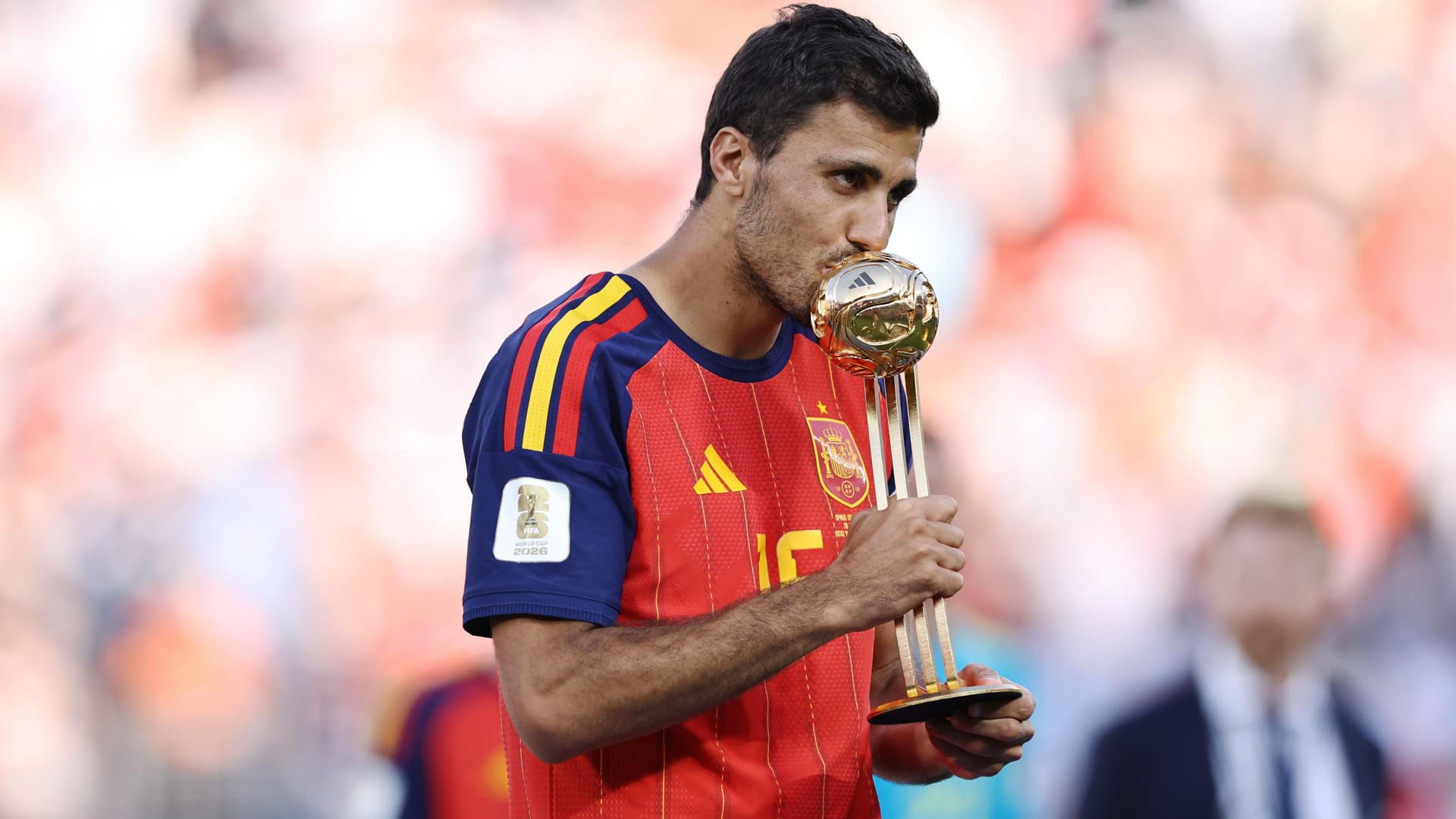
Manchester City’s next big decision is not just about one midfielder. It is about whether a club built on stability, continuity and near-total control now has to treat even Rodri as a movable piece in a wider reset.
Pep Guardiola’s exit after a decade, combined with a squad overhaul and the departures of four starters from the Treble-winning 2022-23 side, has changed the shape of the debate. Manuel Akanji, Nathan Ake, Bernardo Silva and John Stones have already moved on, and that puts extra weight on the question of whether City keep building around Rodri or use his value to manage the next phase of the squad.
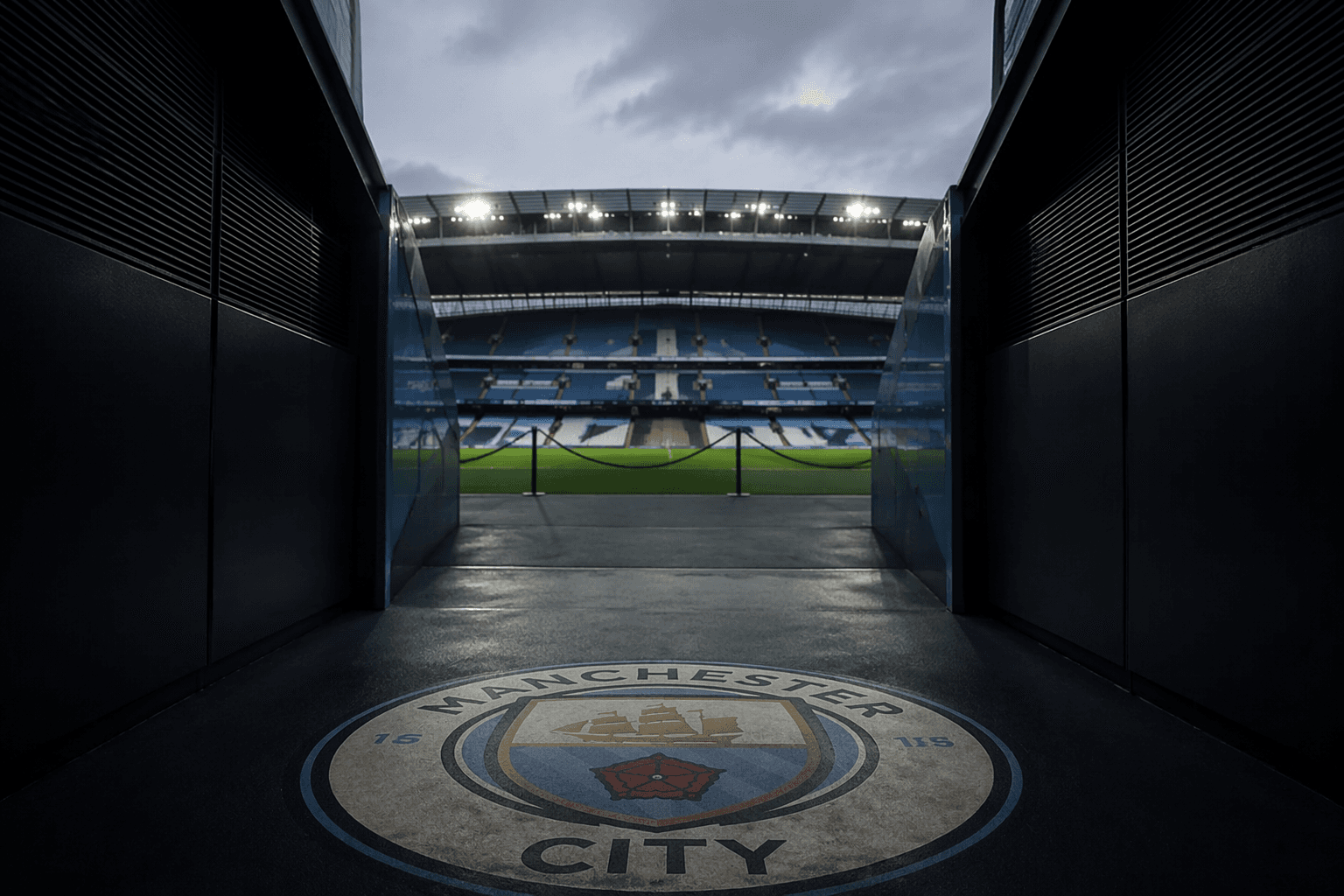
Rodri at the center of City’s reset
Rodri is not being discussed like an ordinary senior player. Manchester City paid Atletico Madrid his £62.8m release clause in 2019, making him the club’s record signing at the time, and described him as a “perfect fit” when he arrived. That investment has since turned into something much larger than a transfer fee: he became the holding midfielder around which City’s control of games was built.
BBC Sport’s contract coverage said Rodri signed a new five-year deal that kept him at City until the summer of 2027, when he had already made 151 appearances for the club. That extension was designed to remove uncertainty, but the current context has reopened it. By the time BBC Sport later updated his status, he had made 298 appearances in all competitions, a number that shows how deeply embedded he has become in City’s structure.
The broader issue is not whether Rodri is important. It is whether a club that has spent a decade reducing risk can still treat a player of his stature as untouchable when the squad around him is changing so quickly.
Why his value is so high
Rodri’s 2024 men’s Ballon d’Or put a formal award on what City had already been living through on the pitch. BBC Sport noted that he became the first Spanish player to win the men’s award since 1960 and the first Premier League player to take it since Cristiano Ronaldo in 2008. In the same coverage, he was credited with losing just one game for club and country in the previous 19 months, a record that captured how rarely City were without him at the base of midfield.
That matters because value in elite football is not only about transfer fees. It is also about the cost of replacement, the cost of disruption and the cost of rebuilding the balance of the team. Rodri’s role is especially hard to replicate because he is not simply a ball-winner or a passer; he is the stabilizing point that allows City to play high-possession football without exposing themselves every time they lose the ball.
The market has already reflected that status. Capology lists him with one year and £11,440,000 remaining on a City contract that expires on 30 June 2027, with an estimated gross fixed salary of £220,000 a week. Transfermarkt identifies him as City’s No. 16 and as a Ballon d’Or winner. Those figures do not decide the football question by themselves, but they show why any conversation about a sale would be one of the most expensive and consequential choices the club could make.
Injury adds another layer to the calculation
Rodri’s future also has a physical dimension. BBC Sport reported that he was set to undergo surgery on a back issue on Monday, with Enzo Maresca confirming the operation. Sky Sports added that the back surgery could make him a doubt for the start of the Premier League season.
That detail matters because top clubs do not just plan around ability. They plan around availability. A player who is indispensable when healthy becomes harder to evaluate when injury creates uncertainty about timing, rhythm and immediate readiness. For a side already in transition, even a short-term absence can accelerate questions about whether the squad needs a different midfield profile or whether it simply needs more depth behind him.
Rodri’s own stance has also fed the uncertainty. BBC Sport reported that he said he would wait until after the World Cup to sort out his future amid links to Real Madrid, and that he had a year left on his contract at the time. That placed him in the narrow space where a club can either extend with confidence, ride out the remaining term or test the market before the contract gets shorter and the leverage shifts.
What the Real Madrid link really means
Real Madrid’s interest has become part of the wider conversation, but BBC Sport also said a move looked unlikely because Rodri is settled at Manchester City and has no plans to leave. That tension is exactly why his case matters: the player most associated with City’s control of games is also the one whose name keeps appearing whenever elite clubs imagine improving the middle of the pitch.
For City, the question is not simply whether they could sell. It is whether they should when his reputation, age profile and on-ball authority still make him one of the most difficult midfielders in Europe to replace. A sale might maximize value on paper, but it would also force a very expensive search for a player who can absorb pressure, dictate tempo and protect the back line at the same standard.
That is where the story becomes bigger than one contract. Clubs at the top of the sport are increasingly forced to choose between loyalty to proven players and the financial logic of moving before value declines. City, after years of operating with near-constant continuity, now look as if they are approaching that crossroads with Rodri, a player once signed as a foundational piece and now evaluated as a possible trade-off.
The next phase of Manchester City’s midfield will show whether the club still protects its core at almost any cost, or whether even a Ballon d’Or winner can become part of a more pragmatic succession plan.
This article was produced by Prism’s automated news system from verified source data, official records, and press releases, then run through automated quality and moderation checks before publishing. The system is built and supervised by the people who set the standards it runs under. Read our full AI policy.
Did this article answer your question?