Mandelson security veto overruled, reignites scrutiny of Starmer's vetting claims
Mandelson failed security vetting for Washington, yet the Foreign Office overruled it, deepening claims that Starmer’s account to MPs was incomplete.
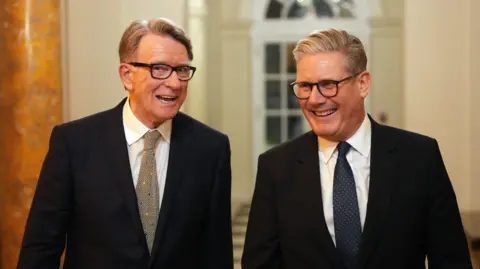
Lord Peter Mandelson failed developed vetting for the US ambassador post in late January 2025, but the Foreign Office overruled the security decision and allowed the appointment to go ahead. The dispute now sits at the centre of a harder question than party politics: whether a sensitive diplomatic posting can be pushed through when the official security process says no.
The row deepened after Sir Keir Starmer told MPs in the House of Commons in September 2025 that “full due process was followed” when Mandelson’s appointment was discussed. Starmer later denied misleading the Commons when challenged over the vetting process. That denial has come under renewed pressure because documents released on 11 March 2026 warned that Mandelson’s appointment posed a “reputational risk” and showed that Starmer and his then-chief of staff, Morgan McSweeney, had been informed about Mandelson’s links to Jeffrey Epstein before the job was finalised.
Jonathan Powell, the national security adviser, described the process as “weirdly rushed”, underscoring how unusual the handling of a major ambassadorial appointment appeared inside government. The released material also showed that the key findings were in a due diligence checklist shown to Starmer on 11 December 2024, well before the appointment went ahead. Mandelson was later sacked as ambassador after the extent of his relationship with Epstein became public.

The governance issue is not simply whether Mandelson was a poor fit for Washington, but whether the machinery meant to guard sensitive posts was bypassed, softened or politically overridden. Developed vetting is supposed to protect the state’s most exposed appointments from reputational, security and leverage risks. If a failed vetting decision can be reversed after the fact, the practical value of the process depends on who is willing to stand up to Downing Street and the Foreign Office when political judgement points the other way.
Kemi Badenoch’s attack on Starmer has revived scrutiny of that boundary between security advice and ministerial discretion. Starmer has said the problem lay in the process rather than the individual decision, and he has promised changes so ambassadorial appointments are not announced before vetting is complete. For government, the question left hanging is not whether the Mandelson episode was embarrassing, but whether it exposed a system in which political urgency outran institutional caution.
Know something we missed? Have a correction or additional information?
Submit a Tip